Budget-Day Immigration Lockbox Needs a Homes-Jobs-Services Ledger
Do not bury the immigration plan inside budget spin. Publish the capacity math with the targets.
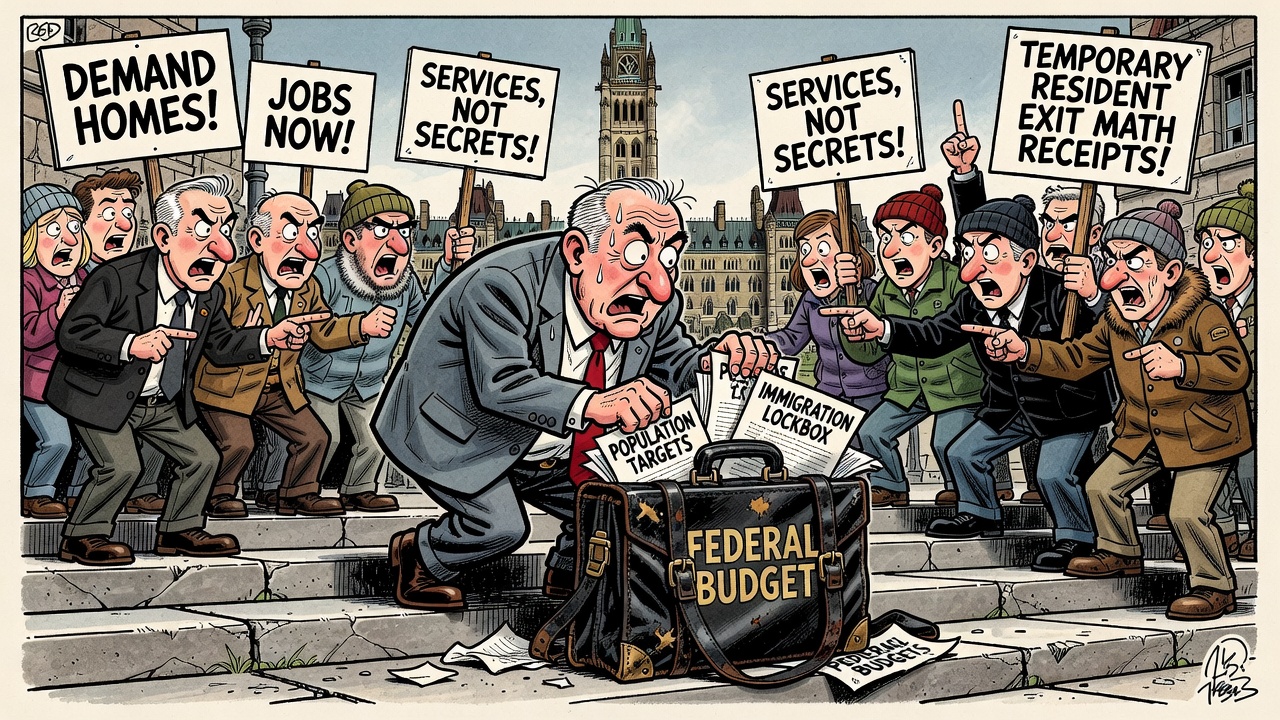
Ottawa has found a very convenient hiding place for the next immigration levels update: Budget Day.
iPolitics reported on November 3 that the annual immigration levels update will be included in the November 5 federal budget, with a government source confirming the plan will be packaged with the budget rather than released as a standalone immigration document. That may be efficient for cabinet communications. It is not good enough for public accountability.
Immigration policy is not just a line item beside deficit projections and tax measures. It changes demand for housing, health care, schools, shelters, transit and entry-level jobs. If Prime Minister Mark Carney’s government wants to say immigration is “back under control,” then Budget Day has to show more than targets. It has to show the load-bearing math.
The baseline is already serious. Budget 2025 set the 2026–2028 plan at 380,000 permanent-resident admissions per year. It also listed temporary-resident-arrival targets of 385,000 in 2026 and 370,000 in both 2027 and 2028. Those figures are not abstractions. They land in rental markets where young workers are already priced out, in classrooms where provinces need seats, and in clinics where families are still looking for doctors.
A conservative accountability standard should be pro-immigration and anti-fog. Canada can welcome newcomers while refusing to let Ottawa separate the arrival numbers from the capacity numbers. In fact, hiding the capacity math is what fuels backlash and leaves newcomers blamed for failures created by federal planners.
The budget lockbox should therefore come with a one-page immigration capacity ledger. It should state the confirmed 2027–2029 permanent-resident targets, temporary-resident arrival and exit assumptions, expected status changes, asylum and shelter-cost forecasts, backlog impacts, and service-standard effects. It should also show housing starts and completions by province, health-care and school-capacity assumptions, youth-unemployment and wage assumptions, and municipal infrastructure costs.
The key word is completions. Announced housing money does not house a family. A promised doctor-training seat does not treat a patient this winter. A temporary-resident target is not credible without a verified exit and status-transition model. If cabinet has those receipts, publish them with the budget. If it does not, stop calling the plan controlled.
Budget Day is already designed for political theatre. Canadians do not need immigration targets slipped into the applause lines. They need the homes, jobs and services ledger that proves Ottawa’s plan fits the country it is asking to absorb it.
- iPolitics: Immigration levels update to be included in Nov. 5 budget
- Government of Canada: Budget 2025 report
- iVoteLiberal.com background: Carney’s Sustainable Immigration Promise Needs the Homes-Jobs-Services Math
This article argues for transparent capacity planning, not for blaming newcomers for federal planning failures.