Carney’s Sustainable Immigration Promise Needs the Homes-Jobs-Services Math
“Sustainable” cannot just mean a softer press line. It has to mean Ottawa can show the capacity model behind the targets.
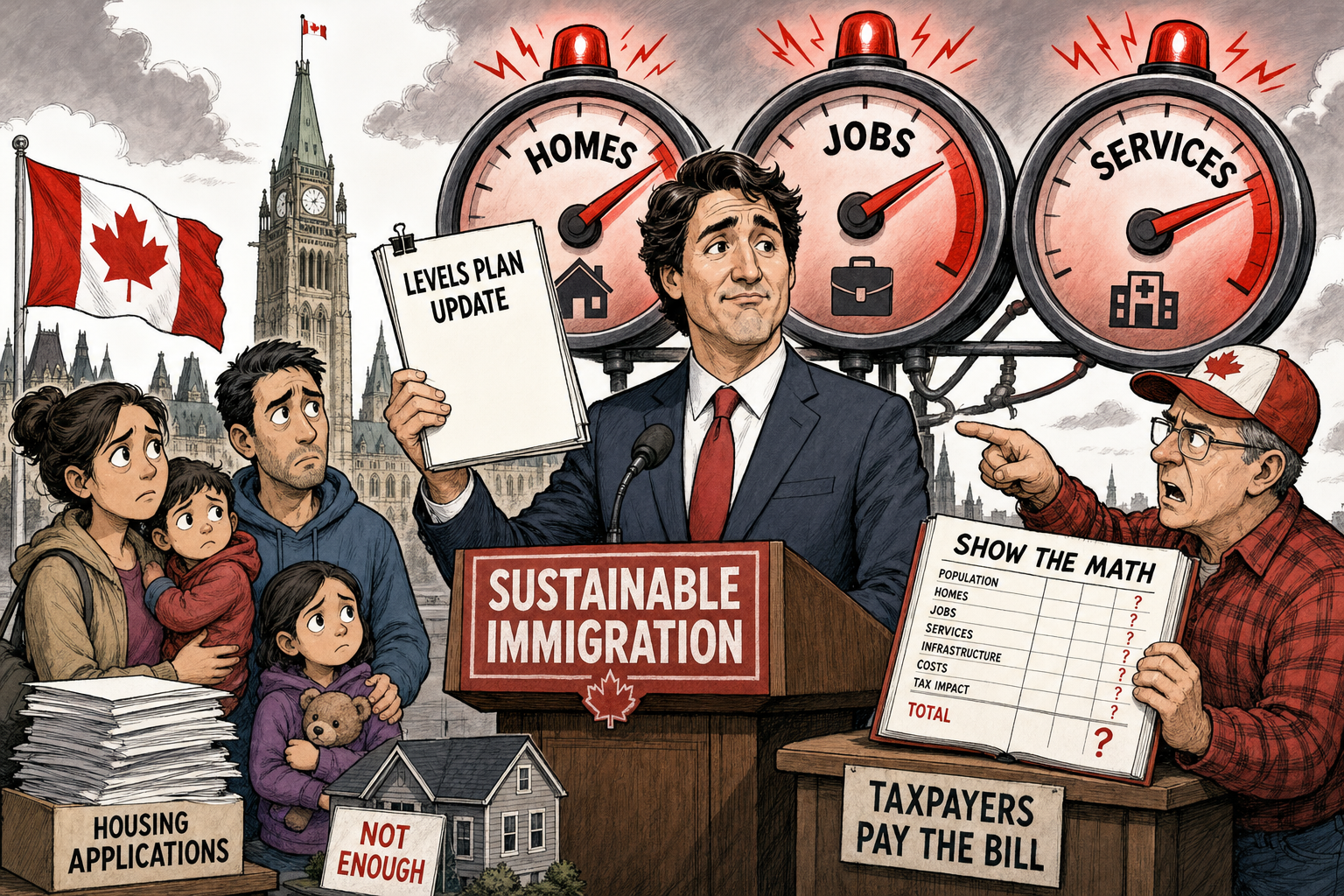
Prime Minister Mark Carney says Ottawa will not budge from “sustainable immigration levels.” That may sound responsible. But after years of population-growth whiplash, housing shortages, strained shelters, family-doctor gaps and youth job pressure, Canadians should not accept “sustainable” as a branding word. They should demand the arithmetic.
IRCC’s current 2026–2028 supplementary levels plan says the government aims to reduce temporary resident arrivals and stabilize permanent resident admissions. The table lists temporary resident arrival targets of 385,000 in 2026 and 370,000 in both 2027 and 2028, with an objective of reducing the temporary population to less than five per cent of Canada’s total population by the end of 2027. It also lists planned permanent resident admissions of 380,000 in 2026, 2027 and 2028, subject to ranges and later confirmation or adjustment.
That last phrase is the accountability trigger. IRCC’s own footnotes say notional 2027 and 2028 targets are to be confirmed or adjusted by November 1 of each year. CityNews, carrying Canadian Press reporting, noted in October that the federal levels were due for an update by the next month. If the Carney government has confirmed the numbers, changed them, or is holding them for budget messaging, the public should see the workpapers now.
The reason is simple: immigration levels are not just an Ottawa spreadsheet. They land in rental markets, classrooms, emergency rooms, food banks, transit lines and entry-level labour markets. CMHC’s 2026 housing-market outlook estimates national housing starts falling from 247,000 in 2026 to 223,000 in 2027 and 216,000 in 2028. A government cannot claim sustainability while population targets and housing supply forecasts live in separate silos.
The ledger should be province by province. How many permanent residents, temporary workers, international students, asylum claimants and family members are expected to arrive? How many temporary residents are expected to leave? What assumptions are being used for overstays, status changes and asylum backlogs? How many homes will be completed, not merely announced? What does each province report for doctors, nurses, school seats, shelter capacity, trades training, unemployment, wage pressure and municipal infrastructure?
Conservatives should be clear: pro-immigration does not mean pro-secrecy. Canada can welcome newcomers and still insist that federal targets respect homes, jobs, wages and services. In fact, hiding the math is what fuels public distrust and leaves newcomers blamed for failures created by politicians.
If “sustainable” is real, publish the model. If the model is not ready, say so. But do not ask Canadians to trust another immigration plan built on slogans while the capacity ledger stays locked in Ottawa.
- Immigration, Refugees and Citizenship Canada: Supplementary Immigration Levels Plan 2026–2028
- CityNews / Canadian Press: Ottawa will not budge from sustainable immigration levels: Carney
- Canada Mortgage and Housing Corporation: Housing Market Outlook
This article argues for transparent capacity planning, not for blaming newcomers for federal planning failures.