Before Police Get Jammer Powers, Publish the Disruption Ledger
If Ottawa wants to let local police disrupt communications, Canadians deserve public rules before the switch is flipped.
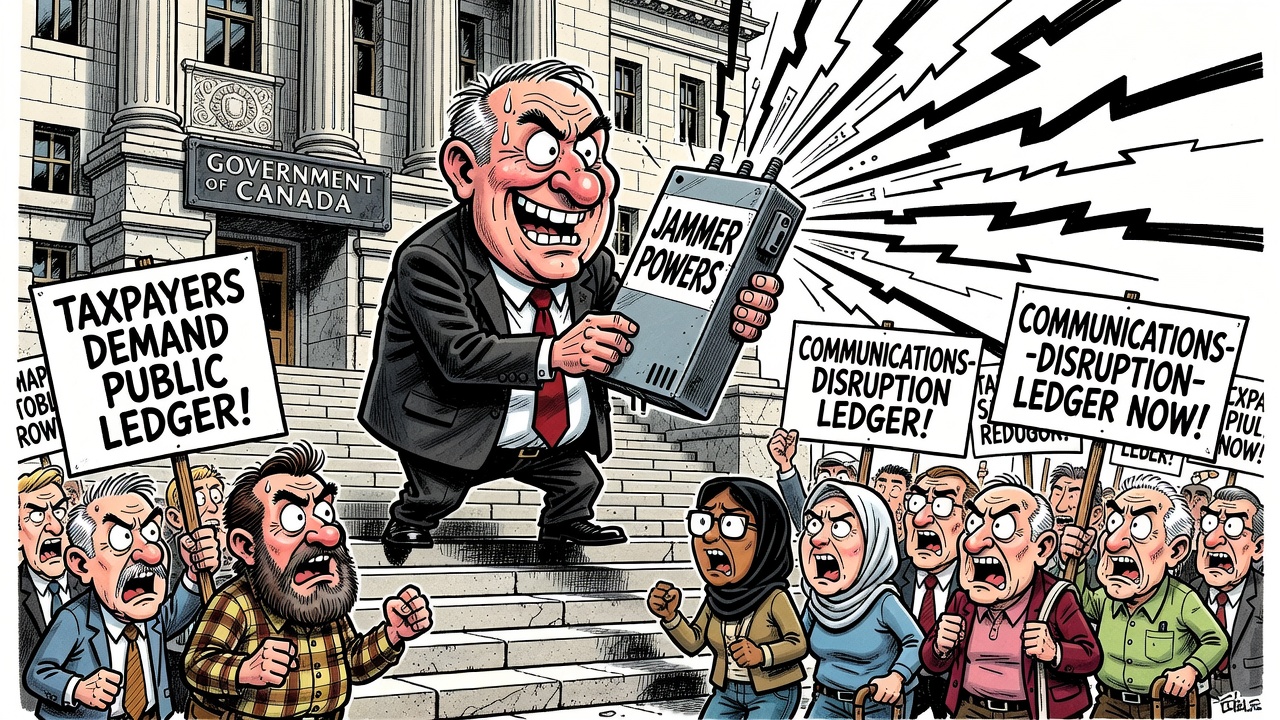
Police sometimes face real threats where radio-controlled devices, drones or coordinated suspects can put lives at risk. Conservatives should not pretend every security tool is illegitimate. But conservatives should also be the first to ask a basic question: who watches the government when the government gains the power to interfere with Canadians’ communications?
That is the issue raised by Ottawa’s proposed Radiocommunication Act Exemption Order (Jammers — Certain Law Enforcement Agencies), published in the Canada Gazette on October 10. The proposal would exempt employees of listed police agencies from jammer prohibitions when installing, using, possessing, manufacturing, importing or distributing jammers for duties or training. The schedule names 27 police forces, including the OPP, Sûreté du Québec, Ottawa Police, Toronto Police, Vancouver Police, Peel, Calgary, Edmonton, Winnipeg and York Regional Police.
The Gazette says the permitted purposes include national security, public safety, international relations, investigation or prosecution of offences, evidence preservation, property protection and prevention of serious harm. It also points to scenarios such as critical infrastructure, major public events and crime scenes. Those categories may sound reasonable, but they are broad enough to demand tight guardrails.
A jammer is not just another piece of kit. Used badly, it can affect phones, radios, Wi-Fi, GPS-linked systems or other wireless devices in the area. In the wrong circumstances, it can interfere with journalists, lawful protesters, bystanders, businesses, emergency callers or even other first responders. The public does not need operational secrets. It does need democratic receipts.
Ottawa’s proposal includes conditions such as training, notice, storage, minimum-interference obligations and five-year retention of use records. Good. Now publish the accountability architecture around those records. Who can authorize a deployment? Is judicial approval required in any use case? Which frequencies and device classes can be affected? How is 911 protected? How are hospitals, transit, airports and news-gathering protected? What after-action reports will Parliament, privacy commissioners and the public see?
This is where the Liberal government’s habit of announcing power first and explaining safeguards later becomes a problem. Civil liberties are not a left-wing luxury. They are a conservative inheritance: limited government, clear law, private life and accountable policing.
If the case for police jammer powers is strong, it can survive transparency. Ottawa should publish a communications-disruption ledger before final approval: the authorizing official, legal threshold, emergency exception, frequency limits, affected-area assessment, emergency-service safeguard, complaint route and annual public statistics by agency. Canadians can support public safety without handing any government a blank cheque to silence signals in the dark.
- Canada Gazette: Radiocommunication Act Exemption Order (Jammers — Certain Law Enforcement Agencies)
- Blacklock’s Reporter: New Powers To Jam Phones
- Docket by Matt Lucinski: Legislative and regulatory docket tracker
- iVoteLiberal context: Bill C-22 Encryption Red-Line Ledger
This article argues for public authorization and audit rules. It does not claim that every listed police force has used a jammer or that emergency tactical details should be disclosed.