Carney Wants Pipeline Credit Without Tanker-Ban Receipts
A pipeline promise is not a plan until Ottawa explains how it gets past the tanker-ban red line.
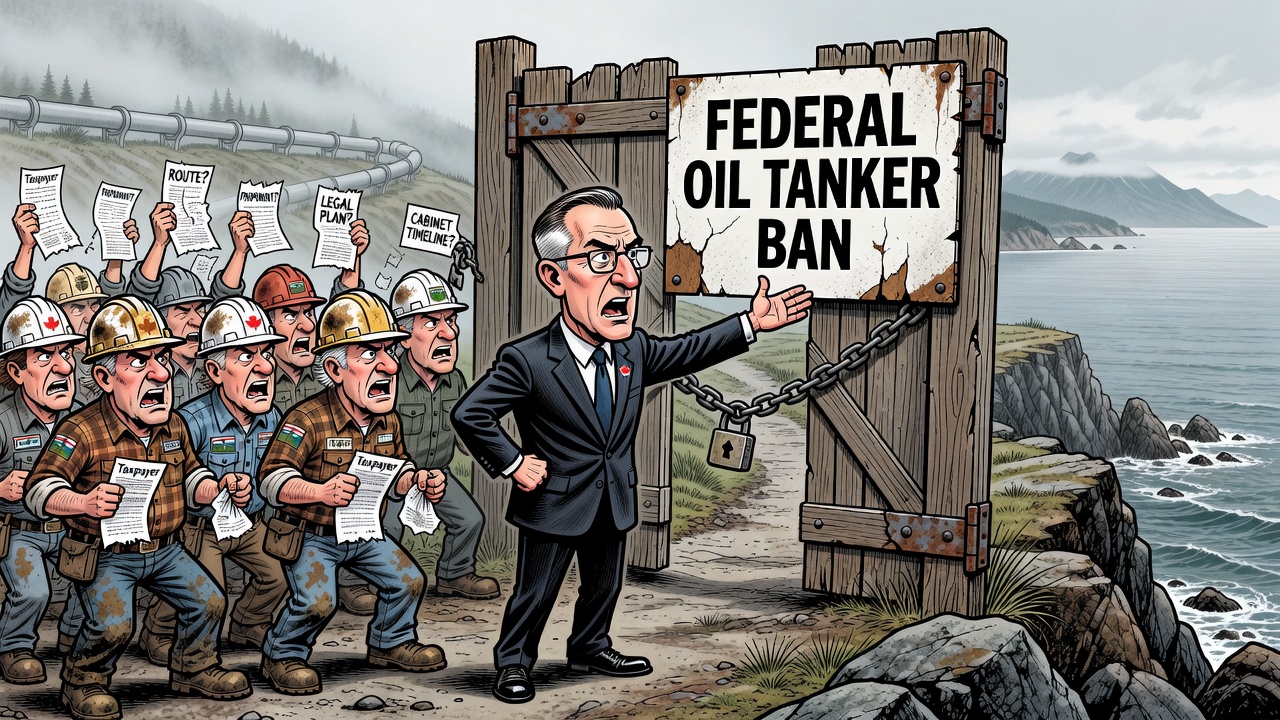
Prime Minister Mark Carney keeps asking Canadians to believe he can make Canada an energy and infrastructure power again. That promise collides with a hard Liberal-era reality on the B.C. coast: the federal oil tanker ban is still in place, and Carney has now said it will stay in place.
That matters because Alberta is not asking for a slogan. Premier Danielle Smith has been pressing for a new pipeline to tidewater, and public reporting says Alberta sees a northern B.C. route as central to getting more oil to Asian markets. Associated Press reported Thursday that Carney said a proposed pipeline to the Pacific Coast would preserve the longstanding northern B.C. tanker ban. The same coverage said Smith was expected to announce details on a possible route in Calgary, while B.C. Premier David Eby says the ban protects the province’s northern coast.
Meanwhile, the Trans Mountain expansion has not solved the credibility problem. The National Post reported July 1 that Trans Mountain expansion capacity is effectively full, while northern export options remain constrained by the tanker-ban framework. If the only completed west-coast expansion is already tight, then Ottawa cannot claim a serious nation-building pipeline strategy while refusing to explain how any next route would legally reach export water.
Carney’s defenders will say this is complicated. They are right. Pipelines require investors, First Nations consultation, environmental review, provincial cooperation, safety rules, commercial commitments and a credible route. But complexity is exactly why the Prime Minister should stop selling vibes and publish receipts.
Start with four of them. First: what route is Ottawa actually prepared to consider? Second: who is the proponent, or what process will identify one? Third: what is the federal legal plan for the tanker-ban obstacle if Alberta says northern access is necessary? Fourth: when will cabinet publish an approval timeline with milestones Canadians can measure?
The July 2 federal-B.C. cooperation announcement with Premier Eby talked about accelerating major energy and trade corridors and said Ottawa commits to maintaining the North Coast tanker ban in accordance with the proposed route of a new trans-provincial pipeline under the Canada-Alberta agreement. That is politically important language. It is still not a public route map, a named proponent, a legal-risk memo or a cabinet timeline.
A conservative accountability standard does not require pretending every pipeline is automatically easy or every environmental rule is illegitimate. It requires honesty about trade-offs. If Carney believes the tanker ban is permanent, he should say what export corridor remains. If he believes a new pipeline can be built anyway, he should show the map, the law and the schedule. If the answer is that Ottawa wants applause from Alberta while keeping a veto comfortable for coastal B.C. politics, Canadians should know that too.
Carney can have a tanker ban. He can have a credible new pipeline plan. What he cannot have, at least not honestly, is credit for both until he publishes the receipts.
- National Post: Trans Mountain capacity and tanker-ban constraints
- Associated Press / Canadian Press: Carney says the northern B.C. tanker ban will stay as Canada pursues Alberta pipeline
- Canadian Press via CityNews: B.C., Carney ink deal to retain northern tanker ban ahead of Alberta pipeline update
- Prime Minister of Canada: July 2 Canada-British Columbia Cooperative Prosperity Agreement
- iVoteLiberal.com: Earlier pipeline-promise accountability context
This article argues for public planning and disclosure. It does not claim a specific pipeline route has been approved or that any proponent has filed a complete application.