Carney’s Pipeline Promise Is Already a Liberal Unity Test
Western Canada does not need another Liberal therapy session over pipelines. It needs permits, timelines and a prime minister willing to choose workers over cabinet theatre.
Global News reported Thursday that Carney expects an announcement Friday about Canada–Alberta talks on a new pipeline project. Watch the Global News report here.
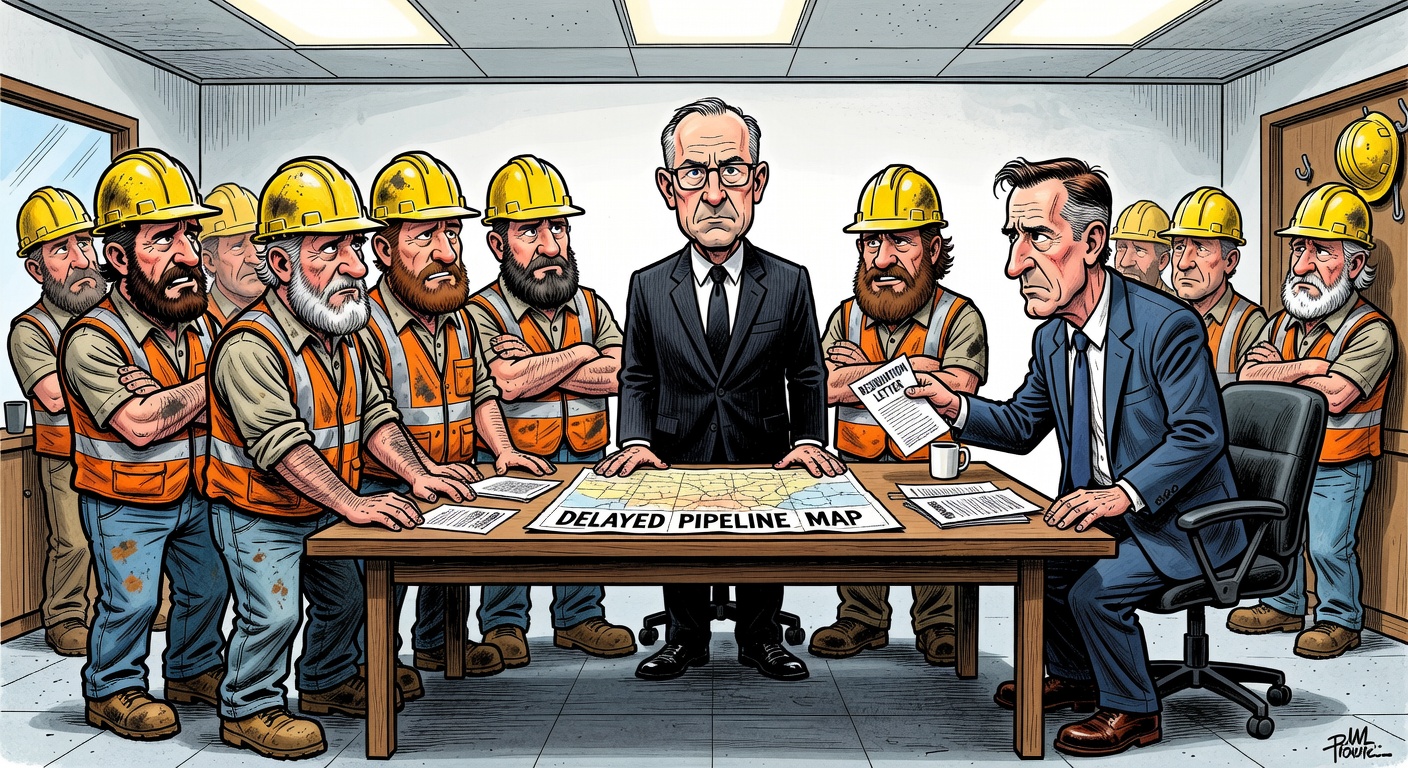
Pipeline politics returned to the centre of federal politics Thursday. Global News reported that Mark Carney anticipates an announcement Friday after discussions between Ottawa and Alberta on a new pipeline project. Separately, Reuters has reported that Canada and Alberta are negotiating an agreement that could fast-track construction of a new oil pipeline to the Pacific Coast, though the outlet also notes there are serious hurdles.
That would be a major shift from the last decade of Liberal policy. The Trudeau-Carney Liberal era produced tanker bans, impact-assessment uncertainty, cancelled or abandoned projects, years of anti-energy messaging, and a national-unity wound that Ottawa still has not healed. Now Carney wants to present himself as a builder. Good. But Canadians should judge the government by permits, not adjectives.
The National Post has reported, through a syndicated item, that Carney may use promised national-interest legislation this fall if Alberta can find a private-sector backer for a new pipeline. The same report says Liberal MP and former environment minister Steven Guilbeault told people close to him he would likely leave cabinet if Carney approves a pipeline project that weakens environmental rules.
Those claims matter because they expose the real test. Is Carney’s “build Canada” message a serious economic pivot, or is it a communications bridge between Alberta workers and a Liberal caucus still shaped by anti-resource politics?
For Western Canadians, this is not symbolic. Pipelines affect jobs, royalties, Indigenous equity opportunities, export markets, tax revenue, national security and Canada’s ability to sell resources to customers other than the United States. A country that cannot build energy infrastructure across its own territory has surrendered part of its sovereignty.
But accountability must cut both ways. If Carney is serious, he should publish the pipeline criteria before the backroom bargaining hardens: what project qualifies, what route is being discussed, what environmental rules remain, what approvals are streamlined, what Indigenous consultation standard applies, what private-sector proponent is responsible, and what taxpayer exposure exists.
Canadians should also know whether cabinet ministers are free to veto national economic policy by threatening resignation. A prime minister cannot promise nation-building in Calgary and then let Ottawa’s activist wing quietly control the permit desk.
The conservative position should be clear: build projects that are lawful, privately backed, environmentally responsible and economically necessary. But stop pretending endless process is leadership. If Carney wants credit for changing direction, he must show the permits, show the timelines and show the law. Otherwise Friday’s pipeline announcement will be just another Liberal headline waiting to expire.
Global News video: Carney anticipates announcement on new pipeline project; Reuters: Canada–Alberta pipeline agreement faces hurdles; National Post syndicated via Unpublished: Carney may use national-interest legislation on pipeline in fall; CityNews / Canadian Press: Alberta and Ottawa pipeline agreement talks.