24 Sussex Fundraising Needs a Donor Firewall
Restoring a national residence may be defensible. Letting a prime-ministerial project create donor-access questions is not.
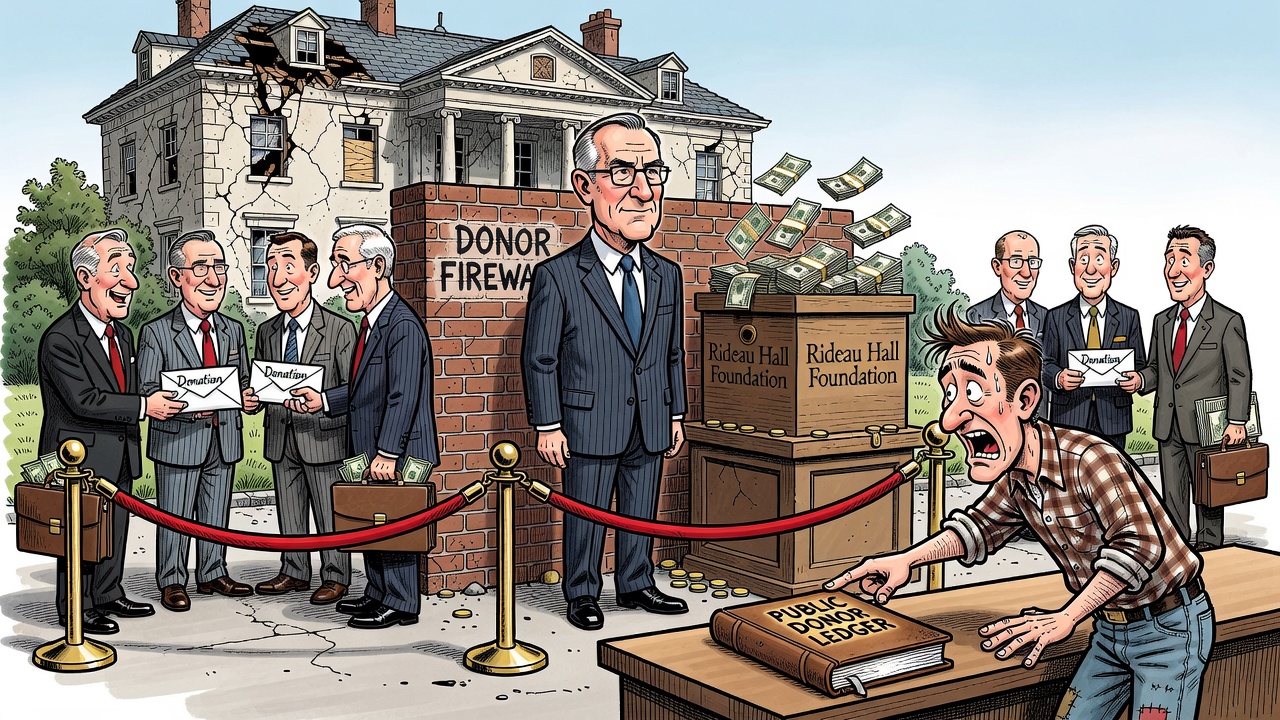
The 24 Sussex debate should not be reduced to whether Canada can maintain an official residence. A serious country can preserve its public buildings, secure its prime minister and stop letting national assets rot. The real test is whether Prime Minister Mark Carney’s government can restore the residence without building a private influence channel beside it.
Canadian Press reported that the Rideau Hall Foundation had already raised more than $100,000 after Carney announced a 24 Sussex restoration fundraiser and design competition. The report said the early total included more than 200 online donations averaging $257, plus another $50,000 in pledges. It also said the renovation did not yet have a specific budget, while the fundraising cap was described as $5 million toward a broader $50 million goal.
That is exactly the moment when the rules should be published, not after the donor list is politically awkward. CP reported that the foundation says its policies reject corporate and anonymous donations and require donors to attest to residency status. Blacklock’s Reporter, meanwhile, flagged records saying the charity assigned to crowdfund 24 Sussex would solicit donations from federally regulated corporations, while also noting Carney’s prior Rideau Hall Foundation role and his denial of a conflict.
Conservatives do not need to argue that every donor is buying access. The stronger, fairer case is that government should prevent the appearance of access before it happens. A prime-ministerial residence is not a hospital wing, a museum gala or a local charity drive. It is tied directly to the office of the head of government, security planning, public procurement, design contracts and future official entertaining.
Ottawa should therefore impose a simple donor firewall. Publish the full Rideau Hall Foundation donor policy for this campaign. Publish all solicitation materials. Disclose donor names above a low threshold, not years later but on a rolling schedule. Report rejected donations by category: corporate, foreign, anonymous, federally regulated, lobbyist-linked or otherwise ineligible. Ban donors, their controlled entities and their lobbyists from related design, construction, consulting, security and maintenance contracts.
Carney should also release a short conflict memo explaining his past relationship with the foundation, who approved the arrangement, and what recusals or screens apply inside the PMO, Privy Council Office and National Capital Commission. If there is no conflict, the memo should be easy to publish. If the rules are clean, Canadians should be able to read them.
The issue is not whether 24 Sussex should be restored. The issue is whether the Liberals can stop turning every public file into a trust exercise. Put the donor firewall, registry and procurement screen in the open. Then Canadians can judge the project by the receipts instead of by insider reassurances.
- Canadian Press via CityNews: More than $100K raised for 24 Sussex restoration
- Blacklock’s Reporter index: June 2026 archive item on 24 Sussex fundraising
- Future of Good: Democracy advocates warn fundraiser launched without safeguards
- iVoteLiberal.com: Earlier 24 Sussex cost-ceiling analysis
This article does not allege that any donor bought access or that corporate donations were accepted. It argues for public rules and a firewall because conflicting public reporting and the nature of the project make transparency essential.