CMHC’s MLI Select Promise Needs a Real Compliance Ledger
Ottawa insured affordability, energy and accessibility promises under MLI Select while routine policing relies heavily on lenders, attestations and sample reviews.
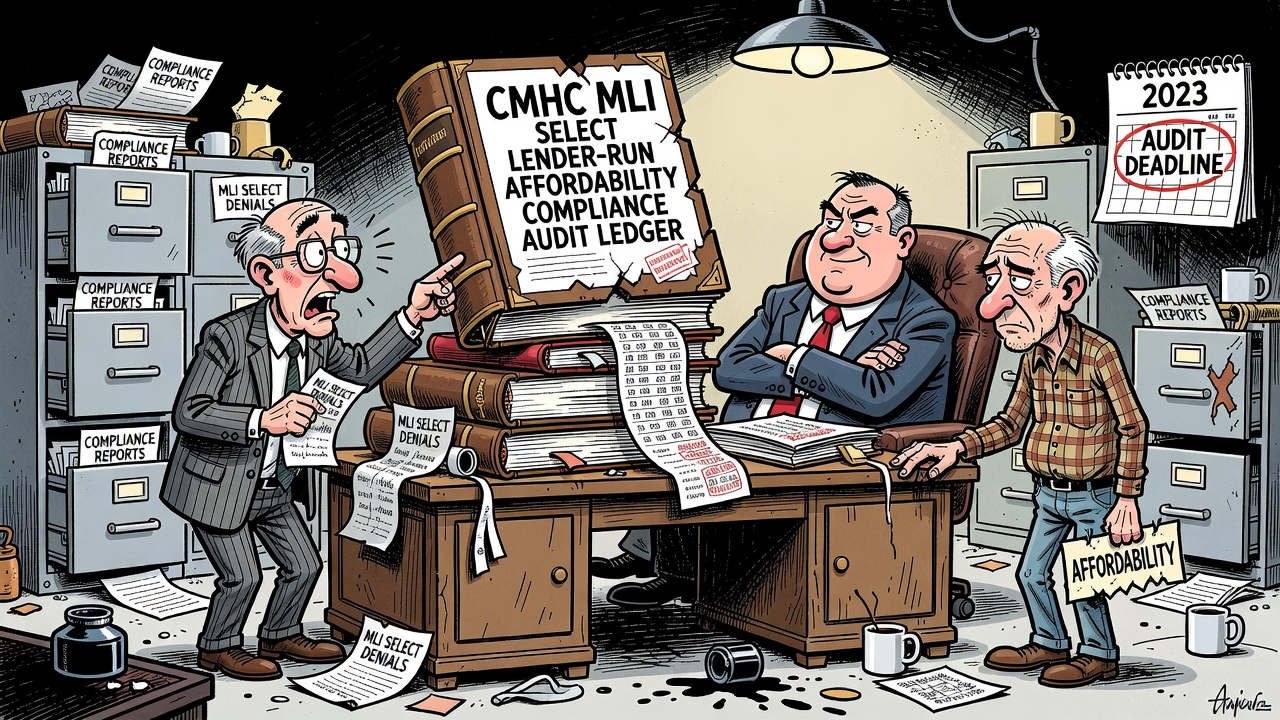
Ottawa’s housing pitch depends on trust: taxpayers back programs, CMHC insures projects, and Canadians are told those projects will deliver affordability, accessibility and better building performance. But trust is not a control system. If a federal housing program depends on private files, borrower attestations and lender monitoring, then the public deserves to see exactly how often those promises are actually checked.
That is the problem exposed by Conservative MP Kerry Diotte’s written question on CMHC’s MLI Select program. Diotte asked how CMHC verifies that insured multi-unit projects keep rent-cap, energy-efficiency and accessibility commitments, including how many Edmonton properties received in-person post-occupancy compliance audits. According to The Hub’s summary of the tabled response, CMHC said its contractual relationship is with approved lenders, and those lenders are responsible for monitoring borrowers and addressing breaches.
The same report says CMHC did not identify any post-occupancy physical compliance audits conducted by the approved lender for Edmonton. It also says affordability is tracked through annual borrower attestation and rent roll submitted to the lender; energy targets do not have a separate CMHC-led post-construction audit or field-verification program for every project; and accessibility commitments can sit in a lender’s loan file unless CMHC asks for them. CMHC’s own quality assurance is described as periodic review and sample-based testing, with site visits on an exception or risk basis.
Some risk-based oversight is reasonable. Conservatives should not demand a bureaucracy that inspects every doorknob in the country. But MLI Select is not a minor paperwork exercise. It is a federal mortgage-insurance program that offers more favourable financing where developers claim social, environmental or accessibility outcomes. If those outcomes justify public backing, the verification system must be strong enough to prove they happened after occupancy — not just during application season.
The answer becomes harder to accept beside another number: The Hub reports CMHC had recorded 362 files involving non-financial defaults as of September 24, 2026, including social-outcome non-compliance and certificate-of-insurance issues. Yet the response reportedly did not break those files down by infraction type because of data limitations, and did not provide clear counts for the toughest remedies such as revoking insurance, demanding repayment or clawing back premium discounts. One borrower had been restricted from MLI Select after measures introduced in August 2026.
That leaves Canadians with the worst possible arrangement: big affordability claims, limited public audit detail and an enforcement record that cannot be easily tested. Housing Minister Gregor Robertson and CMHC should fix that now. Publish a project-level compliance ledger: address or anonymized project identifier where necessary, lender, approved affordability term, rent-roll review date, energy-verification status, accessibility-attestation status, site-visit count, default category, remedy used and whether the borrower remains eligible for future federal backing.
If Ottawa wants credit for affordable housing outcomes, it must publish the receipts. Otherwise MLI Select risks becoming another Liberal housing promise measured by press releases instead of post-occupancy proof.
- The Hub: https://thehub.ca/2026/11/20/mps-questions-cmhc-relies-100-on-lenders-to-police-mli-select-as-ottawa-withholds-asylum-hotel-costs/
- House of Commons written question Q-1466: https://www.ourcommons.ca/written-questions/45-1/q-1466
- House of Commons response to Q-1466: https://www.ourcommons.ca/written-questions/45-1/q-1466/14333931?section=all
This article does not allege every MLI Select borrower is non-compliant. It argues that federally backed affordability, energy and accessibility claims require auditable post-occupancy verification and public enforcement data.