Bill C-22’s Senate Sprint Needs a Metadata and Encryption Ledger
The Senate should not pass lawful-access powers on trust. Put the metadata and encryption limits in the statute before the vote.
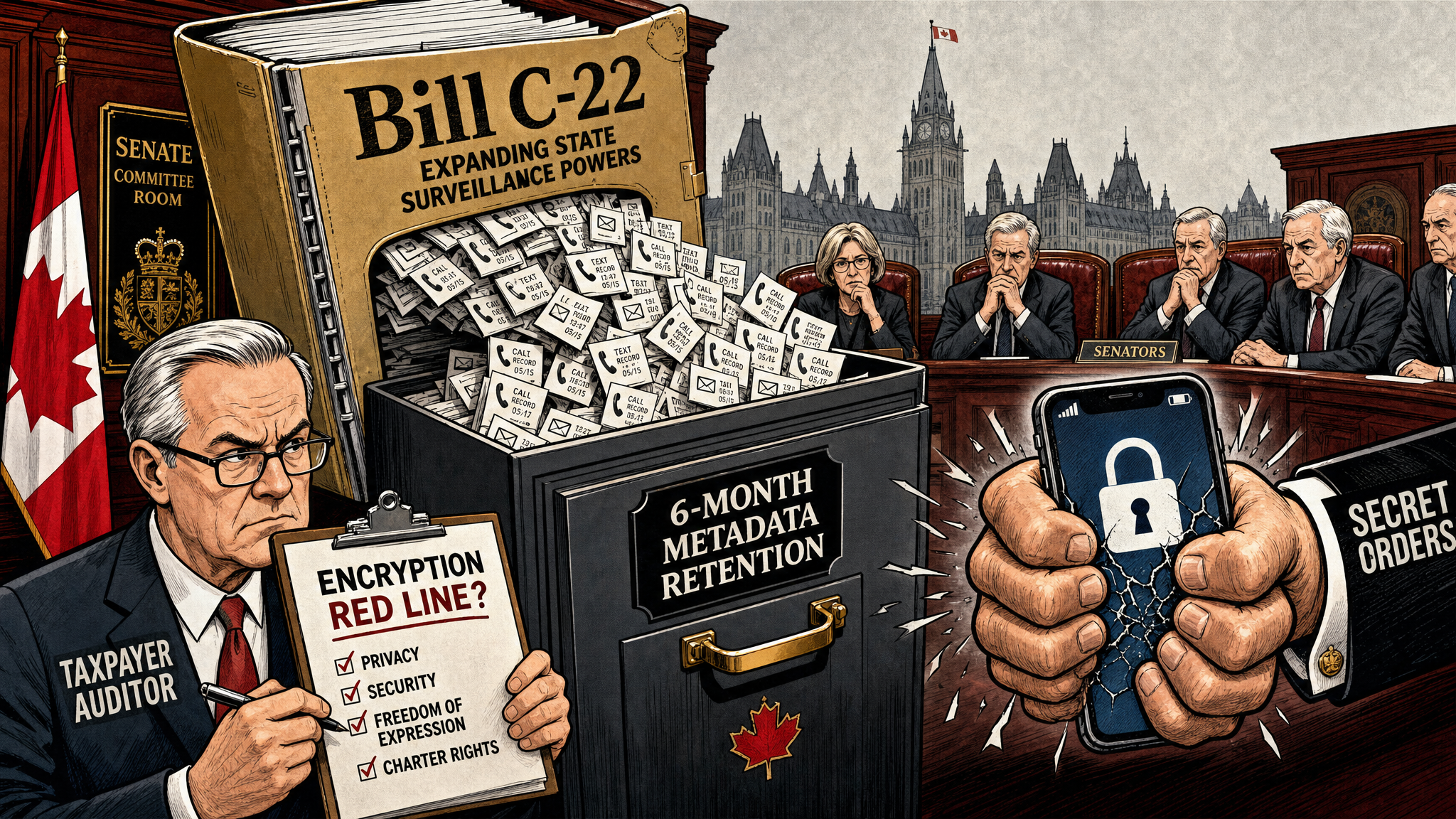
Bill C-22 is no longer a theoretical privacy fight. It is now in the Senate’s hands, and the accountability question is simple: will senators lock clear limits into law, or let the Carney government rely on assurances after months of warnings from civil-liberties groups and secure-technology providers?
OpenMedia says it and 25 other rights, refugee, privacy and expert signatories delivered a November 19 letter asking Prime Minister Mark Carney to intervene before the Senate finishes reviewing the bill. Their ask is narrow enough to be tested on the text: remove the power to require providers to retain metadata on all users, and bar regulations or secret ministerial orders that could circumvent end-to-end encryption.
Parliament’s own LEGISinfo page lists Bill C-22, the Lawful Access Act, 2026, as a government bill currently at consideration in committee in the Senate after referral on October 22. The same page shows the House passed the bill on June 18 after committee amendments. That means the Senate is not dealing with a press release. It is dealing with legislation that could soon become permanent federal authority.
The House amendments did not end the problem. OpenMedia says MPs cut the metadata-retention period from one year to six months and added a narrow compelled-decryption limit. iPhone in Canada reported the same basic change, while noting the groups argue the bill could still permit orders that capture a message before encryption or after it is readable on a device. That is the loophole senators need to close in statutory language, not in ministerial talking points.
Metadata is not harmless paperwork. A record of who contacted whom, when, where and how often can reveal political organizing, medical needs, religious life, family conflict and professional sources. Conservatives should be especially allergic to the idea that ordinary Canadians’ records can be warehoused first and justified later. Targeted preservation tied to an investigation is one thing. A standing filing cabinet for everyone is another.
The encryption warning is just as concrete. iPhone in Canada reported that Meta told senators on November 16 it could not comply with the bill as written while preserving secure end-to-end encrypted services, and that Signal said it would leave rather than weaken security. The Senate committee’s own meeting notice lists witnesses from Meta, Signal, OpenMedia, the Canadian Civil Liberties Association, Citizen Lab and others for that Bill C-22 meeting. These are not fringe objections; they are operational warnings from people who build, study and defend secure communications.
Ottawa can still support lawful, judge-authorized investigations without writing a blank cheque for population-wide retention or secret technical orders. The test is whether the government accepts enforceable guardrails: no mandatory retention of all-user metadata, no order that weakens or routes around end-to-end encryption, court authorization for intrusive obligations, public default rules where national security does not require secrecy, and regular reporting Parliament can actually audit.
If Bill C-22 is truly not a backdoor bill, the government should have no trouble putting that red line directly into the law. Until it does, senators should amend it — not salute it through.
- OpenMedia: Civil Society to Carney: Intercede on Bill C-22 before it’s too late
- iPhone in Canada: Consumer Groups Warn Carney’s Spy Bill Could Put Everyone’s Data at Risk
- Parliament of Canada LEGISinfo: Bill C-22, Lawful Access Act, 2026
- Senate of Canada: SECD Meeting 31 witnesses for Bill C-22
This article supports lawful, targeted investigative tools with judicial authorization. It argues that Bill C-22 should not advance without explicit statutory limits on all-user metadata retention and encryption-circumvention orders.