Ottawa’s Foreign-Buyer Ban Needs a New-Build Exemption Ledger
Ottawa is extending the foreign-buyer ban while preparing a new-build exemption. If that carveout is really about supply, publish the receipts before the money starts moving.
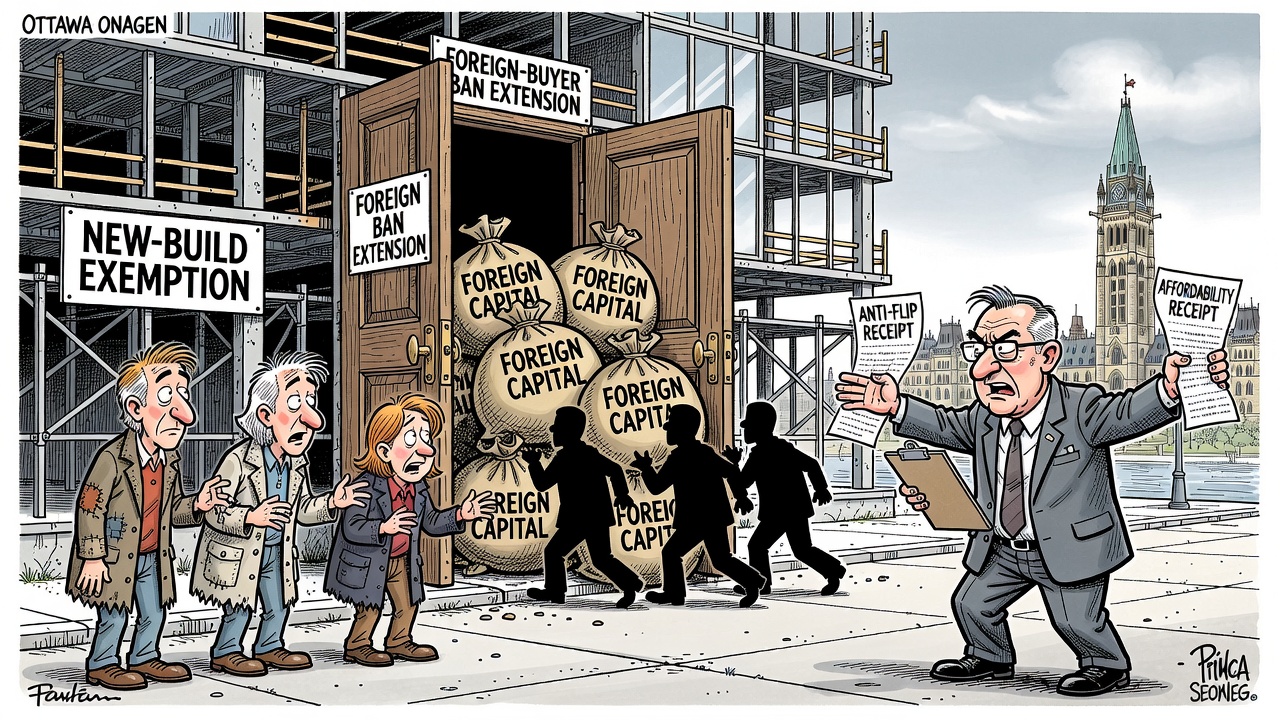
The Carney government is trying to sell two messages at once: foreign buyers should not be purchasing existing Canadian homes, but foreign capital may soon be welcomed into new residential properties. Finance Canada says Budget 2026 legislation would extend the ban on foreign purchases of existing residential properties for two years, to January 1, 2029, while launching a regulatory process to exempt new residential properties.
That distinction could be defensible. Canada needs more homes, and capital for construction is not the same thing as bidding up a resale bungalow against a local family. But Canadians have heard too many polished housing announcements that never turned into affordability. Before Ottawa calls this a supply policy, it should publish the rules that separate genuine construction financing from another speculation channel.
The timing matters. RBC Economics says Canada’s housing market showed little momentum in October: resales were virtually unchanged at 0.3% month-over-month, national inventory rose to five months of supply, and prices remained 3.1% below a year earlier. CREA’s national report tells the same story in the resale market: sales edged up 0.3% in October, the MLS Home Price Index rose just 0.1% from September, and the index was still down 3.1% year over year.
In other words, Ottawa is not making this change in a healthy affordability environment. Buyers are cautious, mortgage costs are a hurdle, and ordinary Canadians are still trying to turn political promises into keys. A new-build exemption without hard guardrails could invite foreign money into pre-construction units, assignment sales, bulk condo purchases or investor inventory that technically counts as “new” while doing little for families looking for a home.
The conservative accountability test is straightforward: if the exemption is about adding supply, prove it. Define “new residential property.” Require beneficial-ownership disclosure. Track whether exempted units are completed, occupied, rented long-term, left vacant or flipped before closing. Publish how many purchases are by individuals, corporations, trusts or nominees. Show whether the units are priced within reach of Canadian incomes, not merely added to a skyline.
Ottawa should also explain enforcement. Who audits the buyer? Who verifies the property is genuinely new? What penalties apply if an exempt purchase becomes a paper flip? How will provinces, land-title offices and FINTRAC share data? And will Parliament receive a quarterly ledger showing units approved, completed, occupied, resold and taxed?
Extending the foreign-buyer ban is the headline. The exemption is the fine print. Canadians deserve both. If this is a construction policy, Ottawa should be able to show completion receipts, affordability receipts and anti-speculation receipts. If it cannot, then the government is not protecting homeownership; it is rebranding a loophole as a housing plan.
- Department of Finance Canada: Government of Canada tables plan to ease grocery costs, support homeownership, and encourage new home construction
- RBC Economics: Canada’s housing market stalls in October
- Canadian Real Estate Association: Canadian Home Sales and Prices Hold Steady in October
This article relies on official federal materials and institutional housing-market data. It does not allege illegal conduct; it calls for public disclosure and enforceable guardrails before a housing-market exemption is implemented.