HungerCount 2026 Is Ottawa’s Affordability Scoreboard
Food-bank use is not a communications problem. It is the household scoreboard for rent, food, wages, benefits and housing delivery.
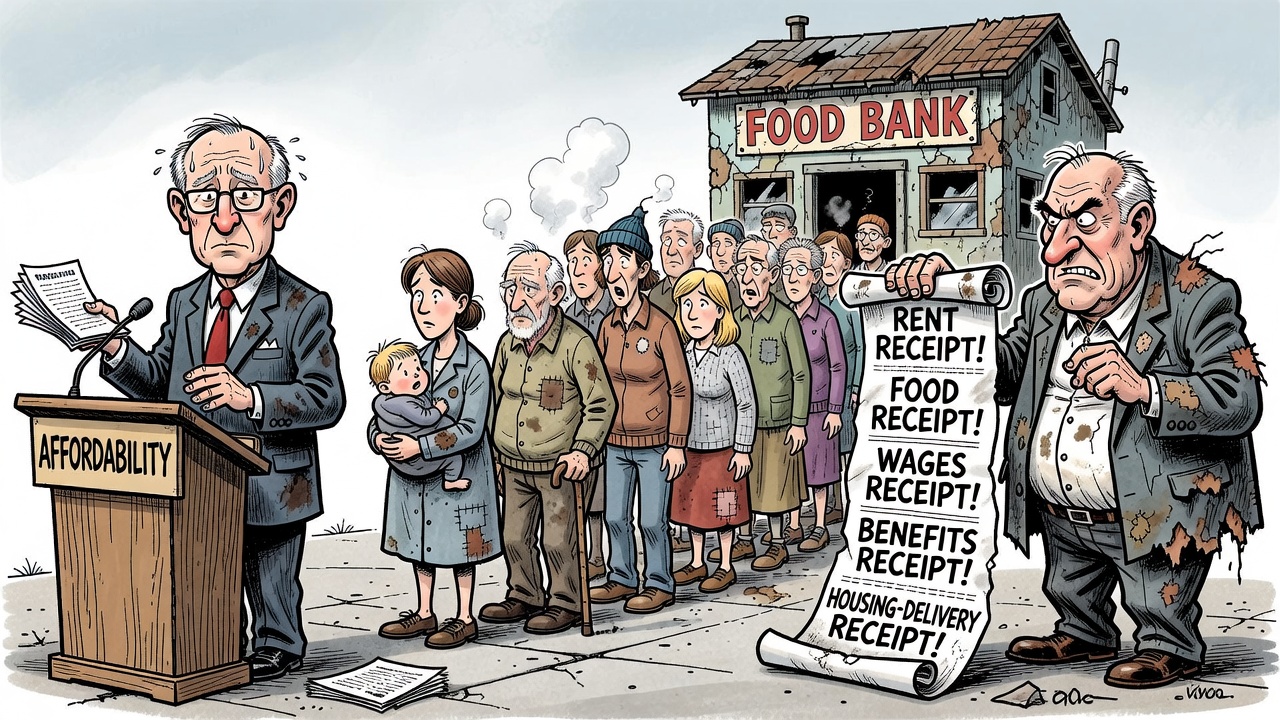
Ottawa can argue about affordability slogans all it wants. Food-bank lines are harder to spin. Food Banks Canada’s HungerCount 2026 recorded 2,355,075 visits in March 2026, the highest number in the organization’s count. That was up 8.7% from 2025 and 116.8% from 2019. When a basic emergency system more than doubles in seven years, the federal government owes Canadians more than another podium promise.
The details are even harder to dismiss. HungerCount says children accounted for 775,658 visits, or 32.5% of food-bank clients. Nearly 18% of clients reported employment as their main source of income, compared with about 12% in 2019. Market renters made up 71.8% of food-bank clients. In plain English: this is not only an unemployment story. It is a rent, grocery, wage and household-cash-flow story.
A conservative accountability standard should be direct: measure policy by outcomes families can feel. If Ottawa says its spending, benefits, housing programs and immigration targets are helping affordability, then publish the ledger that connects those policies to results. How many households moved off food-bank reliance after federal benefit changes? How many affordable units were completed where food-bank demand is rising fastest? How much did rent growth eat from wage gains? What share of new federal housing dollars reduced shelter costs for low-income renters instead of feeding process, consultants and announcements?
The Carney government also has to stop treating housing as a separate file from hunger. HungerCount’s renter data show the connection. A family that pays too much for shelter has less left for food. A worker whose paycheque cannot cover rent and groceries does not need a lecture about “resilience.” They need government to admit the scoreboard is flashing red.
That does not mean pretending Ottawa controls every grocery price or every landlord’s decision. It means recognizing that federal choices matter: deficits that pressure inflation and interest costs, immigration levels that must match housing and services, benefit rules that can trap working households below basic needs, and housing programs that too often count dollars announced instead of doors opened.
The right response is not another emergency photo-op at a food bank. It is a public cost-of-living ledger: rent burden, food inflation, after-tax income, benefit clawbacks, housing completions, shelter capacity, newcomers’ settlement pressure, and food-bank visits by region. Put those measures beside every major affordability announcement and update them quarterly.
Food banks were built as a last resort, not as a shadow welfare state for working families and children. If Ottawa wants credit for compassion, it can start by publishing the receipts that show whether its policies are reducing the lineups—or quietly normalizing them.
- Food Banks Canada: HungerCount Report 2026
- Food Banks Canada: Canada’s 2026 HungerCount finds millions of people in Canada face impossible trade-offs
- Global News / Canadian Press: Food bank visits rise to 2.3M a month as grocery costs go up, report says
This article uses Food Banks Canada’s HungerCount 2026 data and mainstream reporting. It does not allege criminal wrongdoing; it calls for measurable affordability accountability from the federal government.