FINTRAC Accountability Needs Ministers, Not a Closed Door
The issue is no longer only FINTRAC’s four-month clock. It is whether elected officials will answer for the repair plan.
The Auditor General’s October reports put a serious national-security problem on Parliament’s desk. FINTRAC exists to help protect Canada’s financial system from money laundering and terrorist financing. Yet Auditor General Karen Hogan told the public accounts committee that when law enforcement asked FINTRAC for financial information, the centre took an average of nearly four months to provide it. She also said changes to FINTRAC’s supervision of businesses gave the agency less assurance that those businesses were meeting their legal obligations.
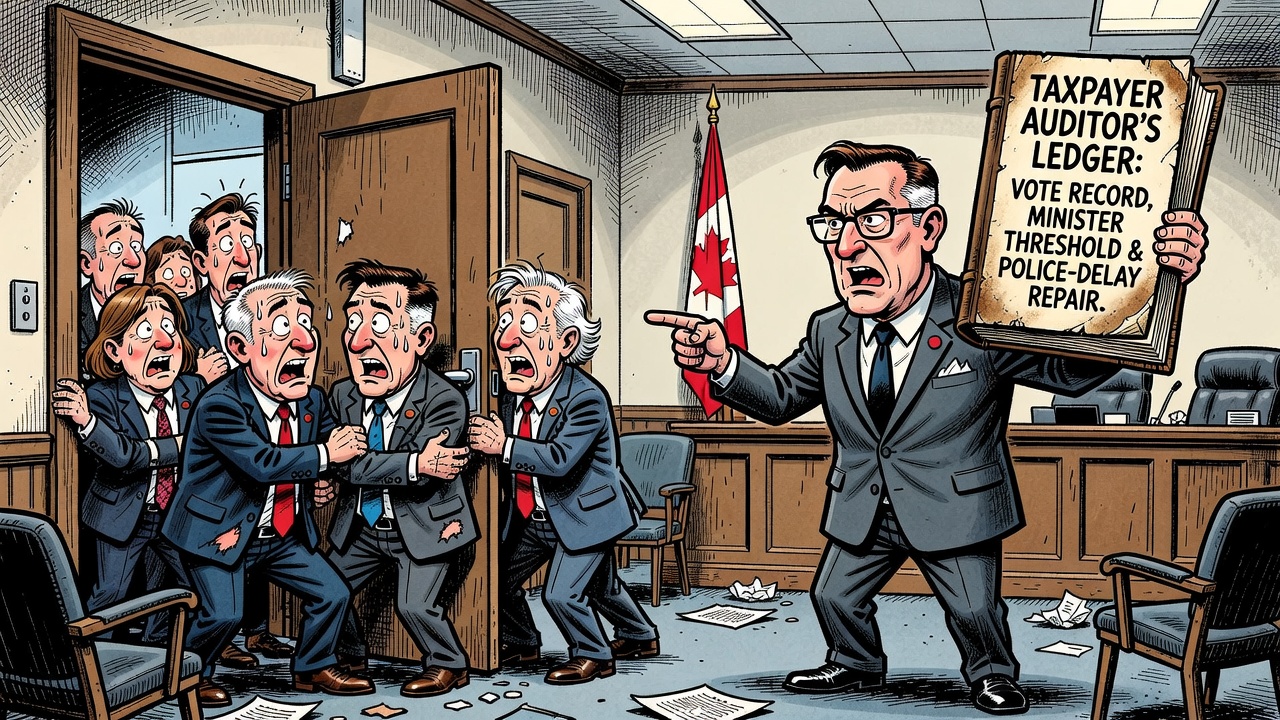
That should have produced a simple accountability hearing: what failed, who knew, when they knew it, and how quickly the government will fix the delay. Police, prosecutors and taxpayers are entitled to know whether intelligence bottlenecks are shrinking or simply being managed with talking points. Instead, The Hub reports that Liberal MPs on the House public accounts committee voted 5-4 three times against calling elected officials to answer questions on the FINTRAC audit.
The blocked invitations reportedly included the parliamentary secretary to the finance minister, the public safety minister, and the parliamentary secretary to the Treasury Board president. After those three defeats, the committee voted 5-4 to adjourn debate and then moved in camera. No final public vote was held on the amended motion to invite the deputy minister of finance.
Deputy ministers matter. Public servants should answer technical questions. But ministerial accountability is not a decoration to be used only when convenient. If a federal agency tied to money-laundering intelligence cannot get requested information to police for nearly four months on average, elected officials responsible for finance, public safety and Treasury Board controls should be willing to explain the repair plan in public.
The Liberal defence, according to The Hub’s account, was that the Auditor General process already bakes in accountability and that deputy ministers are directly responsible for implementation. That answer is too narrow. The Auditor General finds problems; Parliament tests whether the government is fixing them. When MPs shut down elected-witness questions and move behind closed doors, Canadians are left with process instead of answers.
A conservative accountability standard is straightforward. Publish the vote record. Publish the threshold Liberal members say they use for ministerial appearances. Publish FINTRAC’s police-delay baseline, monthly improvement targets, supervisory-risk metrics, responsible minister, responsible deputy, and deadline for full implementation of the Auditor General’s recommendations.
Money laundering is not a partisan game. Neither is terrorist-financing enforcement. If the government believes its fix is credible, ministers should be able to sit at a committee table, defend it, and show the receipts.
- The Hub: Liberal MPs on public accounts committee vote down three bids to question politicians on FINTRAC audit
- Office of the Auditor General of Canada: Opening Statement of Karen Hogan before the Standing Committee on Public Accounts
This article relies on The Hub’s committee-watch reporting and the Auditor General’s October 2026 public statement. It argues for ministerial accountability and does not allege criminal wrongdoing.