Carney’s Poll Bounce Needs a Domestic Receipts Ledger
Canadians may credit Carney abroad. The same poll says the domestic ledger is still missing.
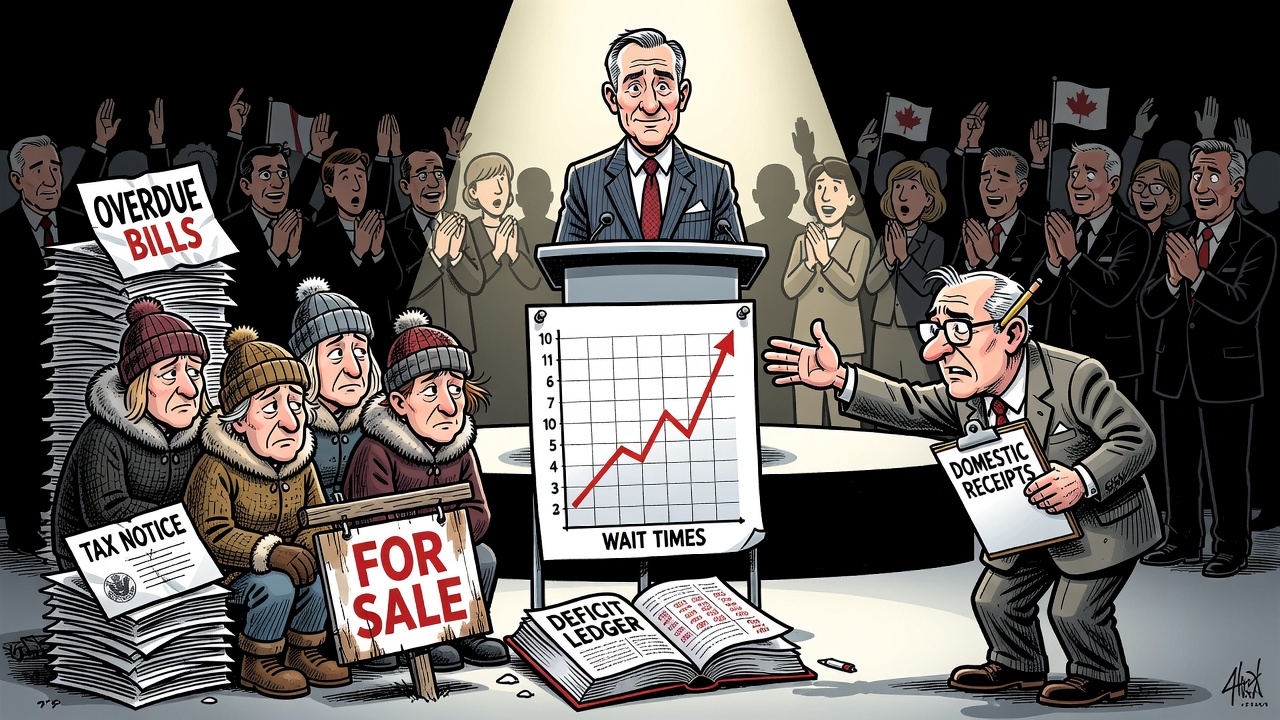
Prime Minister Mark Carney has a real political strength: many Canadians believe he looks competent on the world stage. The new Angus Reid Institute checkup, published November 16, finds 62 per cent say his government has helped Canada’s trade relationships and 60 per cent say it has helped Canada’s standing in the world.
That is not nothing. In a trade-war era, diplomacy matters. A conservative accountability test should be fair enough to admit when voters see a strength. But foreign applause is not a substitute for domestic delivery, and Angus Reid’s own numbers show the gap. On the files Canadians feel at the grocery store, in rent payments, in emergency rooms and on tax bills, the Carney government is either underwater or viewed as having made no meaningful difference.
The poll says 39 per cent believe the government has hurt inflation and the cost of living, compared with 23 per cent who say it has helped. On health care, 28 per cent say hurt and only 13 per cent say helped, while nearly half say no impact. Housing affordability, crime and public safety, and household taxes all draw large “no impact” readings — but among Canadians who do see an effect, the judgment is more negative than positive.
The net-score ledger is even clearer. Angus Reid reports negative scores for government spending and the deficit, household taxes, inflation and cost of living, housing affordability, health care, immigration and crime/public safety. Those are not side issues. They are the core functions of a federal government that promised competent management after a decade of Liberal drift.
Carney still has 58 per cent approval, but that number is down from September. The Liberal vote-intention lead has also narrowed from 14 points to nine. That means the government’s brand is still afloat, but the performance receipts are wearing thin. Voters can admire a prime minister’s airport handshake and still ask why federal spending, taxes, housing, immigration capacity and public safety feel worse or stalled at home.
Ottawa’s answer should not be another slogan tour. It should be a public domestic dashboard: monthly cost-of-living indicators tied to federal action, deficit and spending targets, household-tax impacts, housing starts and completions, health-transfer outcomes, immigration processing and housing-capacity measures, and public-safety results. If ministers want credit for international stature, they should accept measurement on domestic results.
The standard is simple: keep the trade trips if they serve Canada, but publish the receipts that prove families are better off. A prime minister cannot govern indefinitely on global respect while Canadians mark “hurt” or “no impact” on the files that define daily life.
- Angus Reid Institute: The Carney checkup: PM’s government is assessed well on international affairs but less so on Canadians’ core concerns
This article does not allege misconduct. It argues that positive foreign-policy polling should be measured against public domestic delivery receipts on affordability, spending, taxes, housing, health care, immigration and public safety.