Bay of Quinte Deserves the Campaign-Smear Receipts
A riding-level lawsuit over alleged campaign trickery is not proof of wrongdoing. It is, however, a clear reason to publish the receipts.
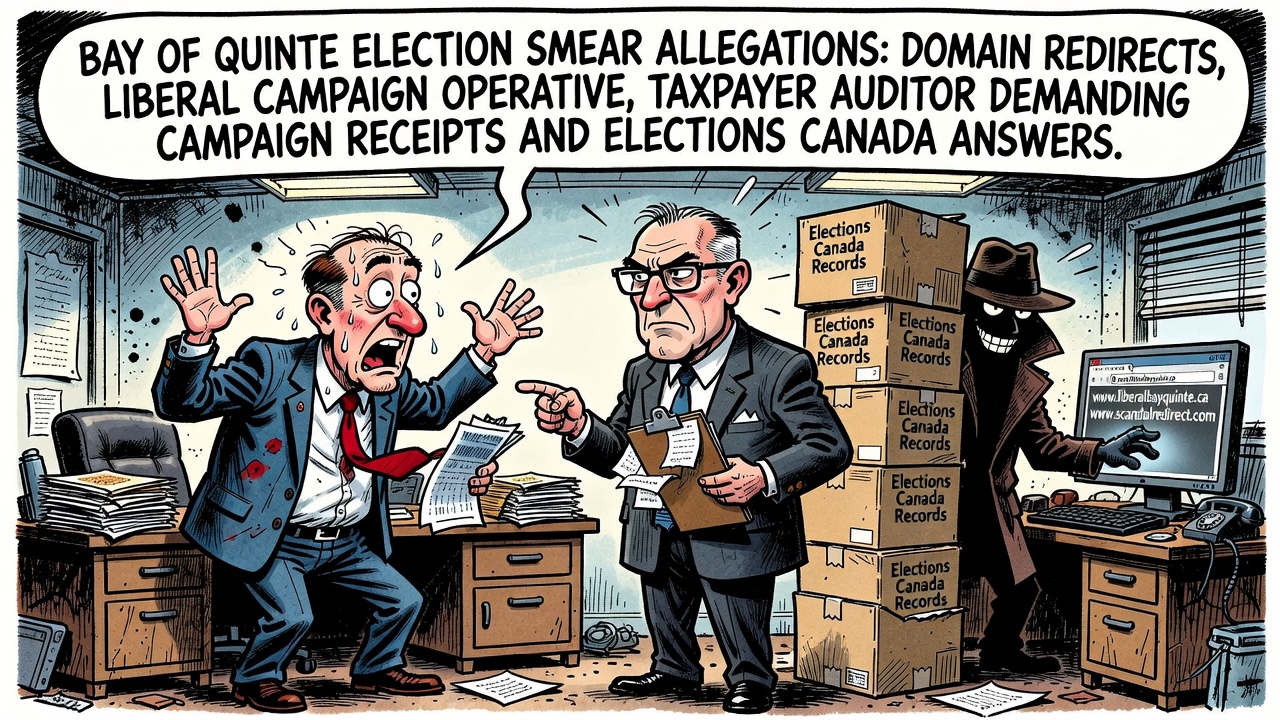
Bay of Quinte voters are entitled to more than partisan finger-pointing after a new report on a lawsuit by defeated Conservative former MP Ryan Williams. Juno News reported Monday that Williams is suing a Liberal Party-affiliated political operative over an alleged election smear involving websites that used Liberal candidate Chris Malette’s name but redirected visitors to Williams’ campaign site.
The allegation, as reported, is simple and serious: domains using Malette’s name were allegedly registered in the Liberal operative’s name, redirected potential Liberal supporters to Williams’ website, and then became the basis for accusing Williams of “dirty tricks.” Williams denies creating the sites. He told Juno that Elections Canada should finish its investigation and that voters should ask the campaign how this happened so it will not happen again.
That is exactly the right standard. A lawsuit is not a verdict, and allegations in court filings are not established facts. But election-integrity questions cannot be brushed aside just because they are local, technical or inconvenient. In a close-enough riding, even a narrative about fake domains and campaign deception can matter. Elections Canada’s official 2025 results show Liberal Chris Malette won Bay of Quinte with 32,846 votes, or 50.4 per cent, while Conservative Ryan Williams received 29,130 votes, or 44.7 per cent — a 3,716-vote margin.
The public should not have to guess who bought what domain, who knew about it, whether any campaign vendor touched the file, or whether any party official benefited from the accusation. Nor should voters have to accept a fog of “no comment” and anonymous online claims. Blacklock’s Reporter’s public excerpt says Malette had no comment on court filings and affidavit claims about a “smear” strategy; the full article is subscriber-only, which makes the need for primary records even stronger.
A conservative accountability approach starts with evidence, not outrage. Publish the statement of claim and any sworn affidavits that can legally be released. Publish the domain-registration records, payment trails, redirect logs, vendor contracts, campaign invoices, volunteer access lists, communications with party officials, and any Elections Canada complaint or response once permitted. If the Liberal riding campaign had no role, the records should help show that. If someone connected to the broader party operation did have a role, voters deserve to know before the story disappears into legal process.
Canada’s elections rely on trust built from verifiable procedures. When a campaign appears to benefit from an accusation about online dirty tricks, and the accused candidate says he did not do it, the answer is not tribal cheering. The answer is a receipt ledger. Bay of Quinte deserves one.
- Juno News: Former Conservative MP sues Liberal operative over alleged election smear job
- Elections Canada: Official Voting Results — 45th general election
- Blacklock’s Reporter: Silent Over Election Affidavit
This article treats the lawsuit and affidavit claims as allegations, not proven facts. It relies on Juno News for the reported lawsuit and domain allegations, Elections Canada for official vote totals, and Blacklock’s public excerpt only for the reported no-comment/court-filing lead.