The $560M Tropical-Forest Loan Needs a Foreign Climate-Finance Receipt Ledger
Before Ottawa calls another overseas climate-finance commitment leadership, Canadians deserve the loan terms, repayment risk and performance receipts.
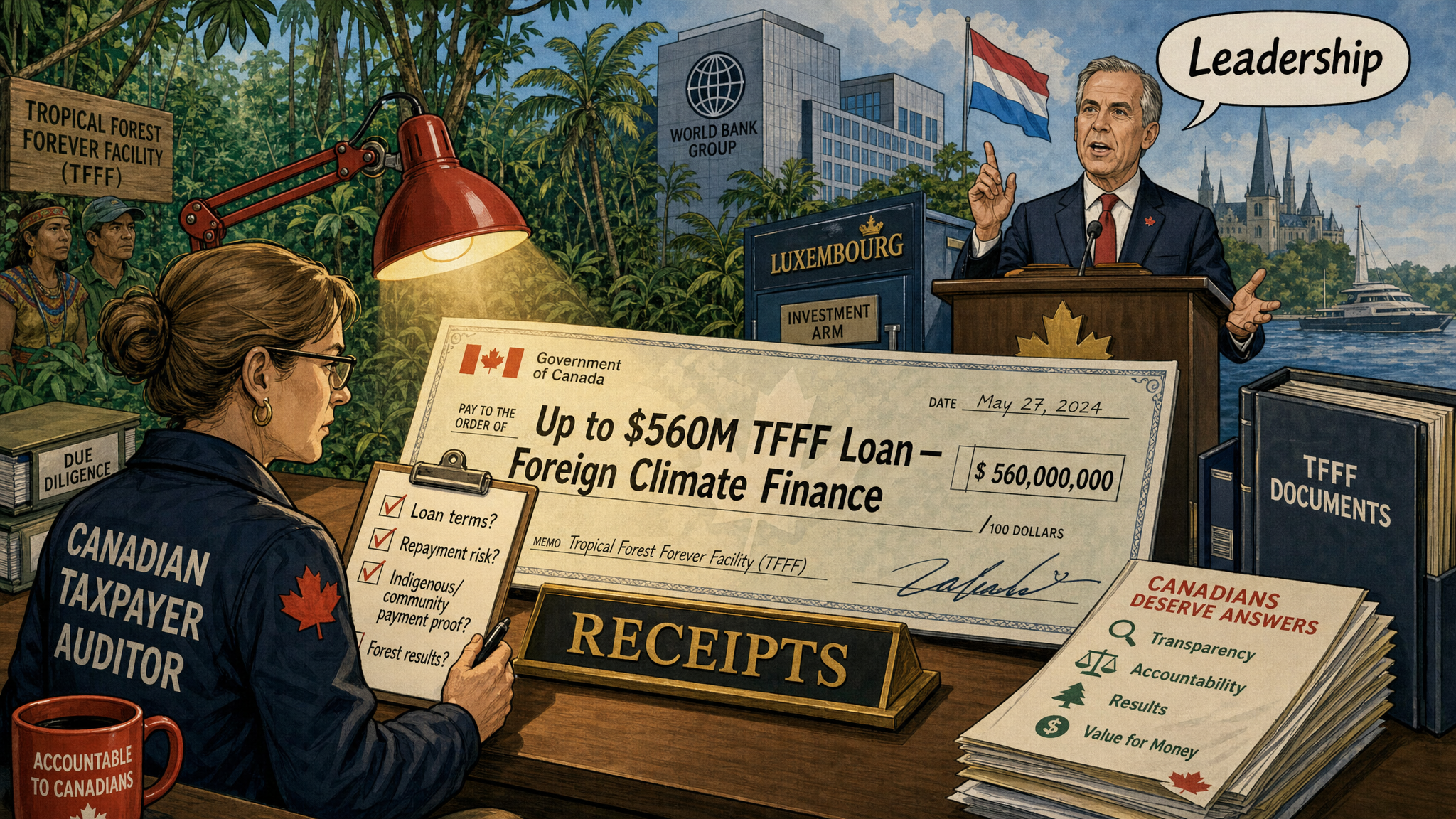
Prime Minister Mark Carney used a Manila meeting with Brazilian President Luiz Inácio Lula da Silva to announce an initial Canadian contribution of up to $560 million over four years to the Tropical Forest Forever Facility. The Prime Minister’s Office says the fund is co-led by Brazil and Norway, aims to protect tropical forests through performance-based conservation payments, and is designed to mobilize public and private capital.
That may sound noble. It is still Canadian taxpayer risk moving overseas, and it deserves a receipt ledger before the government celebrates itself.
Global Affairs Canada describes the contribution as a loan financed from Canada’s international climate-finance envelope, not as a domestic conservation program. The same backgrounder says the World Bank will serve as trustee of the TFFF Financial Intermediary Fund and interim host of the secretariat, while Luxembourg will host the investment arm. The PMO says the facility is trying to mobilize $35 billion in sponsor contributions to attract up to $140 billion in additional private investment.
Those details raise the accountability question, not answer it. What are the loan’s interest rate, maturity, currency exposure, concessional element and repayment assumptions? What happens if investment returns underperform, private leverage fails to arrive, participating countries miss forest-conservation targets, or governance disputes delay payments? How much of the $560 million is truly recoverable, and how much is effectively a subsidy hidden inside climate-finance language?
Ottawa also says conservation payments will be tied to verified results and that at least 20 per cent will go to Indigenous Peoples and local communities. Fine. Publish the verification rules, the satellite or monitoring methodology, the audit rights, the complaint process, the anti-corruption safeguards and the payment trail. If Canadian ministers want credit for helping communities in tropical-forest countries, Canadians should be able to see whether money actually reaches those communities and whether forests are measurably protected.
The conservative standard here is not isolationism. It is stewardship. A government running major deficits, facing housing unaffordability and asking taxpayers to finance one international promise after another should not get applause for a press-release number. It should get questions: why this loan, why now, why this structure, what alternatives were rejected, and what domestic priorities went unfunded?
The Manila announcement happened alongside trade diplomacy in Southeast Asia and renewed engagement with Brazil. Trade relationships matter. Forests matter. But public money does not become immune from scrutiny because a file carries a green label. Climate finance has to meet the same test as defence procurement, industrial subsidies or any other federal spending: publish the terms, publish the risks, publish the outcomes.
Before the Carney government books this as leadership, it should release the foreign climate-finance receipt ledger: the signed loan terms, fiscal cost, repayment-risk analysis, World Bank and Luxembourg governance documents, private-capital leverage assumptions, recipient-country eligibility rules, community-payment verification and annual public reporting schedule. If the deal is as strong as advertised, the receipts should strengthen the case. If the receipts are thin, Canadians will know the difference.
- Prime Minister of Canada: Canada’s contribution to protect tropical forests
- Global Affairs Canada: Tropical Forest Forever Facility backgrounder
- Global News / The Canadian Press: Canada, Brazil announce rainforest-protection project
- Reuters via MarketScreener: Canada pledges up to C$560M for Brazil-led fund
This article does not allege misuse of funds. It argues that a large foreign climate-finance loan requires public loan, governance, verification and repayment-risk receipts.