The After-the-Contract Telesat Screen Needs a Retroactive Receipt Ledger
If the friendship now warrants a formal screen, Canadians deserve to know why the screen was not visible before a $2.3B defence contract moved.
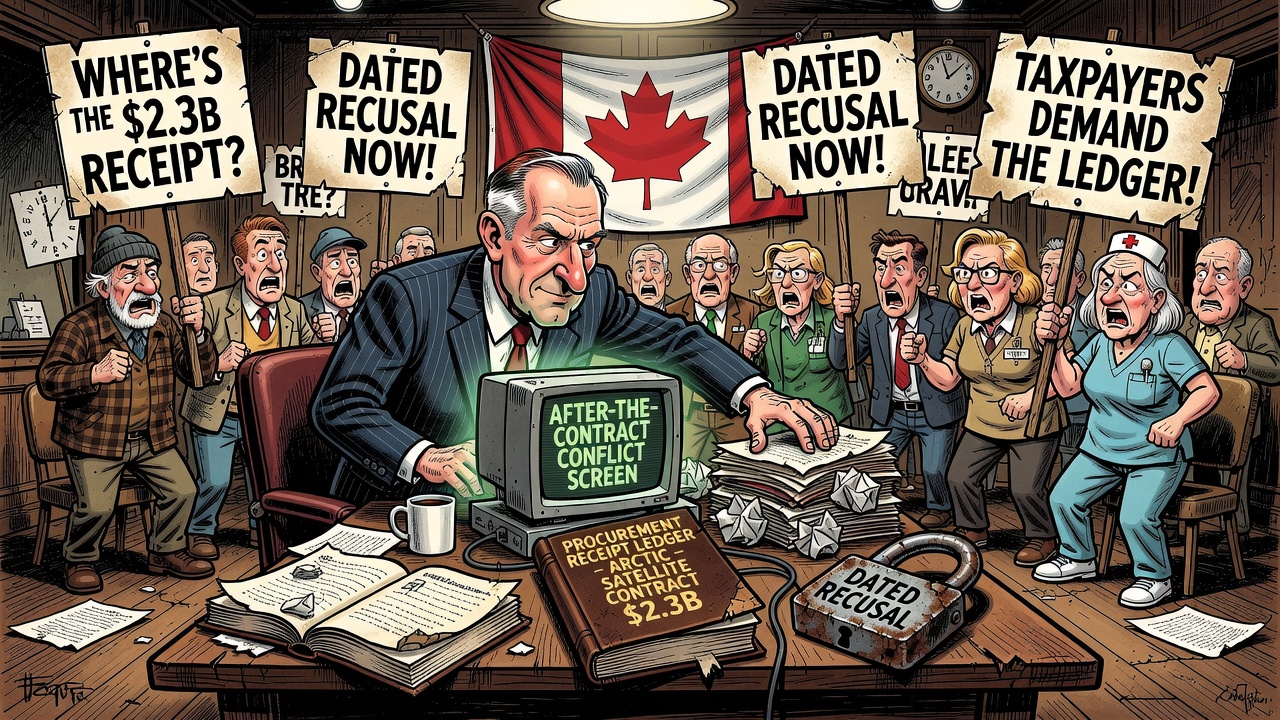
The Telesat file has moved from uncomfortable question to basic accountability test. CTV-reported coverage says Prime Minister Mark Carney asked the federal ethics commissioner on Friday, November 13, to create a conflict-of-interest screen covering Telesat CEO Dan Goldberg, Telesat and its subsidiaries. The report describes Goldberg as a close friend of Carney and frames the request as being made out of an abundance of caution.
Caution is welcome. Timing is the problem.
On August 4, Canada’s Defence Investment Agency announced an initial contract of about $2.3 billion before tax with Telesat LEO ULC for the Enhanced Satellite Communications Project — Polar. The project is tied to secure military satellite communications and Arctic sovereignty. CanadaBuys lists the contract period as July 31, 2026 to September 30, 2033. Telesat’s own SEC-filed release also described the deal as a $2.3 billion services contract for secure Military Ka-band Arctic connectivity.
No one has to allege wrongdoing to see the public problem. A prime minister with a close friendship connected to a major defence supplier should not need opposition pressure, media scrutiny or a post-contract controversy before Canadians learn how the file was firewalled. National security may justify some redactions. It does not justify a blank cheque of trust.
A conservative accountability standard is simple: disclose enough for taxpayers to verify that the decision path was clean. When was the Carney-Goldberg relationship first disclosed to the ethics commissioner, the Privy Council Office and relevant ministers? Was there any written screen before the contract was awarded? Who handled briefings, cabinet discussions, Treasury Board approvals, procurement sign-offs and option-period planning? Which officials or ministers were delegated authority? Did Carney receive any update, oral or written, on Telesat, Lightspeed, Arctic connectivity, satellite procurement or related industrial-policy files?
Those answers can be published without exposing military capabilities. Ottawa can release dates, roles, offices, recusal triggers, delegated decision-makers and contract-governance milestones while redacting operational details. What it cannot credibly do is claim that secrecy itself proves integrity.
The most important question is retroactive: if a Telesat-specific screen is necessary now, why was the public record not clear before the August contract? Canadians are not asking for gossip about a friendship. They are asking for assurance that friendship did not touch procurement judgment, contract oversight, amendments, follow-on decisions or future option periods.
Publish the Telesat screen, the correspondence that created it, the date-stamped disclosure record and a non-operational procurement ledger. A $2.3 billion national-security contract deserves more than an after-the-fact promise.
- CTV report syndicated by CanadaNewsMedia: Carney asks ethics watchdog for Telesat conflict screen
- Government of Canada / Defence Investment Agency: Military communications contract for Arctic sovereignty and national security
- CanadaBuys: Contract history — CW2462679-000
- Telesat SEC filing: Telesat press release filed with SEC
- Rebel News: Ethics Commissioner pressed on Carney’s Telesat friend
This article distinguishes reported friendship and screen details from official procurement records. It does not allege criminal conduct; it demands public conflict-screen and procurement receipts.