Pearson Bag-Tag Scandal Needs a Security-Clearance Ledger
Ottawa wants broader clearance powers after reported tag-switching cases. The missing piece is proof the airport-security system will actually catch insider risk.
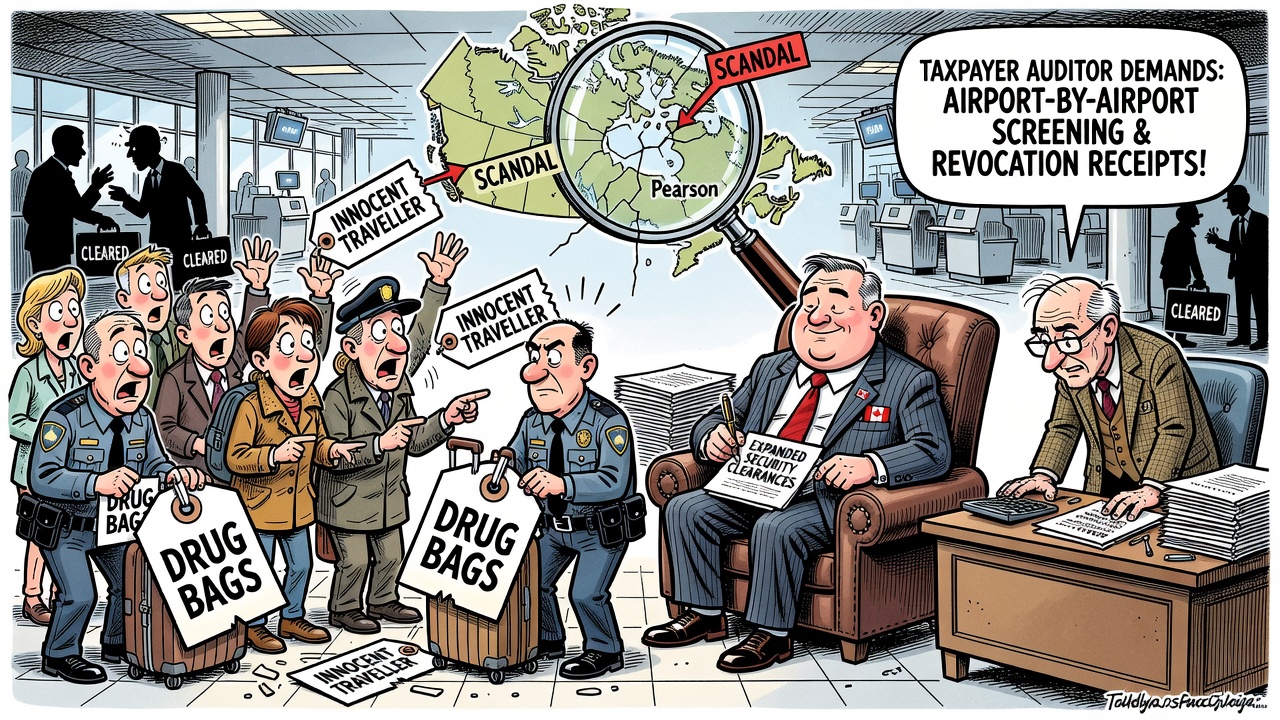
CTV’s W5 investigation, republished by Yo! Vancouver, describes a simple but devastating airport-insider scheme: an employee allegedly removes a tag from an innocent traveller’s luggage and attaches it to a drug-filled bag headed to the same destination. If police intercept the suitcase overseas, the passenger whose name is on the tag can be the one detained.
The report says W5 identified more than two dozen Canadian-linked cases, almost all involving flights out of Toronto Pearson, and says the RCMP told W5 that 16 Pearson workers had been arrested over five years, mostly in drug-related cases, with at least five tied to tag-switching schemes. Those are allegations and reported figures, but the public-safety question is not hypothetical.
The RCMP’s own July 2025 release describes two Swissport baggage handlers charged after an investigation at Pearson involving baggage tag switching. Police said a French national was detained in Paris after cannabis arrived from Canada, was later released without charges, and investigators alleged the tags had been manipulated without the passenger’s consent.
Now Ottawa is reaching for new powers through Bill C-39, the Building Canada Strong Act. Parliament’s LegisInfo page says the bill is at consideration in House committee. The bill text would let the Transport Minister grant, suspend or cancel security clearances for purposes related to transportation security or safety, the integrity of the national transportation system, public safety, or other purposes set by order. It would also permit information-sharing arrangements about security clearances with foreign governments and international organizations.
There is a conservative case for stronger screening when organized crime can exploit trusted airport positions. But there is also a conservative warning: wider ministerial power without public performance metrics is how governments convert failure into discretion and call it reform.
Transport Canada’s own consultation paper admits the current Transportation Security Clearance program is built mainly around traditional transportation-security risks and says that scope limits the department’s ability to consider links to organized crime or patterns of suspicious activity. That is an admission of a design gap. Canadians should not be asked to applaud the fix until Ottawa publishes the baseline.
The baseline should be airport by airport: how many workers require clearances, how many applications were refused, suspended or cancelled, how many were reviewed after police intelligence, how many tag-switch cases were confirmed or alleged, how often restricted-area access was audited, and what due-process safeguards protect workers from secret, unchallengeable blacklists.
Airport security is not a branding exercise. If innocent travellers can be exposed to foreign detention because insiders abused access at Canada’s busiest airport, the answer is not just “trust the minister.” Publish the clearance ledger, the revocation ledger, the tag-switch case ledger and the appeal ledger before Bill C-39 hands Ottawa more power.
- CTV News/W5 via Yo! Vancouver: Federal government plans sweeping airport security changes after CTV News investigation
- Transport Canada: Discussion paper on strengthening transportation security clearances
- Parliament of Canada: Bill C-39 status
- Parliament of Canada: Bill C-39 first reading text
- RCMP: Swissport baggage handlers charged in alleged tag-switching case
This article attributes investigative findings to CTV/W5 and distinguishes reported allegations from official RCMP and parliamentary records.