The ASEAN-Philippines Trade Deal Needs a Treaty-Text Ledger
Trade diversification can be necessary. Closed-door trade packages still need public receipts before Canadians are asked to accept the bill.
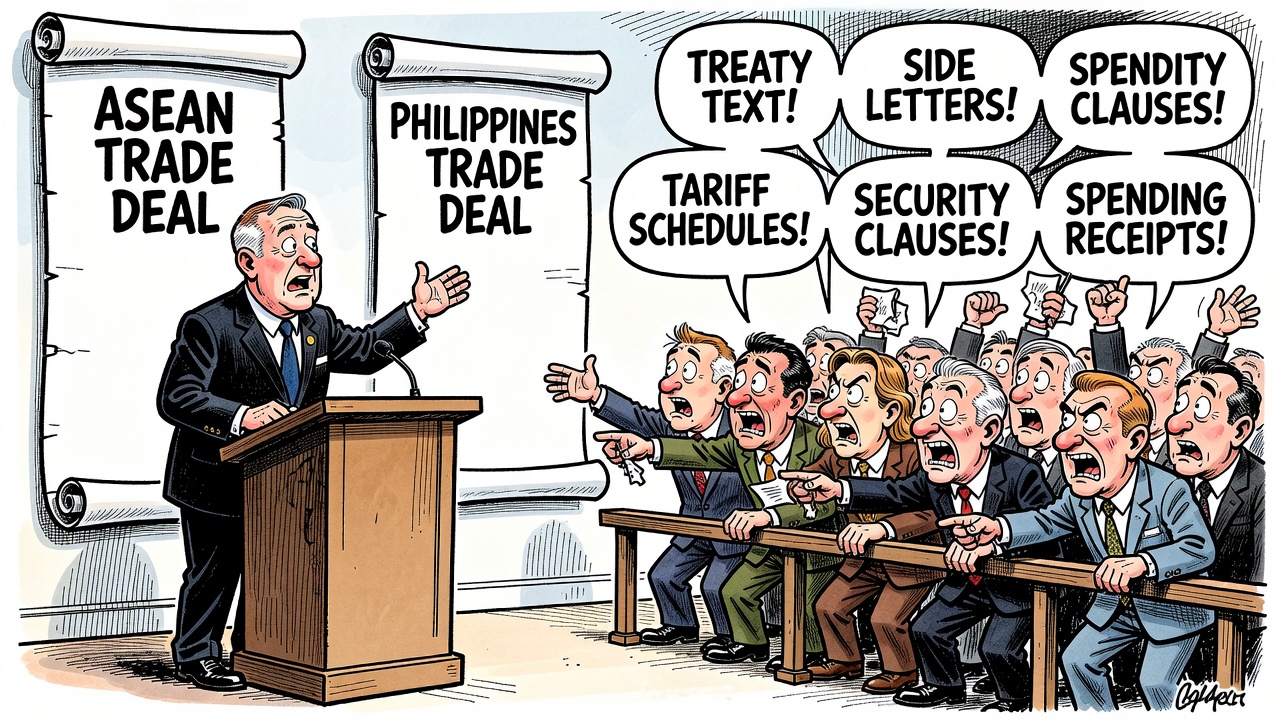
Prime Minister Mark Carney is selling the new ASEAN and Philippines trade announcements as speed, ambition and sovereignty. Canadians should answer with a simple conservative accountability test: show us the text.
On November 14, the Prime Minister’s Office announced that Canada had substantially concluded negotiations toward an ASEAN-Canada free trade agreement and had concluded negotiations for a Canada-Philippines free trade agreement. Ottawa says ASEAN represents almost 700 million people and an economy close to $6 trillion, and claims the ASEAN deal could add nearly $2 billion to Canadian GDP and nearly 14,000 Canadian jobs once in force. It also says the Philippines agreement could help triple Canadian exports to that country by 2035.
Those are big claims. They may even point in the right direction. Canada does need more customers and less dependence on one trading partner, especially while U.S. trade politics remain unstable. But diversification is not a permission slip for government-by-news-release. If the gains are real, the documents should make the case.
The same announcement includes money. Ottawa is promising $5 million in assistance to support ASEAN ratification and benefit-sharing. A related PMO backgrounder lists more than $15.9 million in ASEAN-related spending across technical assistance, law-enforcement training, the ASEAN Power Grid, nuclear-security training and ocean protection. For the Philippines, Carney announced another $26 million for nuclear regulation, climate-resilient agriculture, infrastructure-investment readiness and coastal community resilience.
That means this is not only a trade story. It is a treaty, spending, procurement, security and implementation story. Before signature in 2027, Canadians should see the full treaty text, tariff schedules, rules-of-origin details, procurement exposure, labour-mobility provisions, dispute-settlement rules, side letters and implementation costs. Parliament should also get the sector-by-sector winners-and-losers analysis, not just the headline GDP number.
The security angle needs receipts too. The PMO tied the Philippines visit to closer defence cooperation, a new cyber-security dialogue, customs-cooperation steps, sensitive-information protections and the extension of Canada’s Dark Vessel Detection program until 2033. Those may be defensible initiatives. But when trade access, critical infrastructure, cyber cooperation, nuclear promotion and maritime-security projects move together, taxpayers deserve clear guardrails on data sharing, foreign influence, dual-use technology and contractor selection.
A responsible government would publish the treaty-text ledger before asking Canadians to applaud. That ledger should include the legal text, side letters, tariff-line changes, affected sectors, subsidy and technical-assistance contracts, security clauses, ratification timetable and annual reporting requirements. Trade can be pro-growth without being opaque.
Carney says these deals create more choice and more customers. Fine. Then give Canadians more facts.
- Prime Minister of Canada: Canada concludes negotiations for two new free trade agreements with the Philippines and ASEAN
- Prime Minister of Canada: Prime Minister Carney strengthens Canada’s partnerships with ASEAN and the Philippines
- Associated Press: Canada’s Carney says he’s been in touch with Trump while working on US trade deal
This article supports trade diversification while applying a public-receipts standard to treaty text, implementation spending and security commitments.