CIPO Modernization Needs a Cost-and-Pendency Ledger
Ottawa talks constantly about innovation. Innovators should not have to wait years while an over-budget modernization story is answered with slogans.
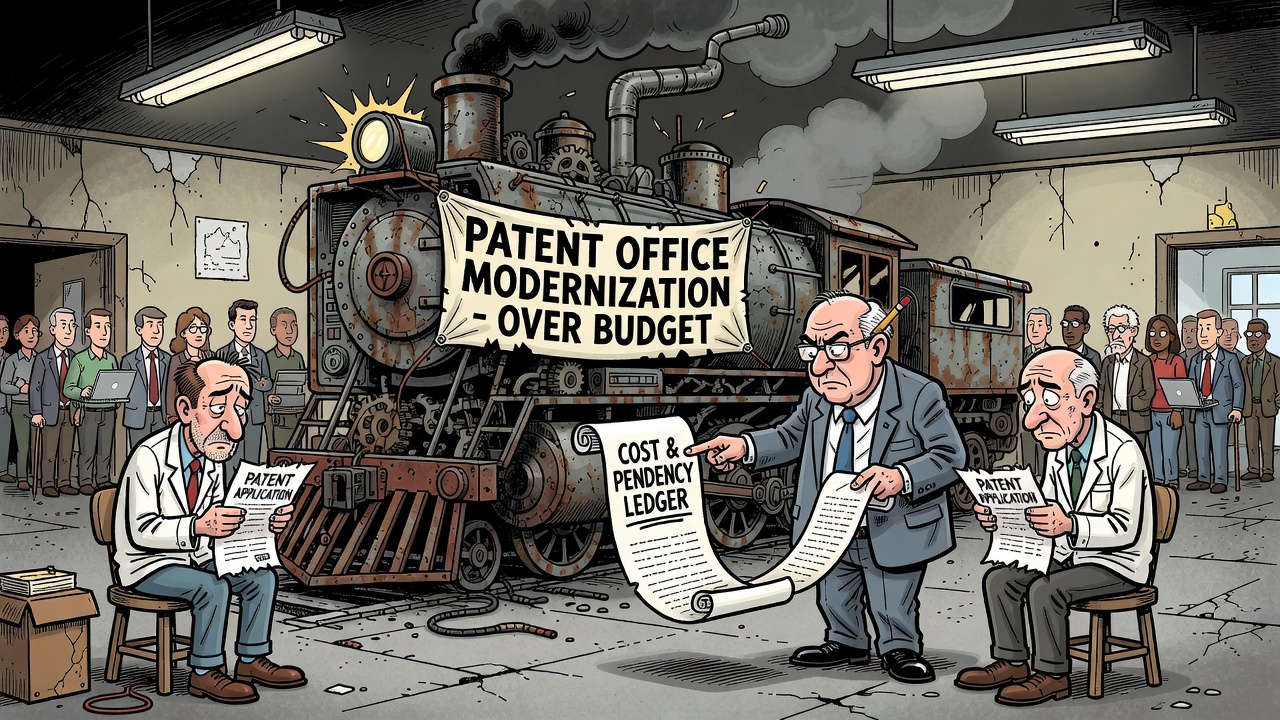
Canada cannot build a serious innovation economy if the federal system that protects inventions moves at the speed of a basement filing cabinet. Patents are not paperwork trivia. For start-ups, manufacturers, researchers and investors, a granted patent can decide whether an idea attracts capital, gets licensed, or dies waiting for Ottawa.
That is why the Canadian Intellectual Property Office’s latest numbers deserve more attention. CIPO’s 2025–2026 annual report, tabled in Parliament on October 23, says digital modernization continued, including work on the Next Generation Patents system. But the same report lists the average time from request for examination to patent grant at 40.3 months, up 9.5 months from 30.8 months in 2024–2025.
Blacklock’s Reporter separately reported on November 5 that a patent-office modernization plan ran two years late and 114 percent over budget, citing Department of Industry disclosure requested by Conservative MP Arnold Viersen. That allegation should not disappear into Ottawa fog. If the figures are wrong, ISED should correct them publicly. If they are right, taxpayers and inventors deserve the ledger.
The official CIPO release strikes an optimistic tone, saying the office reduced patent backlogs, modernized key services and expanded support for entrepreneurs. Fair enough: some progress may be real. The annual report also says CIPO used a “Patent Operations Blitz” after the staged launch of Next Generation Patents, with staff processing more than 33,000 tasks to address growing inventories.
But a blitz is not a business case. If modernization temporarily affected processing timelines, Canadians should know the cost, cause and recovery plan. CIPO’s report even notes that certain patent-related statistics were unavailable for the reporting period because of modernization of patent information systems. That is exactly when public reporting should get sharper, not blurrier.
Conservatives should be clear about the standard. Modernizing a patent office is not automatically wasteful. Old systems do need replacement. The problem is spending public money on a promised upgrade while service times worsen and basic performance data goes missing. That is how federal IT projects lose public trust: not only through overruns, but through the absence of plain, monthly receipts.
ISED and CIPO should publish a patent modernization cost-and-pendency ledger: original budget, final cost, schedule changes, contractor list, change orders, known defects, unavailable-data explanations, and month-by-month targets for reducing patent pendency. Include service standards, backlog counts, examiner capacity and what will be reported to Parliament until the system stabilizes.
Innovation policy is not a press release. If Ottawa wants Canadians to build, invent and compete, the patent office should prove it can deliver rights on time and explain every dollar spent getting there.
- Blacklock’s Reporter: November 2026 accountability reporting by Tom Korski
- CIPO: CIPO releases its 2025–2026 Annual Report
- CIPO / ISED: 2025–2026 Annual Report, Canadian Intellectual Property Office
This article attributes the over-budget and late-project claim to Blacklock’s reporting and uses official CIPO materials for the patent-pendency, modernization and reporting-period details.