Public-Safety Claims Need a Violent-Crime Outcomes Ledger
Do not cherry-pick either old spikes or one-year improvements. Publish the public-safety scoreboard Canadians can test.
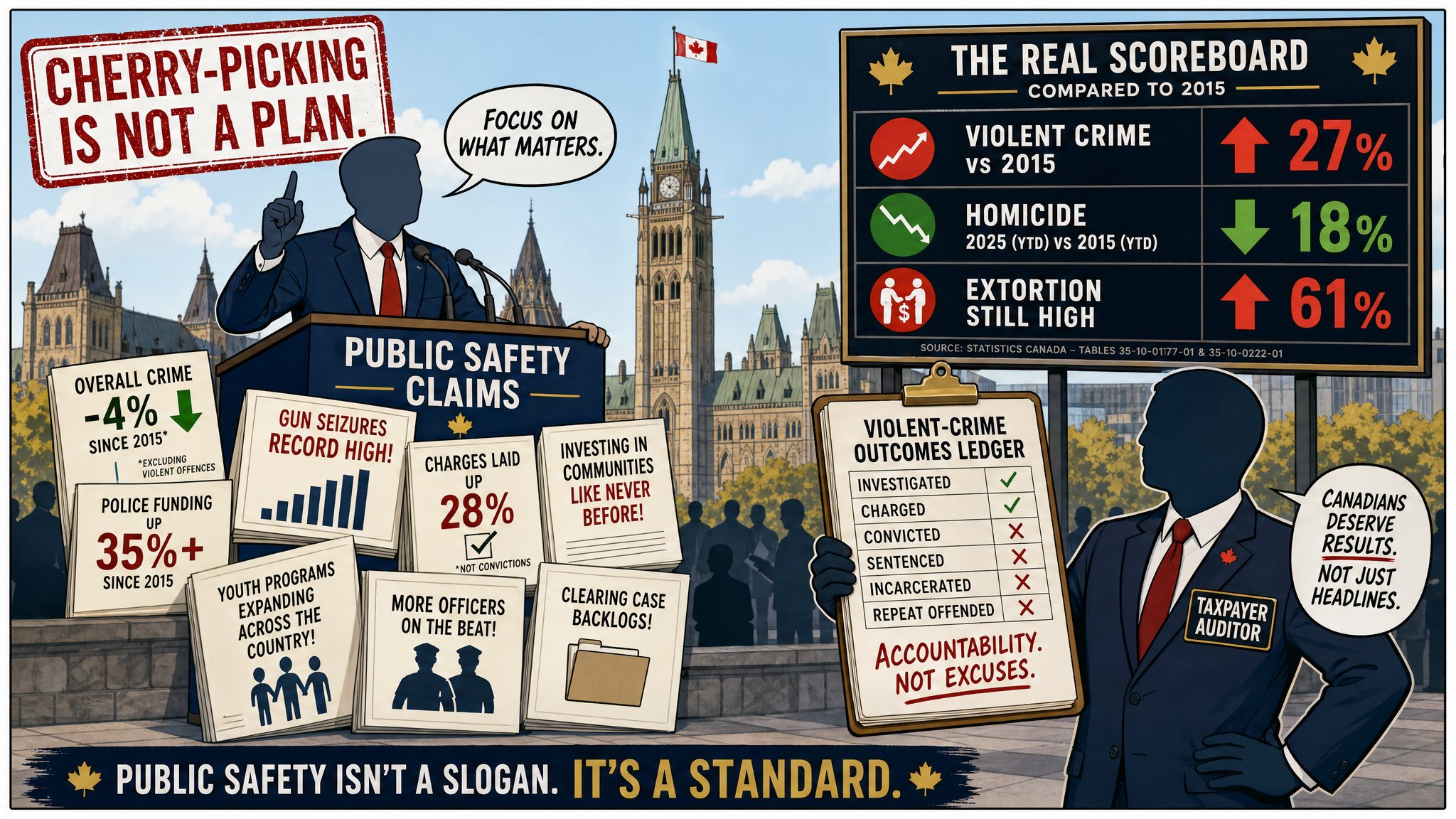
Ottawa’s public-safety message now has two temptations: quote the worst decade-long increases when it suits one side, then point to one-year improvements when it suits the other. Canadians deserve better than duelling talking points. They deserve a violent-crime outcomes ledger.
The immediate trigger is a November 11 SooToday report on Secretary of State for Combatting Crime Ruby Sahota’s response to Conservative-cited crime statistics and Budget 2026 public-safety claims. The report says Conservatives cited increases since 2015 across violent crime, firearms offences, homicides, gang-related homicides, sexual assaults, auto thefts and extortions, and called for repeal of Bill C-5 and Bill C-75. Sahota pointed to six public-safety bills and said the bail-and-sentencing reform has been in effect since July 15. SooToday reported that she did not present her own statistics in that reply.
That is the accountability gap. If ministers say the government is acting, the next sentence should be the scoreboard. What was the 2015 baseline? What is the 2025 rate? Which trends changed before the July 15 bail-and-sentencing provisions came into force? Which trends should be judged only after the reforms have enough time to show results?
Statistics Canada’s 2025 police-reported table gives both sides facts they should not cherry-pick. Compared with 2015, the total violent-crime rate was 35 per cent higher. Extortion was 240 per cent higher. Firearm use, discharge or pointing was 74 per cent higher. Level-one sexual assault was 52 per cent higher. Those are serious public-safety signals, not partisan theatre.
The same StatCan release also shows why slogans are not enough. The homicide rate fell 16 per cent from 2024 to 2025 and was 5 per cent lower than in 2015. Motor-vehicle theft fell 16 per cent in 2025 and was 9 per cent lower than in 2015. StatCan also cautions that police-reported data can be affected by reporting behaviour, police practices and resources, public awareness and legislative changes. In other words, the numbers matter, but they need context.
Justice Canada says the 2026 bail-and-sentencing reforms created a tougher bail regime, new sentencing rules for repeat violent offences, firearms crimes, extortion, human trafficking, motor-vehicle theft and organized retail theft, plus changes aimed at protecting victims and witnesses. If those reforms are as important as Ottawa says, the government should be eager to measure them.
The conservative accountability test is simple: stop hiding behind either fear or reassurance. Publish a quarterly public-safety outcomes ledger with the 2015 baseline, 2024 and 2025 rates, post-July-15 bail decisions, repeat-offender releases, bail breaches, violent reoffending, extortion and firearm trends, court-delay impacts, victim-safety outcomes, border-gun and fentanyl seizures, and provincial implementation gaps.
Canadians can handle a mixed picture. What they should not accept is a ministerial answer that says “trust our bills” without posting the results. If Ottawa claims its public-safety agenda works, publish the receipts.
- SooToday: Federal minister responds to stats showing increase in violent crime
- Statistics Canada: Police-reported crime statistics in Canada, 2025
- Statistics Canada: Table 5: Police-reported crime for selected offences, Canada, 2015, 2024 and 2025
- Department of Justice Canada: Canada’s sweeping bail and sentencing reforms become law
This article relies on police-reported data and argues for public measurement. It does not claim national police-reported trends capture every unreported offence, community experience, court outcome or victim impact.