The Air-Passenger Backlog Ledger: $76M Spent, 100,000 Complaints Waiting
Before Ottawa moves the backlog to private dispute resolution, Canadians deserve the spending, performance-pay, enforcement and passenger-cost receipts.
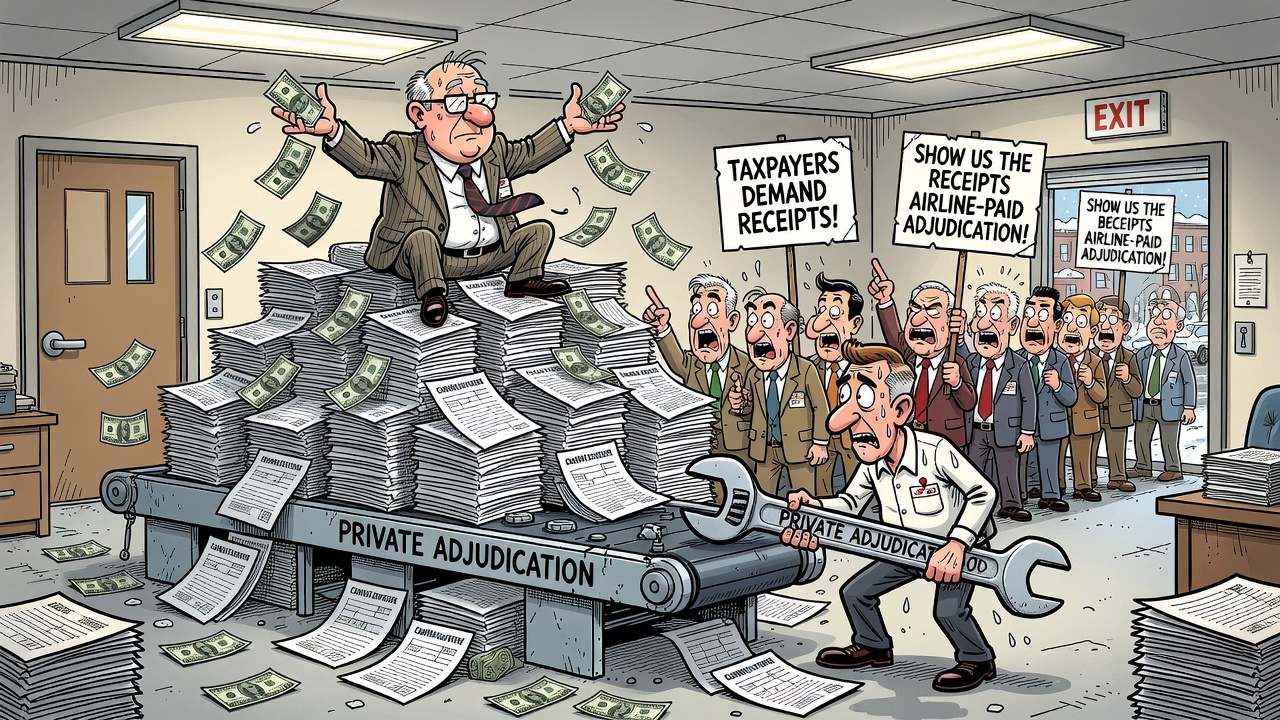
Air passengers were promised rights. What they got was a backlog.
Transport Canada said in May that nearly 100,000 Air Passenger Protection complaints were sitting before the Canadian Transportation Agency and that the number was still growing. That is not a rounding error. It is a federal service failure affecting travellers who already paid for flights, endured delays or cancellations, and then waited again for the system meant to protect them.
The accountability question is simple: what happened to the money? The Canadian Transportation Agency’s 2024-25 results report says Budget 2023 provided $75.9 million over three years to increase complaint-processing capacity. At the Finance Committee’s October 26 meeting on Bill C-31, Conservative MP Dan Albas pressed Transport Minister Steven MacKinnon on that funding and asked what went wrong, who was held accountable, and whether anyone responsible received performance pay or bonuses.
The Hub reported that MacKinnon did not directly answer whether anyone at the CTA had been held accountable, or whether anyone involved received bonuses. He said the CTA had “proven incapable” of materially reducing the backlog and pointed to a complicated, costly regulatory structure. That may explain part of the failure. It does not close the ledger.
Now Ottawa’s solution is to change the machinery. Transport Canada says the government plans to clear the backlog through a neutral third-party dispute resolution organization, remove confidentiality obligations on passengers, shift regulation-making power toward the minister, and increase enforcement powers so systemic violations can face fines of up to $1 million. Its briefing material also says possible future paths include airline-contracted dispute firms, minister-procured dispute resolution, or the CTA continuing the work.
Some reform may be necessary. A 100,000-case backlog is not proof that the old model works. But a conservative accountability standard does not let government fail with public money, declare the agency incapable, and then move the file to a new structure without first publishing the post-mortem. If airlines pay private adjudicators, passengers also deserve protection against cost pass-through and conflict-of-interest risk.
So publish the air-passenger backlog ledger: the $75.9 million spending plan, quarterly complaint targets, cases opened and closed, average processing time, staffing levels, contractor costs, bonus and performance-pay records, fines issued under existing powers, reasons milestones were missed, and the full cost model for the new dispute system.
The passenger-rights regime should not become another Ottawa loop: announce rights, underfund or mismanage delivery, spend millions, blame complexity, and outsource the mess. Travellers deserve compensation when airlines break the rules. Taxpayers deserve receipts when government promises to enforce them.
- The Hub: Transport minister tells finance committee no answer on who was accountable for complaint backlog
- House of Commons Finance Committee: FINA meeting 56 transcript, October 26, 2026
- Transport Canada: Plan to clear the air travel complaints backlog
- Canadian Transportation Agency: Departmental Results Report 2024-2025
- Transport Canada briefing binder: Canada’s Air Passenger Rights Regime
This article argues for public spending transparency and traveller accountability. It does not allege unlawful conduct by individual public servants.