Stellantis’ Brampton Sale Needs a Taxpayer Clawback Ledger
If Ottawa says Stellantis breached public-funding obligations, Canadians deserve the agreement clauses, clawback math, job guarantees and enforcement timeline.
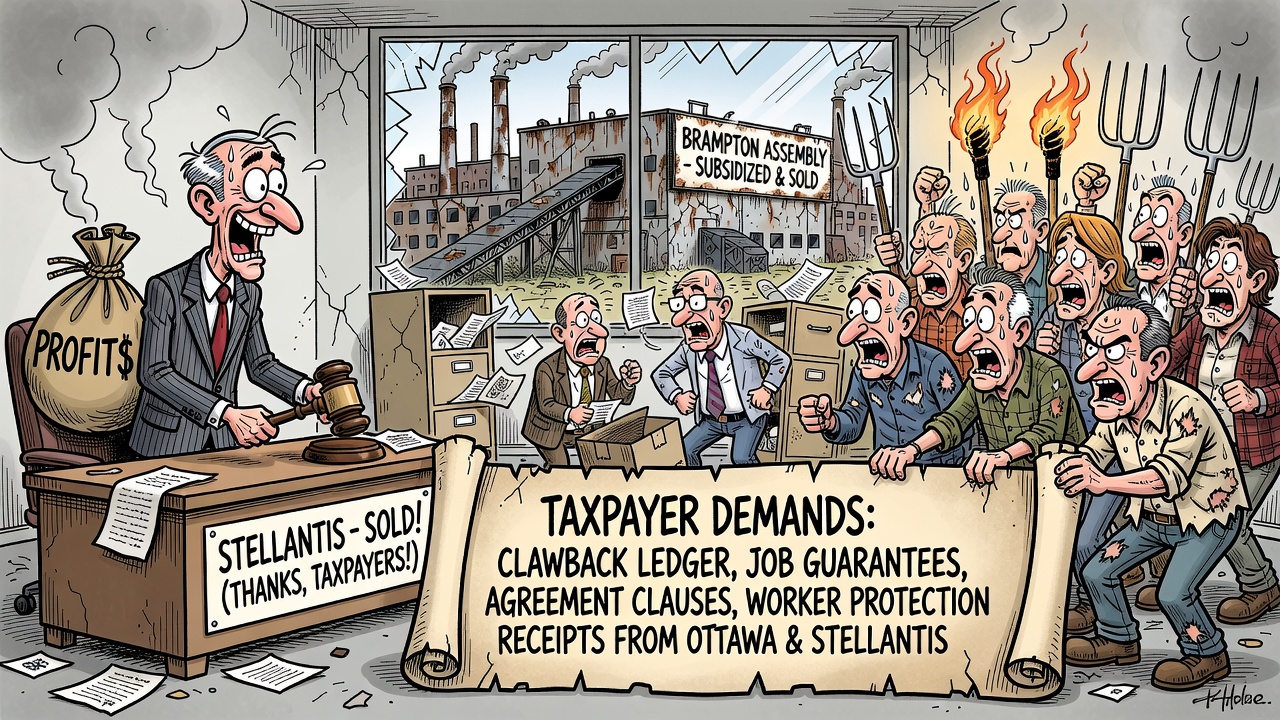
Stellantis’ deal to sell the idled Brampton Assembly Plant to Roshel is exactly the kind of industrial-policy moment where Ottawa’s promises must meet the ledger. The issue is not whether Roshel, a Canadian defence manufacturer, can put the site back to productive use. The issue is whether taxpayers and workers were protected before a subsidized auto-footprint commitment turned into a sale announcement.
Stellantis and Roshel announced on November 9 that Roshel would acquire the Brampton plant and associated equipment for an undisclosed amount. Their release said the companies would also explore defence-industry collaboration, and that the transaction is expected to close by the end of 2026, subject to conditions including applicable government and regulatory requirements.
That is a major shift for a plant that had been slated for Jeep production after retooling. Global News reported that more than 2,000 workers were laid off when the Brampton plant halted operations in 2023, that retooling began in early 2024, and that Stellantis later paused the plan before moving Jeep Compass production to Illinois. Global also reported that Roshel may offer opportunities for roughly 700 to 1,000 laid-off Stellantis workers, but the public still lacks a binding worker-transition ledger.
Prime Minister Mark Carney called the sale “unacceptable” and a “betrayal,” saying it violated obligations under several agreements and that Ottawa would enforce Canada’s rights to protect workers and public funds. Stellantis told Global it had offered to voluntarily return government support received for Brampton’s original retooling plan, while citing confidentiality provisions for further details.
That answer is not good enough. If the government can say there are breached obligations, then Canadians deserve to know the non-commercially sensitive basics: which agreements, which clauses, how much public money was paid, how much is being returned, what formula determines the clawback, who approved the original subsidy terms, and what enforcement clock is now running.
The broader context makes that disclosure unavoidable. Global reported that a 2023 joint federal-Ontario commitment totalled $15 billion over 10 years and included obligations to maintain Stellantis’ Ontario footprint through 2035, including Brampton. When governments write industrial-policy cheques that large, they cannot hide the accountability mechanism behind confidentiality after the jobs disappear.
A conservative accountability standard is simple: public money must come with public milestones, enforceable clawbacks and named decision-makers. Ottawa should publish a Stellantis Brampton clawback ledger before the sale closes: the funding agreements, footprint obligations, missed milestones, repayment offer, legal options, worker guarantees, Thursday stakeholder agenda and any government approvals still required.
If the Liberals want credit for defending autoworkers, they should show the contract receipts. If they want credit for recovering taxpayers’ money, they should show the calculation. Anything less turns “we will enforce our rights” into another press-conference slogan.
- Global News: Stellantis’ agreement to sell Brampton plant a “betrayal,” Carney says
- Global News: Stellantis signs deal with Roshel to sell idled Brampton assembly plant
- Stellantis / SEC filing: Stellantis and Roshel sign agreement for sale of Brampton Assembly Plant
This article argues for public disclosure, clawback enforcement and worker-protection accountability. It does not allege unlawful conduct by Roshel, Stellantis, workers, ministers or public servants.