Ottawa’s $4.5B COVID Benefit Write-Off Needs a Recovery Ledger
A clean audit opinion does not erase billions in pandemic write-offs, CEBA losses, pay errors and Defence inventory failures.
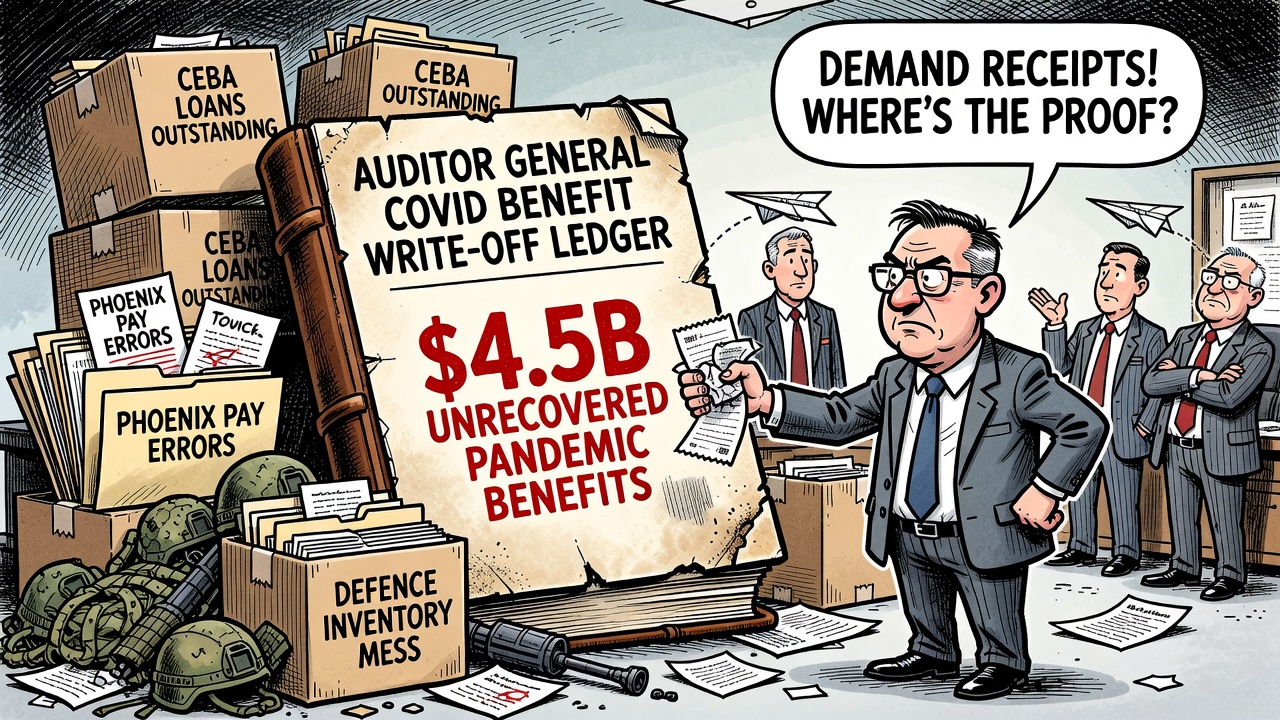
The Auditor General gave Ottawa a clean opinion on the 2025–26 consolidated financial statements. That is useful, but it is not a clean bill of management. The same watchdog package says the federal government wrote off approximately $4.5 billion in COVID-19 benefits it had paid out and will not recover. That is not a rounding error. It is a pandemic spending ledger being closed at taxpayer expense.
The problem is bigger than one number. The Office of the Auditor General also reported $7.2 billion in Canada Emergency Business Account loans still outstanding, with $5.6 billion considered likely not collectable. The Department of Finance’s annual report says Ottawa ended the year with a $39.3 billion operating deficit and a $1.306 trillion accumulated deficit. In that context, every unrecovered billion matters.
Conservatives should be careful here: emergency programs were built under pressure, and many Canadians and small businesses needed help quickly. But speed cannot become a permanent excuse for weak verification, slow recovery and quiet write-offs years later. If the government has decided particular debts cannot be collected, Canadians deserve to know why, by program, by department, by reason and by year.
CityNews, citing the Canadian Press, reported that the COVID-benefit write-off jumped from $26 million the previous year to $4.5 billion in 2025–26. That kind of increase demands more than a footnote. Ottawa should publish how much was linked to ineligibility, insolvency, hardship remission, administrative error, statute-barred collection, death, bankruptcy or a cost-benefit decision not to pursue recovery.
The same audit commentary points to a broader control culture. Pay problems remain unresolved as Ottawa prepares to move from Phoenix to Dayforce in July 2027. Audit testing found 18% of sampled employees had basic or acting-pay errors, most tied to processing delays. National Defence inventory accounting has now been a problem for 23 straight years, with inventory errors understating the annual deficit by an estimated $751 million.
That is the pattern: spend first, reconcile later, explain last. A responsible government would publish a recovery dashboard showing amounts paid, reviewed, deemed ineligible, recovered, remitted, written off and still outstanding. It would separate fraud from honest error. It would show collection costs, appeals, hardship decisions and department-level accountability. It would also set deadlines for Phoenix/Dayforce readiness and Defence inventory cleanup.
A clean audit opinion means the statements can be relied on. It does not mean taxpayers should shrug at a $4.5 billion write-off. The receipts now belong on the table.
- Office of the Auditor General: Federal Auditor General highlights important observations on the government’s financial reporting
- Office of the Auditor General: Commentary on the 2025–2026 Financial Audits
- Department of Finance Canada: Annual Financial Report of the Government of Canada, Fiscal Year 2025–2026
- The Canadian Press via CityNews: Ottawa wrote off $4.5B in COVID benefit repayments last year
This article argues for public disclosure and stronger recovery controls. It does not allege unlawful conduct by any specific recipient.