Marc Miller’s China Mission Needs a Contractor Ledger
Two China-based vendor records tied to a Canadian trade mission deserve statements of work, security screens and deliverable receipts.
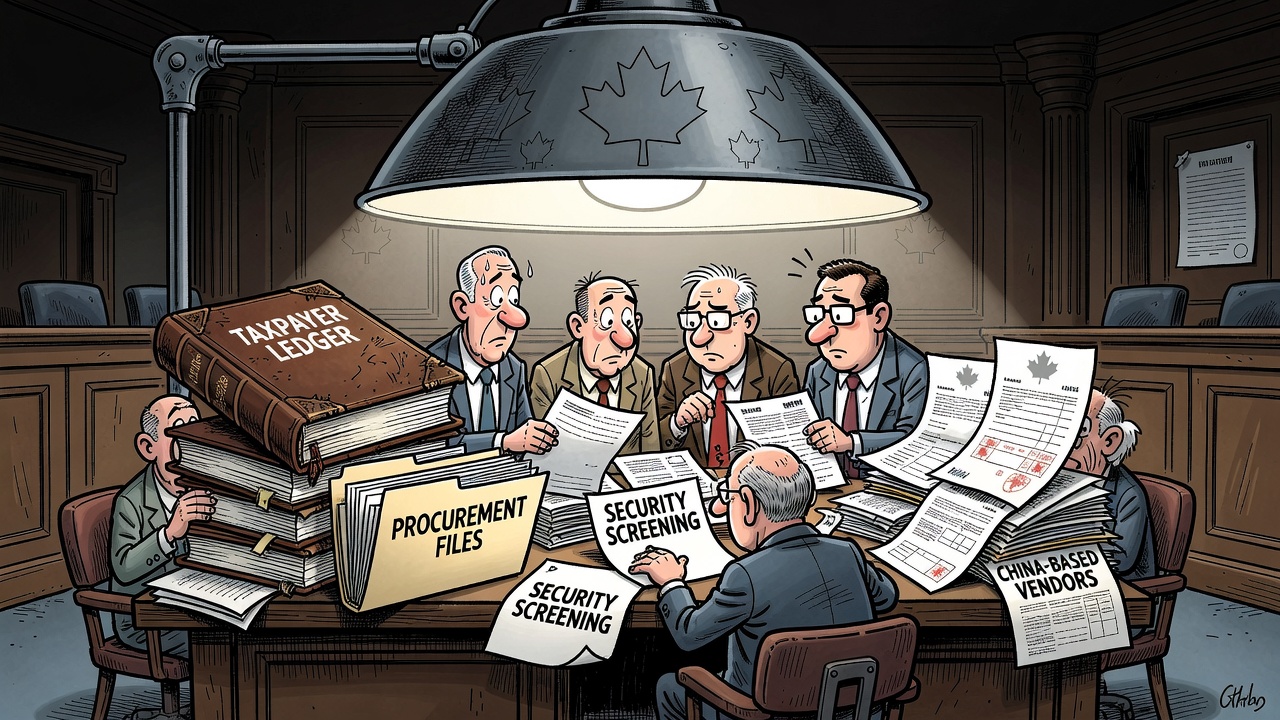
The record on Ottawa’s October creative-industries mission to China is not complicated: the government promoted the trip as a way to help Canadian companies sell abroad, while federal contract records list two China-based vendors attached to the mission. That does not prove misconduct. It does prove Canadians deserve a contractor ledger.
Rebel News first flagged the two Global Affairs Canada contract records on November 10. One official record, C-2026-2027-Q2-01015, lists a China vendor named “Winter Games Network Technology (Sh,” a competitive traditional solicitation, four bids, and a value of $80,638.64. The comment field says the work related to “Creative Industries Trade Mission to China 2026 – Interactive and Digital Media (IDM)/Video Games.”
The second official record, C-2026-2027-Q2-01060, lists “Hermark Culture Communication Co.” as a China vendor, also through a competitive traditional process, with five bids and a value of $40,821.66. Its comment describes “Creative Industries Trade Mission to China 2026–Performing Arts Market Study.” Together, the two records total $121,460.30.
Canadian Heritage’s own mission page said the China mission ran from October 11 to 15, 2026 in Shanghai and Shenzhen, led by Marc Miller, then Minister of Canadian Identity and Culture and Minister responsible for Official Languages. It was aimed at up to 40 Canadian companies and organizations in interactive and digital media, including gaming and immersive experiences, plus performing arts.
After the trip, Canadian Heritage called it a success. The department said the delegation included 36 Canadian companies and organizations, held more than 370 tailored business-to-business meetings, and produced seven commercial agreements worth more than $4.2 million, with more deals under negotiation.
Fine. If taxpayers helped organize a trade mission that actually produced results for Canadian exporters, the government should be able to show the receipts. But the public release celebrates the outcomes without naming the mission contractors, publishing the statements of work, or explaining why China-based suppliers were the right fit for a Canadian export mission in a sensitive market.
That matters because China policy is now a major test of Liberal judgment. Ottawa is trying to deepen economic and cultural ties with Beijing while still dealing with legitimate public concern about foreign interference, data exposure, procurement controls and political access. In that context, “competitive” is not the end of the accountability question. It is the start.
A conservative accountability standard would be straightforward: publish the statements of work, deliverables, evaluation grids, bidder lists, security and privacy screening, subcontractor disclosures, conflict checks, data-access terms, invoice approvals and final products. If the vendors produced useful market intelligence or mission support, Canadians can judge that. If sensitive participant information was shared, Canadians should know what safeguards applied.
This is not an argument to ban every local vendor in every foreign market. It is an argument against black-box government. When Ottawa uses public money in China, especially on missions promoted as helping Canadian companies, the public deserves more than a success quote and two bare contract records. Publish the contractor ledger.
- Government of Canada contract record: C-2026-2027-Q2-01015
- Government of Canada contract record: C-2026-2027-Q2-01060
- Canadian Heritage: Canadian creative industries trade mission to China
- Canadian Heritage: Minister Miller strengthens Canada’s creative economy through trade and cultural partnerships with China
- Rebel News: Two China-based firms got $121,460 in Global Affairs contracts tied to Marc Miller’s trade mission
This article argues for public disclosure and procurement accountability. It does not allege unlawful conduct by any supplier, official or minister.