The Emergency Medical Stockpile Needs a $331M Waste Ledger
Emergency preparedness is not a slogan. It is an inventory, expiry and warehouse ledger taxpayers can audit.
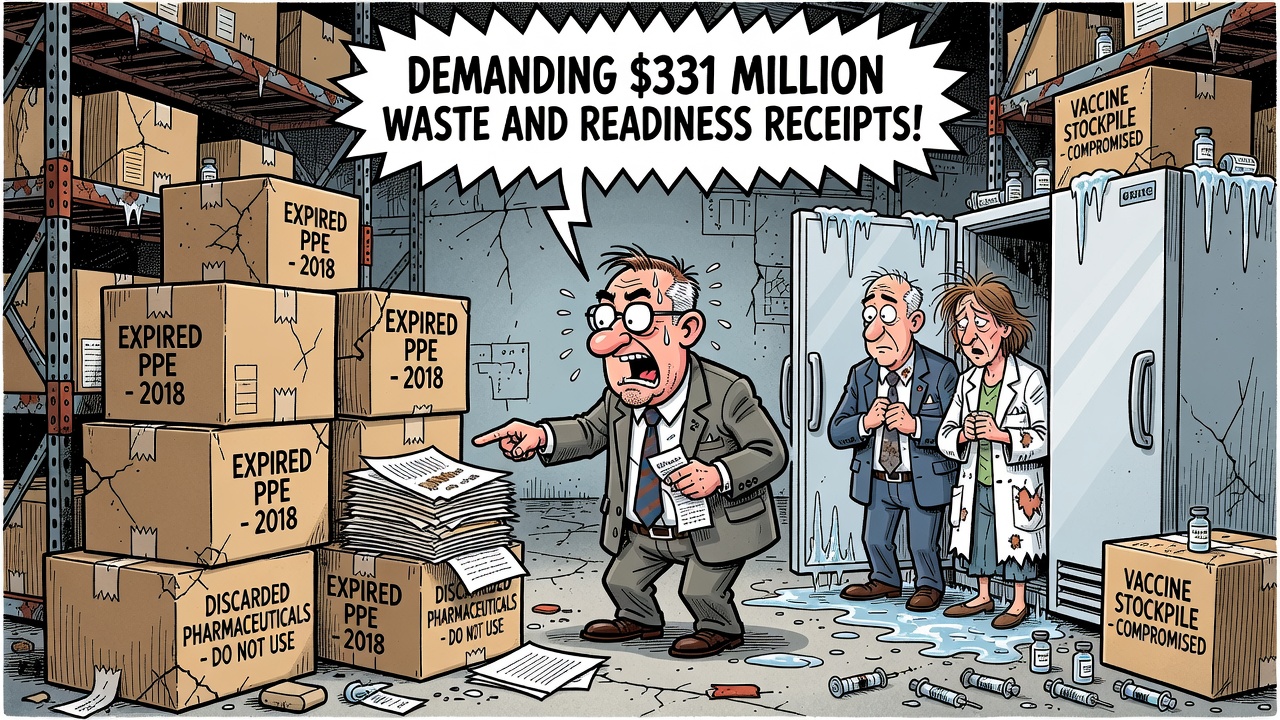
Emergency preparedness is one of the few things government must get right before the crisis arrives. Canadians can forgive officials for buying aggressively in the fog of COVID. They should not forgive a federal agency that, years later, still cannot show a clean ledger for what it needs, what it has, what expired, and who fixed the warehouses meant to protect it.
The Auditor General’s latest report says the Public Health Agency of Canada did not effectively manage the National Emergency Strategic Stockpile, the federal reserve of medical supplies used when provincial, territorial or federal supplies are insufficient. The stockpile answered all 81 requests it received from 2024–25 to 2025–26, which matters. But a system can respond to today’s requests and still be badly unprepared for tomorrow’s emergency.
The most basic failure is planning. The audit found that PHAC had gaps in understanding the types and quantities of supplies needed for future emergencies. According to the Auditor General’s news release, the agency conducted needs assessments for all pharmaceuticals, but did not conduct needs assessments or set inventory targets for any of the 15 social-service supply types, such as cots and blankets, or for 80 percent of medical equipment, such as defibrillators and ultrasound equipment.
Then comes the waste ledger. In 2025–26, PHAC wrote off $331 million in medical supplies that had expired or been damaged. As of March 31, 2026, the stockpile still contained about 84 million expired items, 97 percent of them personal protective equipment, much of it acquired during the pandemic. Storing expired protective equipment over the previous two years cost another $6.3 million.
The warehouse story is worse because it was foreseeable. The audit says more than $20 million in pharmaceuticals had to be discarded in 2025 after deficiencies such as insufficient freezer space, inadequate temperature monitoring and lack of preventative freezer maintenance were not fixed in time. Those deficiencies had been identified in 2022 and 2023.
This is not an argument for a smaller emergency reserve. It is an argument for a competent one. Conservatives should insist that preparedness and thrift are not opposites. A stockpile that buys without inventory targets, stores expired goods, and loses pharmaceuticals to unresolved warehouse problems is not prudent government. It is a taxpayer-funded guessing system.
PHAC did create a stockpile management plan in 2024 with 14 actions after earlier warnings. By March 2026, the Auditor General found only five had been implemented. Canadians deserve to know which nine remained unfinished, who owns them, what deadline applies, and what emergency-readiness risks remain open while Ottawa moves paper around.
The Carney government should publish a stockpile receipt ledger: needs assessments, inventory targets, expiry schedules, disposal costs, warehouse inspection results, freezer-maintenance records, temperature-monitoring fixes, and the officials accountable for closing each gap. If supplies must be kept for national security reasons, summarize categories and risks without exposing sensitive details. But do not hide the management failure.
Public health emergencies test competence, not slogans. Before the next pandemic, wildfire evacuation, mpox surge or national-security incident, taxpayers need proof that the federal stockpile is no longer a warehouse of expired promises.
- Office of the Auditor General of Canada: Public Health Emergency Stockpile
- Office of the Auditor General of Canada: Public Health Agency of Canada had weaknesses in its management of medical stockpile
This article relies on the Auditor General’s public audit report and news release. It argues for disclosure and management accountability; it does not allege criminal conduct.