Ottawa’s Access Watchdog Has Already Written the Secrecy Receipts
Thousands of access complaints are not a paperwork problem. They are an accountability problem.
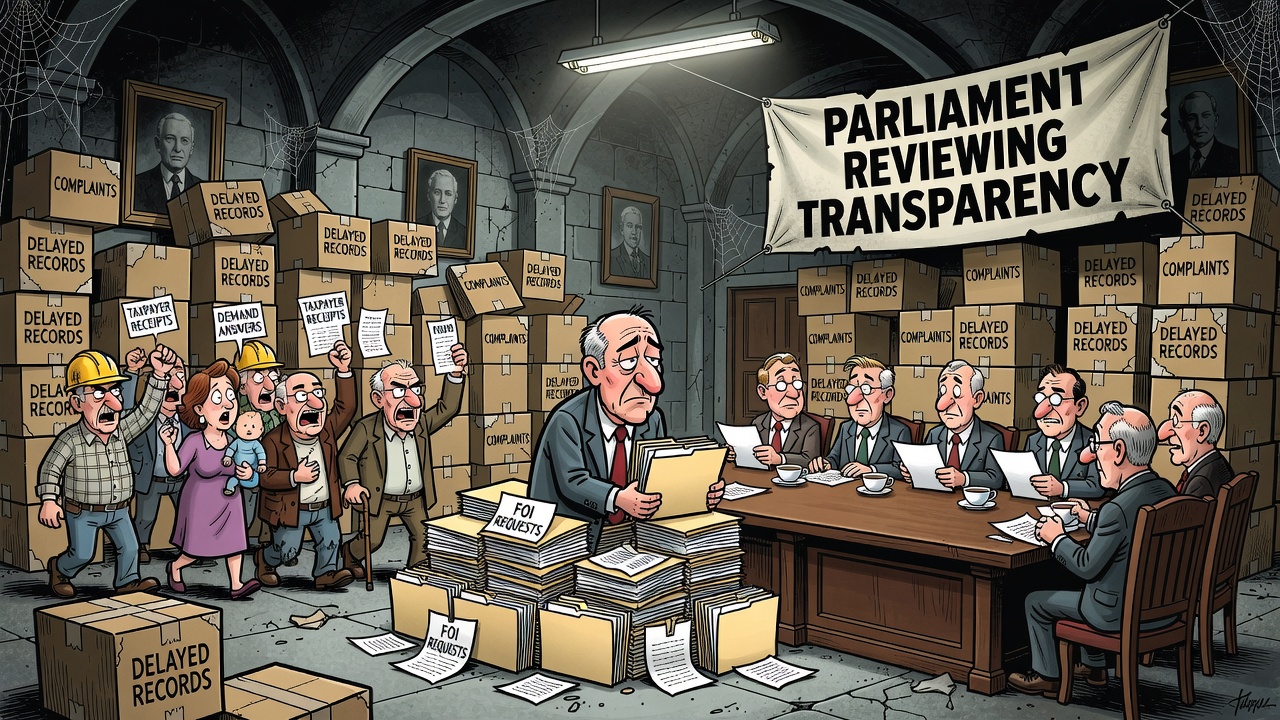
The federal access-to-information system is supposed to let Canadians test government claims against government records. Instead, the watchdog’s own reports keep describing a system where delay, missing records and institutional resistance turn a legal right into a patience test.
In 2024–25, the Office of the Information Commissioner accepted 3,626 complaints. That was after years in which complaints had repeatedly surged: 6,945 in 2021–22 and 7,407 in 2022–23. The same report shows delay complaints, extension complaints and refusal complaints as recurring categories — not exotic edge cases. These are the ordinary ways Canadians are told to wait, accept longer timelines or take “no” for an answer.
The 2025–26 report shows the pressure did not disappear. The OIC says 5,839 complaints were submitted that year, including 2,259 delay complaints and 456 extension-of-time complaints. It also lists 1,185 refusal complaints. In other words, the problem is not simply that impatient journalists file too many requests. The problem is that federal institutions too often fail basic transparency tests: respond on time, search properly, justify exemptions narrowly and comply when the independent officer orders a fix.
That matters because access delays protect political narratives. Immigration backlogs, defence procurement, pandemic contracting, public-safety failures, foreign-interference files and budget decisions all depend on records. If documents arrive months or years late, the government has already won the news cycle and voters lose the chance to judge decisions while accountability still matters.
The watchdog has also connected the access crisis to modern recordkeeping. Her 2025–26 report uses ArriveCAN as a cautionary example, noting that Slack was used by CBSA project personnel, that the workspace was deleted in May 2023 and that the OIC could not review its contents because no backup or archive existed. That is not a technical footnote. If government work moves to collaboration platforms but retention rules do not follow, transparency evaporates by design or by neglect.
Parliament knows the issue is serious. ETHI launched a 2026 study on the state of access to information in Canada, and the Commissioner says the government’s mandated review of the Access to Information Act began in June 2025. That gives Liberals a choice: modernize the law for citizens, or modernize the excuses for departments.
A conservative accountability standard is simple. Publish institution-by-institution monthly dashboards showing requests received, overdue files, extension reasons, refusal categories, commissioner orders, compliance dates, court challenges and records-retention failures. Include emails, texts, chats and collaboration tools. Cabinet confidences and national security can be protected without turning routine accountability into a black box.
Canadians do not need secrecy with better branding. They need receipts, deadlines and consequences.
- Office of the Information Commissioner of Canada: 2024–2025 Annual Report
- Office of the Information Commissioner of Canada: 2025–2026 Annual Report
- House of Commons ETHI Committee: State of Access to Information in Canada
This article argues for enforceable transparency reform and stronger records-retention rules. It does not allege unlawful conduct by individual public servants.