CRA Automatic Filing Needs a Liability Ledger Before Ottawa Expands It
Automatic filing can help people who miss benefits. It can also become another Ottawa system where citizens carry the risk and government keeps the power.
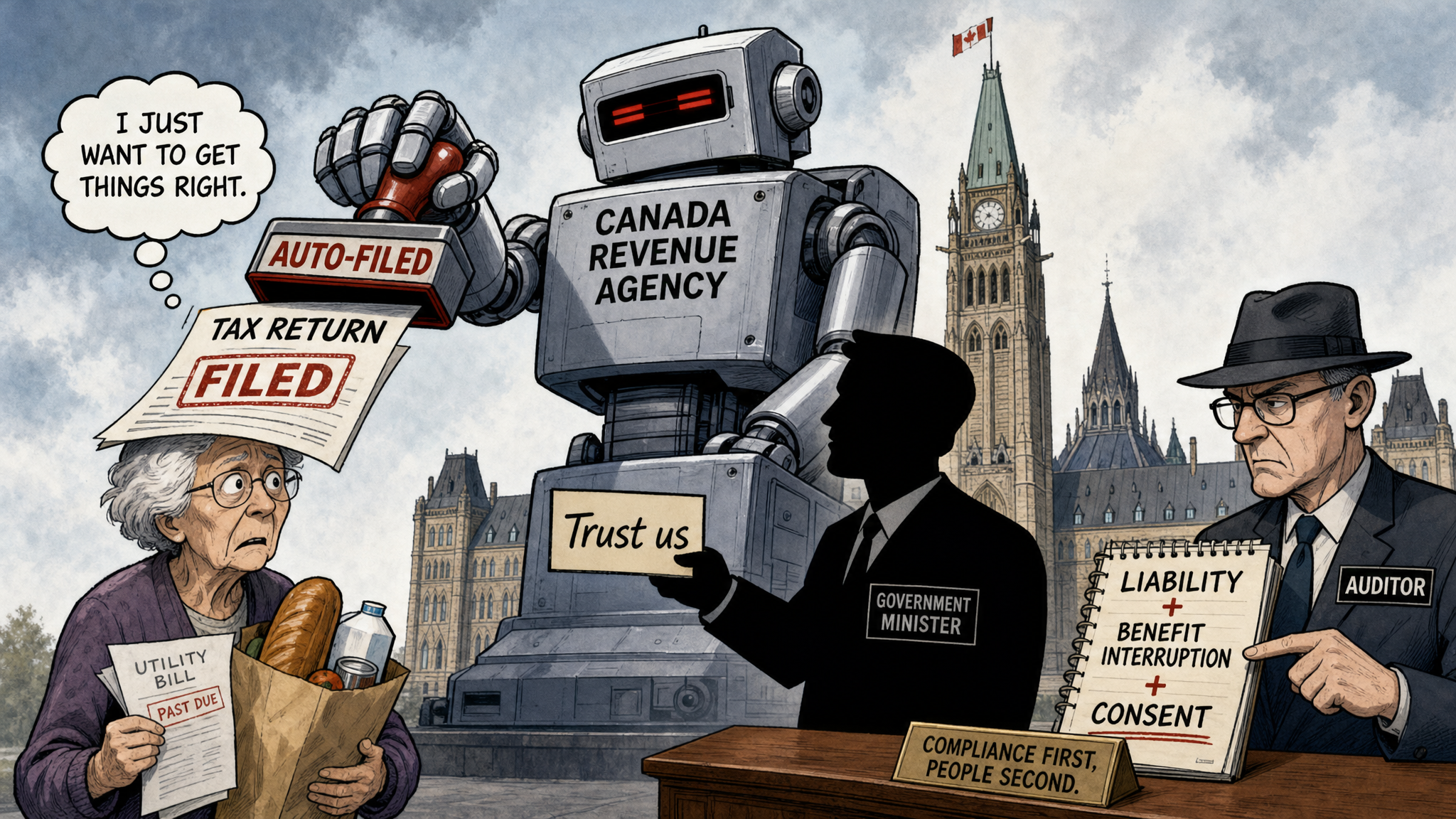
The Canada Revenue Agency is moving toward automatic tax filing, and the accountability question is not whether automation can ever help. It can. The question is whether Ottawa is expanding it with a clear taxpayer-rights ledger, or building another federal black box that vulnerable Canadians must fix after the damage is done.
Budget 2025 says Ottawa wants Automatic Federal Benefits to reach up to 5.5 million low-income Canadians by the 2028 tax year. CRA transition material says the agency plans two tracks: automatic filing for some eligible lower-income non-filers starting in fall 2026, pending royal assent, and pre-filled returns beginning in 2027 that still require the person to review, update and accept the return. That is the sales pitch: fewer missed benefits and less paperwork.
But Bill C-31 shows why the fine print matters. The bill would let the minister file an individual’s return where the minister has reason to believe no tax is payable. It also says the return is deemed to have been filed by the individual, and it treats a failure to correct information as a misrepresentation made by that individual.
Read that again. Ottawa prepares the return, but the citizen can still be the one legally attached to the return and the correction burden. For a digitally excluded senior, a newcomer, an Indigenous taxpayer dealing with fragmented records, or a low-income worker moving between jobs and benefits, that is not a small administrative detail. It is where automation becomes liability.
The Taxpayers’ Ombudsperson has already put the warning in writing. In a September 2026 brief to the House finance committee, the office said Bill C-31’s deemed-filing model could create service problems including delayed benefit payments, incorrect filings and lost payments. Its principal recommendation was that the committee consider not adding the proposed automated-filing and deemed-filing subsections at all. If Parliament proceeds, the office urged safeguards on timing, continuity, confirming address and direct-deposit information, and avoiding preventable service failures.
A conservative accountability standard is simple: do not automate first and explain rights later. Before Bill C-31 expands CRA’s power to file for people, Parliament should require a public liability ledger. Who is responsible when CRA uses stale employer data? What happens when an auto-filed return changes Canada Child Benefit, GST credit, disability tax credit, GIS or provincial benefits? How quickly can a taxpayer correct the record? Is interest paused during correction? Are penalties barred when the error came from government-held data? Who helps taxpayers without online access?
The answer cannot be “trust CRA.” This is the same federal machine that asks ordinary Canadians to keep receipts, meet deadlines and pay interest when paperwork goes wrong. If Ottawa wants to file on behalf of citizens, Ottawa should accept a higher burden of proof, clearer appeal rights and published safeguards.
Automatic filing should mean automatic protection, not automatic blame. Publish the liability, benefits-impact and correction ledger before Parliament gives CRA more automated power over household finances.
- Parliament of Canada / LEGISinfo: Bill C-31, A second Act to implement certain provisions of the budget tabled in Parliament on November 4, 2025
- Parliament of Canada: Bill C-31 first-reading text — automated filing clauses
- Budget 2025: Chapter 3 — Delivering Automatic Federal Benefits for Low-Income Individuals
- Budget 2025: Tax Measures — Automatic Federal Benefits for Lower-Income Individuals
- CRA Commissioner Transition 2026: Important Issues — Automatic Federal Benefits
- Office of the Taxpayers’ Ombudsperson: Brief to Standing Committee on Finance: Bill C-31 (45-1) — Automated Filing
This article relies on official and parliamentary sources for the Bill C-31 and automatic-filing claims. Independent reporting on committee amendments was reviewed as context, but the article’s factual claims are grounded in official records.