Bill C-22 Needs a Senate Privacy-Amendment Ledger Before It Moves
The government says Bill C-22 is lawful access, not mass surveillance. Fine. Then publish every privacy receipt before senators let it advance.
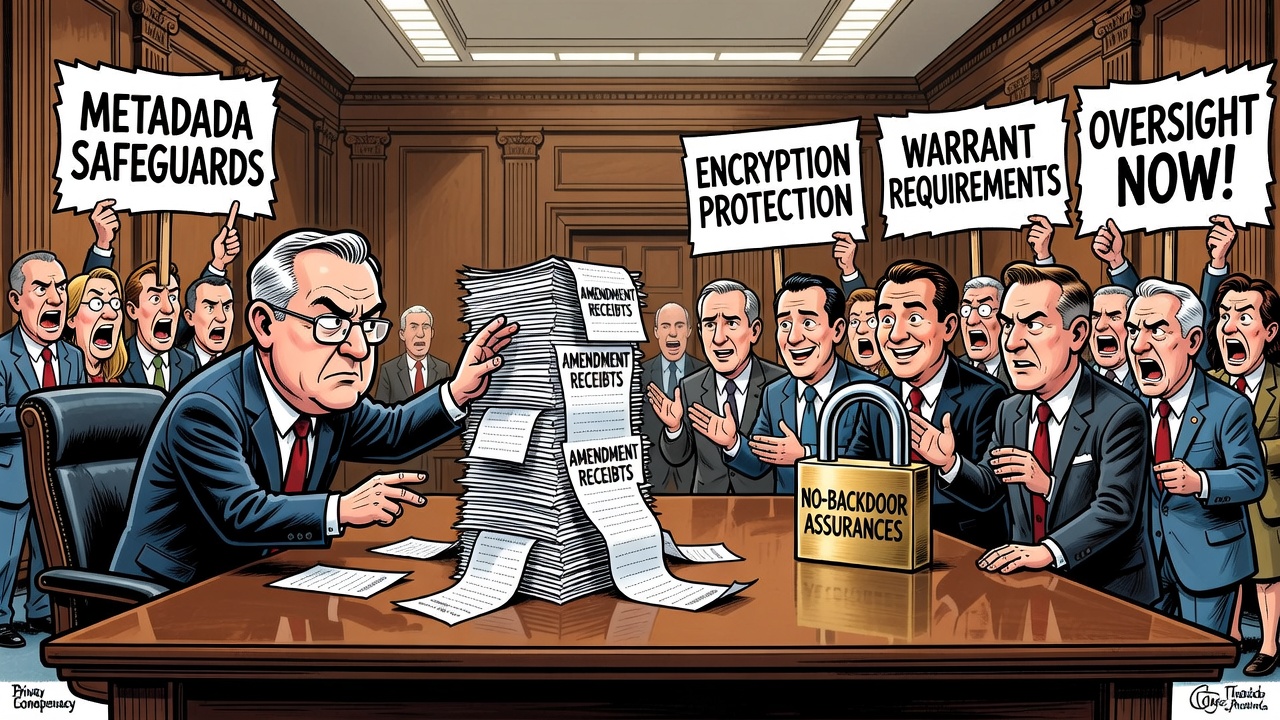
Bill C-22 has reached the Senate at exactly the stage where slogans should stop and amendments should be counted. The government’s line is that the Lawful Access Act, 2026 gives police and national-security agencies workable tools while preserving warrants, encryption and provider security. That promise now needs a public ledger.
On November 2, Privacy Commissioner Philippe Dufresne appeared before the Senate National Security, Defence and Veterans Affairs Committee and said targeted amendments are still warranted. That matters because this is not a narrow paperwork bill. Senate debate has described powers touching subscriber information, computer data, location and transmission data, plus a new regime for electronic service providers and metadata retention for up to six months.
The government deserves credit for one thing: it has heard enough public alarm to deny the obvious danger points. Public Safety says Bill C-22 would not create backdoors, would not let law enforcement or CSIS directly enter provider systems, and would still require legal authorization such as a warrant or production order to access personal information. Those assurances are useful. They are not a substitute for statutory guardrails.
The Commissioner’s Senate checklist is practical, not hysterical. Narrow the definition of subscriber information. Limit who can be compelled to produce it, or at least carve out medical and privileged information. Define “publicly available” information so Canadians do not lose privacy rights just because data can be scraped or exposed somewhere online. Fix production-order forms so judicial oversight is not undermined by stale paperwork. Add a necessity-and-proportionality requirement across the Act. Let providers trigger an arm’s-length expert assessment before obligations create systemic vulnerabilities.
That is the standard Conservatives should insist on: not blind opposition to police work, and not blind trust in Liberal regulatory discretion. If the power is necessary, prove it in the text. If encryption is protected, show the clause. If metadata retention is limited, publish the category, duration and review rule. If ministerial orders cannot become a workaround for warrants, put the firewall in language ordinary Canadians can read.
Senators should not let the bill move on a handshake. Before clause-by-clause work concludes, the committee should publish a Bill C-22 privacy-amendment ledger listing every Privacy Commissioner recommendation, the government’s response, the accepted language, the rejected language and the reason for rejection. It should also include the no-backdoor clause, metadata limits, warrant requirements, NSIRA and Intelligence Commissioner review steps, disclosure rules for providers, and post-use reporting obligations.
Lawful access can be lawful only if citizens can see the law’s limits. Bill C-22 needs those limits in public before Ottawa asks Canadians to trust another surveillance framework.
- Office of the Privacy Commissioner of Canada: Statement to the Senate Standing Committee on Bill C-22
- Office of the Privacy Commissioner of Canada: Privacy Commissioner appears before Senate committee on Bill C-22
- Government of Canada: Lawful access — Bill C-22 explainer
- Senate of Canada: Debates, Issue 95 — Lawful Access Bill, 2026
This article addresses privacy, civil liberties and public-safety accountability. It is public-policy commentary, not legal advice.