Carney’s China Trip Needs a Foreign-Influence Guardrail Ledger
Trade diplomacy is not a blank cheque. If Ottawa wants a China reset, Canadians deserve the meetings, concessions, risks and safeguards in writing.
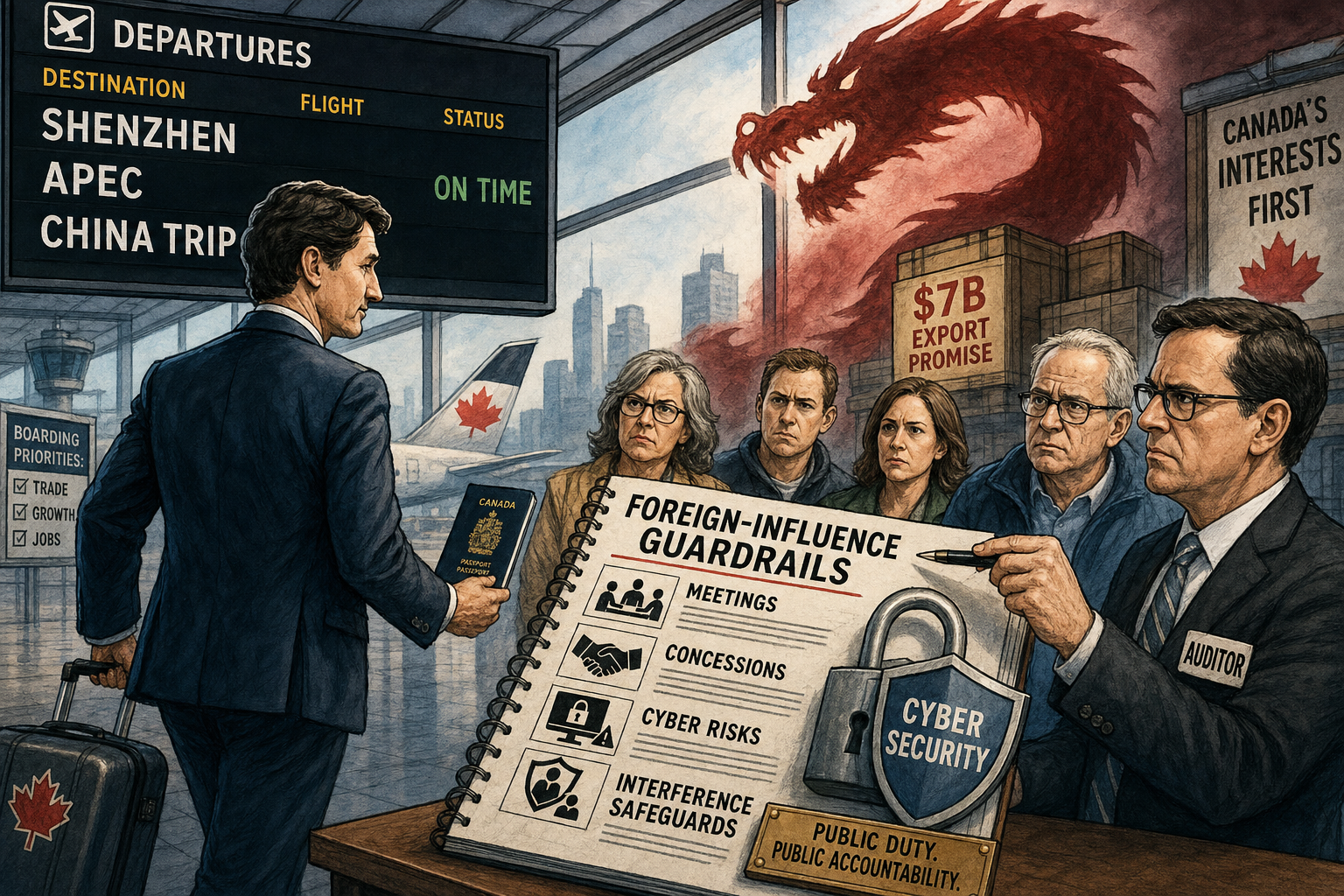
Prime Minister Mark Carney is heading back into the centre of Canada’s China file. A November 4 release from the Prime Minister’s Office says Carney will travel from November 11 to 19, 2026, to Ireland, the Philippines, Cambodia and China, ending in Shenzhen for the APEC Economic Leaders’ Meeting. The same release frames the trip around diversifying partnerships, increasing trade and attracting investment.
That may be normal diplomacy. It is not normal to treat it as a trust exercise. The PMO says Canada has “transformed” its relationship with China over the past year and launched a strategic partnership that is unlocking more than $7 billion in export markets. If that is the case, Parliament and taxpayers should be able to see the working papers: which sectors benefit, which commitments were made, which barriers were removed, and which Canadian assets, data or policy choices are now in play.
The need for guardrails is not partisan theatre. It is written in Canada’s own security record. The Canadian Centre for Cyber Security’s National Cyber Threat Assessment calls the People’s Republic of China’s cyber program the most comprehensive cyber security threat facing Canada today, with capabilities that include surveillance, espionage and attack. That assessment should travel with every trade brief.
The foreign-interference record points the same way. The Public Inquiry into Foreign Interference reported that, based on Canadian intelligence, the PRC stands out as a main perpetrator of foreign interference against Canada and has been assessed as the most active foreign state actor targeting government officials, political organizations, candidates and diaspora communities. That does not mean Canada should refuse every meeting. It means every meeting needs a firewall.
Associated Press coverage of Carney’s January Beijing visit described a deliberate attempt to repair relations after years of tension, including disputes tied to the 2018 Huawei arrest and Canada’s 100 per cent tariffs on Chinese-made electric vehicles. That context matters. A government pursuing a reset with Beijing must prove it is not confusing access with leverage or export headlines with national-security discipline.
A conservative accountability standard is straightforward. Before, during and after the Shenzhen stop, Ottawa should publish a foreign-influence guardrail ledger: ministerial and official attendees; meeting subjects; any side agreements or memoranda; concessions requested by either side; sensitive-sector exposure; cyber-security screening; diaspora-safety safeguards; lobbying contacts; and a post-trip deliverables table separating announced promises from signed, enforceable outcomes.
Canadians do not need performative hostility toward China. They need clear-eyed government. Trade can be useful. Engagement can be necessary. But when Ottawa’s own agencies identify serious cyber and interference risks, the Prime Minister does not get to sell a strategic partnership on benefits alone. He has to show the controls.
- Prime Minister’s Office via Canada Newswire: Prime Minister Carney to travel to Europe and Asia
- Canadian Centre for Cyber Security: National Cyber Threat Assessment 2025-2026
- Public Inquiry into Foreign Interference: Final Report, Volume 1, January 2025
- Associated Press: Canadian prime minister hails renewed relations with China during his Beijing visit
This article uses the PMO travel release as the trip hook, official Canadian cyber and foreign-interference records for security context, and Associated Press for the broader Canada-China reset context.