Budget 2026 Needs a Whole-Invoice Ledger, Not an Operating-Balance Slogan
If Ottawa wants credit for fiscal discipline, it should show Canadians the full borrowing bill before asking them to applaud the accounting label.
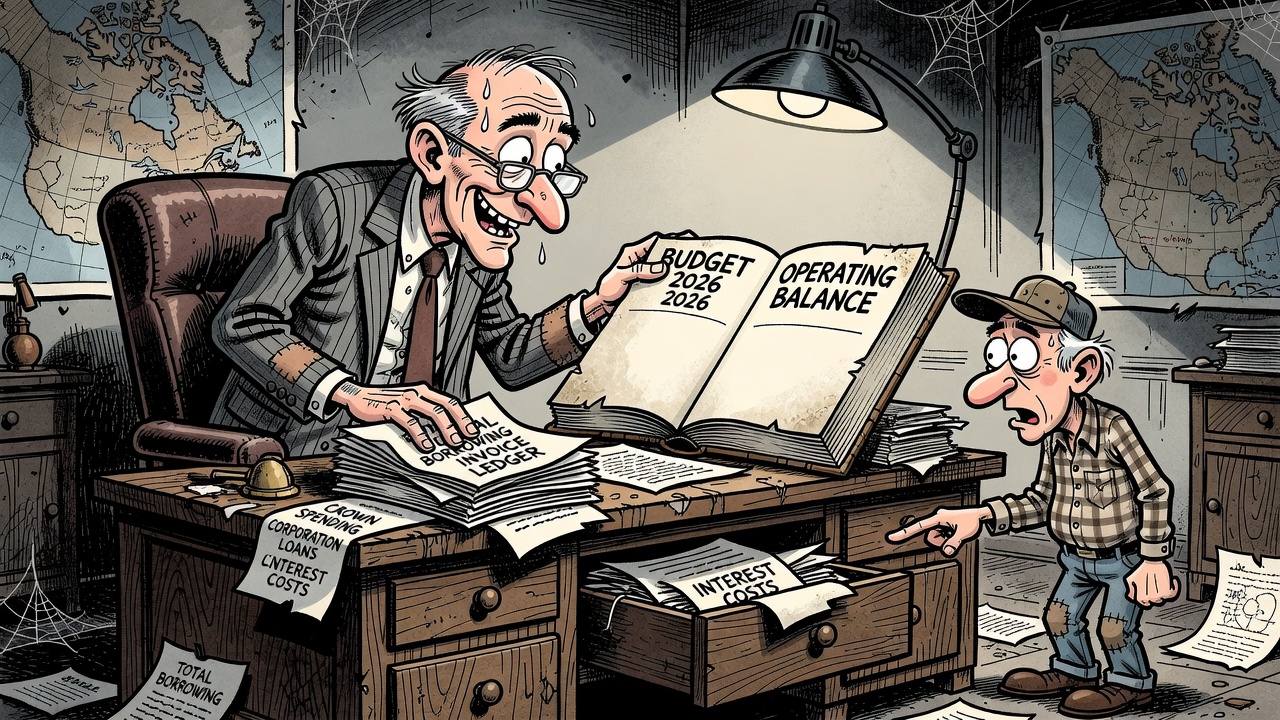
Budget 2026 arrives Thursday, and the Liberal government’s preferred storyline is already visible: the operating budget is on a path to balance, Canada compares well against other G7 countries, and new infrastructure spending is supposedly the responsible way to build growth. The problem is not that any single phrase is automatically false. The problem is that none of it is the whole invoice.
The Parliamentary Budget Officer’s October outlook is the document Canadians should keep beside the budget speech. The PBO projects a $63.3 billion deficit for 2026-27, cumulative deficits of $333.3 billion over five years, and federal borrowing rising by $732.9 billion. It also projects the federal debt-to-GDP ratio climbing every year from 40.8 per cent in 2026-27 to 42.6 per cent in 2030-31. That is not a shrinking debt burden.
The key accountability issue is Ottawa’s split between operating and capital spending. The PBO warned that a balanced operating-budget anchor “should not be interpreted as a balanced fiscal position,” because debt-financed capital spending can keep borrowing and debt rising even while the operating target is met. That should be printed on page one of the budget.
CityNews and The Canadian Press report that analysts are watching exactly this problem before the November 5 budget. Desjardins’ Randall Bartlett said Ottawa’s operating-versus-capital definitions are unclear and self-interested, while Desjardins’ account puts planned new spending since the April spring update at roughly $50 billion over the coming decade. The same report notes the PBO expects the deficit-to-GDP anchor to rise midway through the forecast, not decline as promised.
This is where conservative accountability should be simple: do not let a slogan replace cash math. If capital spending is truly productive, Ottawa should be able to identify the project, the borrowing, the expected return, the repayment path, and the risk if the return never appears. If Crown-corporation loans are being used to finance major priorities, Canadians deserve to see how those loans affect cash borrowing even when they do not hit the headline deficit the same way program spending does.
Nor should a temporary revenue lift become permission to spend permanently. The PBO says nominal GDP and resource prices have boosted revenue projections, but real growth is weaker than previously forecast. The lesson is obvious: windfalls should buy resilience, not camouflage a bigger structural bill.
Finance Minister François-Philippe Champagne can table whatever narrative he wants. Parliament should demand the ledger behind it: headline deficit, operating balance, capital spending, Crown-corporation loans, public debt charges, total cash borrowing, and debt-to-GDP, reconciled in one public table. If the plan is sound, that table will help sell it. If it is not, Canadians should find out before the applause track starts.
- CityNews / The Canadian Press: Here’s what fiscal hawks are watching out for in Budget 2026
- Parliamentary Budget Officer: Economic and Fiscal Outlook — October 2026 news release
- The Hub: Watch the fiscal fine print in Ottawa’s forthcoming budget
This article uses the PBO as the primary source for fiscal projections, with CityNews/Canadian Press and The Hub for budget-preview context and analyst framing.