Bill C-41 Needs a Capacity-and-Consent Ledger Before Advance MAID Requests Move
Advance requests may be the most consequential consent change in Canadian health law. Parliament should not pass it on trust.
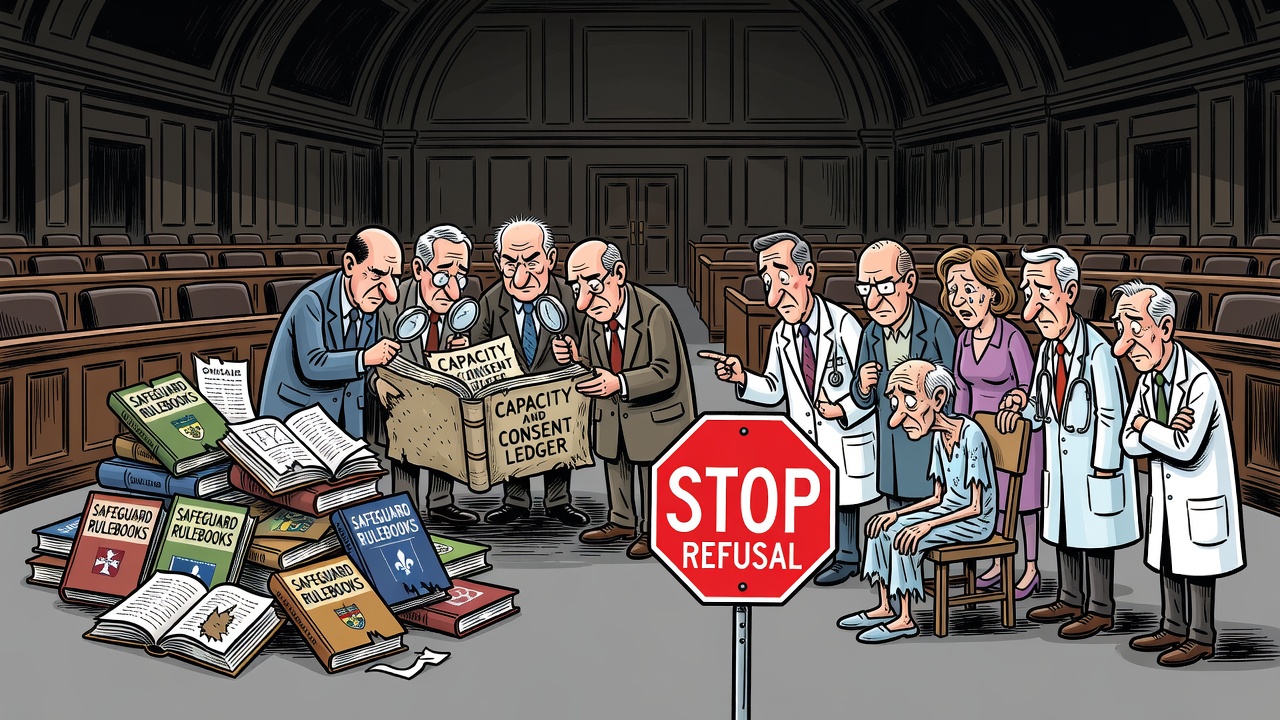
Bill C-41 is not a routine health bill. It asks Parliament to draw the line between a past written request for medical assistance in dying and a future moment when the patient may no longer have capacity to confirm consent. That is exactly the kind of decision that demands receipts, not reassurance.
Justice Canada says the Medical Assistance in Dying Safeguards Act was introduced on October 27, 2026. The bill would permit advance requests for adults diagnosed with a serious and incurable capacity-limiting illness, but only in provinces or territories that pass their own legislation and create the required oversight framework. Ottawa also says the same bill would stop the scheduled expansion of MAID where mental illness is the sole underlying medical condition, a deadline issue now sitting at March 17, 2027.
Those two moves should be judged separately. Blocking mental-illness-only MAID is a necessary correction if the system still cannot prove reliable access to treatment, supports and irremediability assessments. But allowing advance requests creates a different risk: the final, irreversible act may occur when someone else is interpreting what the patient now means by suffering, resistance, comfort or refusal.
The government’s proposed safeguards matter. Justice Canada points to provincial or territorial repositories, two independent medical or nurse practitioners confirming eligibility, and a rule that clear refusal or resistance through words, sounds or gestures invalidates the request. Those are not minor details. They are the entire moral architecture of the bill.
That is why Parliament should demand a capacity-and-consent ledger before voting. Which provinces are ready? What exact information must be stored in the repository? Who verifies that a patient understood the future consequences at the time of signing? How often must the request be renewed? What counts as a “sound” or “gesture” of resistance? Who audits cases after death? Who receives complaints from family, disability advocates, nurses or care-home staff?
The Canadian Press has reported disability-rights concerns, including Inclusion Canada’s warning that advance requests can leave life-ending judgments about suffering and refusal to others after a person loses capacity. That concern does not vanish because the federal press release uses the word “rigorous.” In law, the safeguard is only as strong as the person required to enforce it at bedside, under pressure, in real time.
A conservative accountability standard is straightforward: protect vulnerable Canadians first, then prove the system can do what politicians claim. If Bill C-41 is sound, the government should welcome a public table showing provincial readiness, repository rules, consent verification, refusal protocols, legal-support options, data reporting and independent audits. If Ottawa cannot publish that ledger, MPs should not be asked to gamble with consent.
Autonomy matters. So does contemporaneous protection when autonomy can no longer be spoken clearly. Bill C-41 needs both.
- Department of Justice Canada: Canada moves to allow advance requests for MAID with rigorous safeguards
- Justice Canada: Bill C-41 — Medical Assistance in Dying Safeguards Act
- iNFOnews / The Canadian Press: Liberals table bill to bar access to MAID for mental illness, allow advance requests
This article addresses public policy and legal accountability. It is not medical or legal advice. Anyone in immediate crisis should contact local emergency services or a crisis line.