Bill C-34 Is at Committee. Publish the Witness and Amendment Ledger.
Child protection is serious. That is exactly why Ottawa should stop asking Canadians to trust a new online regulator without showing the committee receipts.
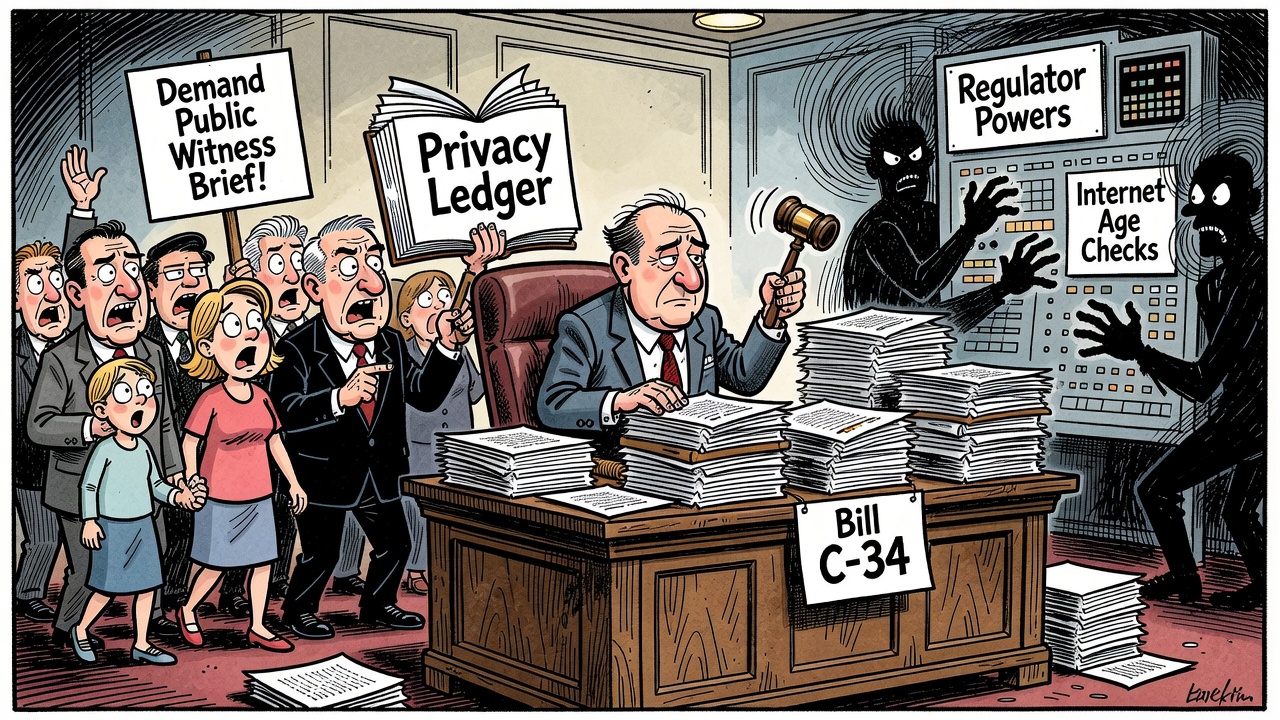
Bill C-34 has crossed an important line. Parliament’s LEGISinfo tracker now lists the Safe Social Media Act as “at consideration in committee in the House of Commons,” after second reading and referral on October 29, 2026. The same tracker shows no recorded votes for the bill and, as of the latest listing, no committee activity yet.
That status change matters because committee is where broad slogans become legal machinery for real families and real platforms. Bill C-34 would enact the Digital Safety Act and the Digital Safety Commission of Canada Act. Ottawa says the goal is safer online spaces for children. Fine. Parents deserve real tools against exploitation, grooming, predatory design and platforms that look the other way. But conservatives should insist that child safety does not become a blank cheque for speech controls, identity checks or regulator discretion.
Justice Canada’s Charter Statement, tabled October 19, says Bill C-34 potentially engages freedom of expression, liberty, unreasonable-search-and-seizure protections, offence rights and equality rights. That is not a footnote. It is the government admitting this bill touches core constitutional terrain. Age verification or age estimation can also create privacy risks if platforms are pushed toward government ID checks, facial analysis, third-party databases or new retention of sensitive personal information.
The Privacy Commissioner has been warning more broadly that AI, age assurance and children’s privacy are now central data-protection issues. That should be the committee’s starting point, not an afterthought. If Ottawa is creating a Digital Safety Commission with power over major online services, MPs should hear from privacy experts, civil-liberties groups, parents, child-safety advocates, platforms, security engineers and free-speech lawyers in public, on the record.
The ledger should be simple. Publish every requested witness, every accepted witness, every refused witness and every brief. Post proposed amendments as text before clause-by-clause voting, not after insiders have already negotiated the outcome. Show which amendments narrow the Commission’s powers, which protect lawful expression, which limit age-assurance data collection, which create appeal rights and which require independent audits. Canadians should also see whether ministers plan to use time allocation, because rushed committee work is how major privacy and speech rules get converted into “trust us” regulation.
If the government believes Bill C-34 is narrow, constitutional and privacy-preserving, it should welcome that sunlight. If it resists a witness-and-amendment ledger, Canadians should ask why a bill sold as protecting children needs to move through Parliament behind fogged glass.
- Parliament of Canada LEGISinfo: Bill C-34, Safe Social Media Act
- Department of Justice Canada: Charter Statement for Bill C-34
- Office of the Privacy Commissioner of Canada: Remarks on AI, age assurance, children’s privacy and federal privacy-law modernization
- Justice Centre for Constitutional Freedoms: Legislative Watch concerns about Bill C-34
This article supports enforceable child-safety protections while arguing that online-safety regulation must be transparent, narrow, constitutional, privacy-protective and reviewable by Parliament.