Whistleblower Protection Dies When Complaints Die in the Backlog
The integrity watchdog says the backlog is crushing capacity. Now publish the receipts.
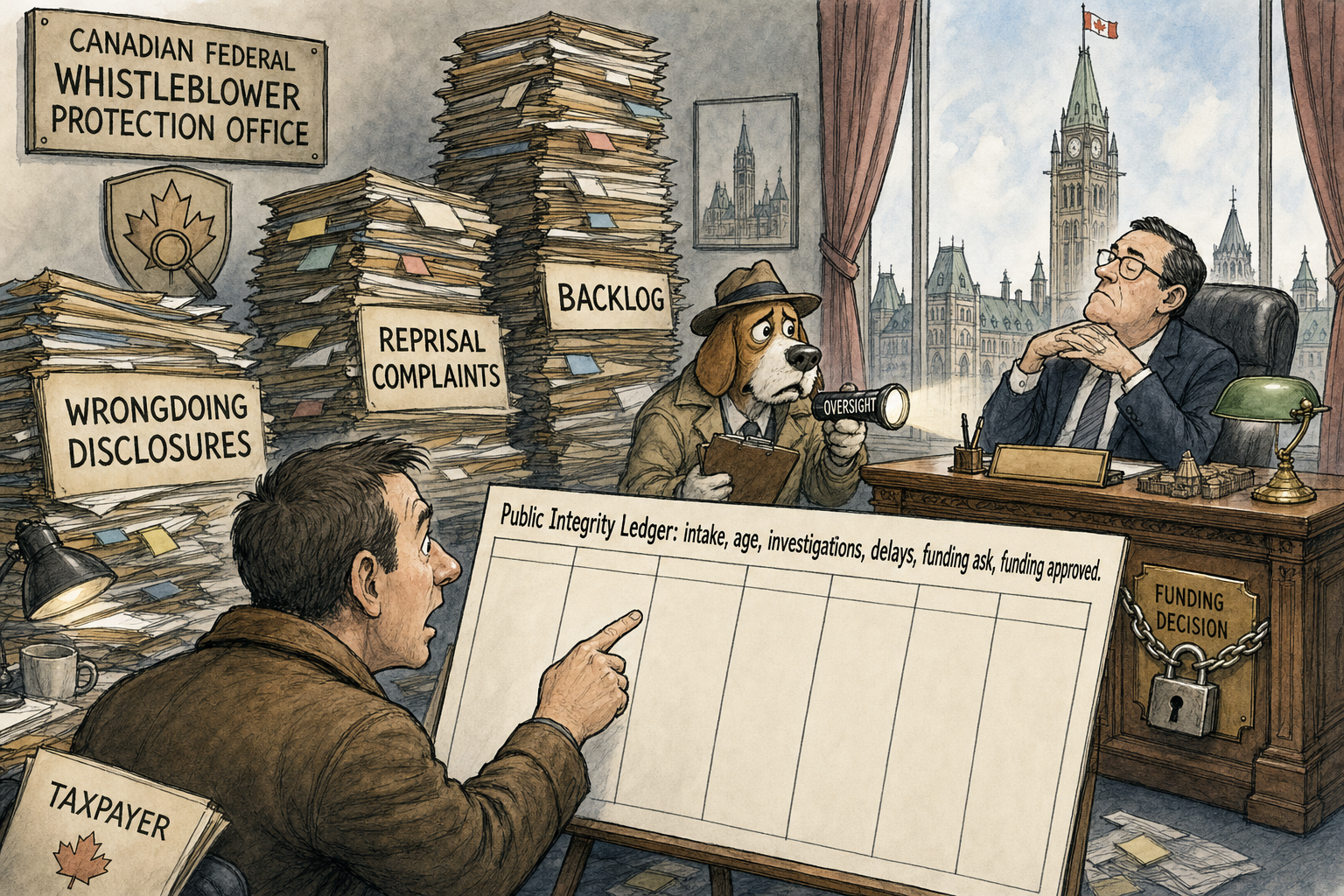
Whistleblower protection is not a slogan. It is supposed to be the pressure valve that lets honest public servants report serious wrongdoing before misconduct is buried by hierarchy, fear or political convenience. When the office built to receive those complaints says the backlog is overwhelming its capacity, Canadians should treat that as an integrity alarm bell, not an administrative footnote.
The Public Sector Integrity Commissioner’s own planning documents are blunt. In its 2025–26 Departmental Plan, the office said delayed and minimal approved funding had significant repercussions as a backlog mounted and its ability to meet its legislated mandate was jeopardized. The same document said approved funding remained insufficient to meet current and projected demand. That is the watchdog saying, in official language, that Parliament created a protection system and then left it underpowered.
The pressure did not disappear this year. The 2026–27 first-quarter financial report says authorities rose only 1.9 percent from the previous year, while disclosure and reprisal caseload growth continued to outpace resource capacity. The risk identified by the office is not theoretical: without enough capacity, it may not be able to deliver its statutory mandate. That means allegations of federal wrongdoing can sit, age and lose force while the system waits for staff, money and time.
The service-standard results show the same problem from the user’s side. For disclosure-of-wrongdoing analysis, the office’s target is to meet the 90-day standard in 80 percent of files. It hit that mark in only 57 percent of files in 2025–26, after 51 percent in 2024–25. For a public servant deciding whether to risk a career by coming forward, delay is not a neutral inconvenience. Delay can mean documents disappear, witnesses move, managers retaliate, and faith in the process collapses.
Commissioner Harriet Solloway warned MPs at the Government Operations committee in October 2025 that insufficient resources create a risk that some allegations may never be investigated. That should be unacceptable to every party. Conservatives should be especially clear about the principle: if Ottawa demands trust, it must prove that misconduct complaints are not being warehoused until they become harmless.
The Liberal government cannot celebrate transparency while letting the whistleblower pipeline choke. Nor can cabinet hide behind process language when the watchdog’s own documents say the mandate is at risk. The fix starts with public receipts: monthly intake, admissibility decisions, file age, investigations opened and closed, reprisal files, founded wrongdoing reports, average delay, uninvestigated allegations, staffing gaps, funding requested, funding approved and ministerial response.
If wrongdoing disclosures are serious enough to create a federal commissioner, they are serious enough to fund, measure and report in public. A protection regime that lets complaints die in the backlog is not protection. It is a warning sign that the accountability system is failing exactly when Canadians need it to work.
- Public Sector Integrity Commissioner: 2025–26 Departmental Plan
- Public Sector Integrity Commissioner: 2026–27 Q1 Quarterly Financial Report
- Public Sector Integrity Commissioner: Service Standards Results
- House of Commons Government Operations Committee: October 2025 evidence — Commissioner Harriet Solloway
This article argues for a functioning, properly measured whistleblower-protection system. It does not prejudge individual disclosure or reprisal files.