The Major Projects Office Needs a Private-Payroll Ledger
A cabinet office that helps sort nation-building projects cannot run on trust when some insiders may still be paid by the industries seeking approvals.
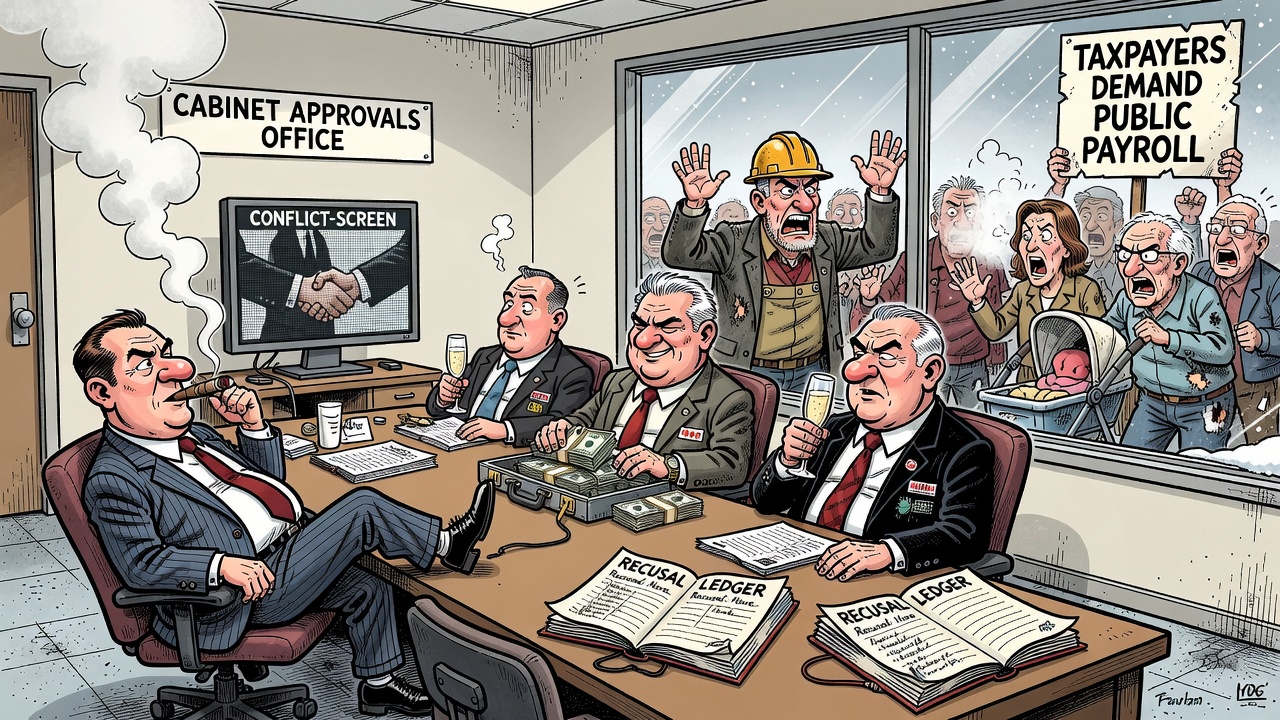
Blacklock’s reported October 28 that MPs were told up to 200 employees at cabinet’s Major Projects Office are on half-salary from private corporations and were not vetted by the Ethics Commissioner. Conservative MP Branden Leslie put the obvious question plainly: why would companies do this “out of the goodness of their heart” when private-sector firms can see value in the arrangement?
That is not an anti-development argument. Canada needs ports, energy corridors, mines, transmission and transportation built faster. The problem is that speed does not cancel ethics. It raises the standard. When the same office is meant to help move major projects through Ottawa, Canadians need to know whether private payrolls, employer loyalties and future career incentives are being firewalled from public decisions.
Ottawa’s own description of the Major Projects Office makes the conflict question unavoidable. The office works with proponents, governments, Indigenous Peoples and industry to identify projects with major benefits. Once a project is submitted, the office assesses it against Building Canada Act factors, then provides recommendations and advice to federal ministers and the Prime Minister. Referred projects can receive help resolving policy or regulatory challenges, structuring financing and reducing project risk.
That is real leverage. A worker inside that process may see early submissions, risk assessments, financing conversations, bottlenecks, political sensitivities and the shape of recommendations before competitors, communities or Parliament do. If that worker’s salary is still partly covered by a company, industry association, lender, law firm, consultancy or project proponent, the public deserves more than an honour system.
The stakes are not theoretical. The government lists dozens of projects and corridors touching LNG, critical minerals, ports, nuclear power, pipelines, hydro, rail and transmission. Prime Minister Mark Carney’s September investment summit release also celebrated nearly $500 billion in new investment commitments, including pension-fund, bank and private-capital money aimed at infrastructure, energy, critical minerals, defence, AI and strategic industries.
That makes the missing ledger the story. Ottawa should publish a table for every seconded or private-sector-paid Major Projects Office worker: employer, salary arrangement, start and end date, files touched, files blocked, conflict screen, recusal obligations, Ethics Commissioner status, confidentiality rules and cooling-off restrictions. Where names genuinely cannot be disclosed, the job title, employer category and conflict restrictions still can be.
Carney’s Liberals want Canadians to believe they can blend cabinet power, private capital and fast-track approvals without old-fashioned patronage or insider advantage. Fine. Prove it. The conservative standard is simple: build the projects, but publish the receipts. If a private-paid insider is anywhere near a public recommendation, taxpayers should see the firewall before the decision, not after the deal.
- Blacklock’s Reporter: Runs On The Honour System
- Government of Canada: Major Projects Office project list
- Government of Canada: Identifying projects of national interest
- Prime Minister of Canada: The first Canada Investment Summit unleashes nearly $500 billion of new investment in Canada
This article does not oppose major-project approvals. It argues that a cabinet project office with private-sector-paid personnel requires public conflict, payroll and recusal disclosure.