Ottawa’s Housing Memo Admits the Immigration-Housing Link
A federal housing note says immigration-led population growth helped drive the shortage. Now Ottawa owes Canadians a public capacity ledger.
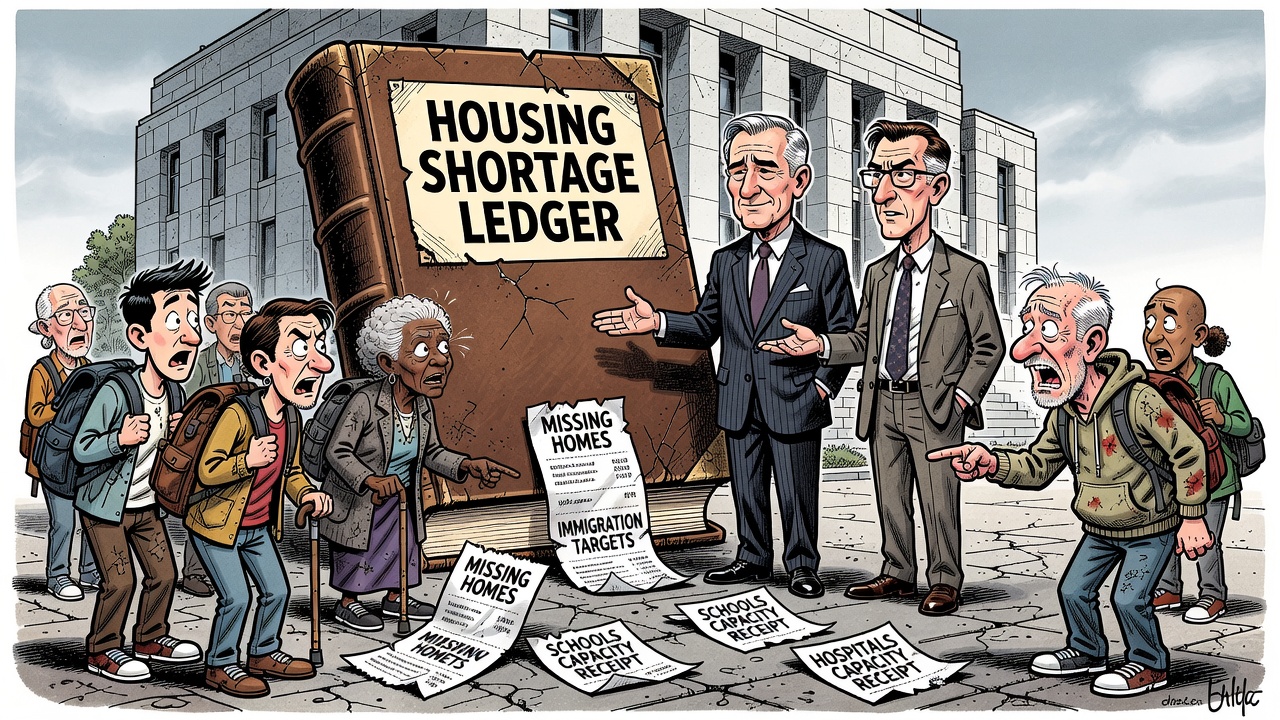
Ottawa’s housing department has now said the quiet part in writing. A Question Period note prepared for Housing and Infrastructure Minister Gregor Robertson says Canada faces a housing supply gap because demand has exceeded new construction. Then it identifies one of the main causes: “strong growth in housing demand driven by immigration-led population growth.”
That sentence matters because Canadians were too often told that connecting immigration levels to housing pressure was unfair, simplistic or politically inconvenient. The fair standard is not anti-immigrant. It is pro-math. If the federal government sets national admission targets, it also has a duty to show where those people will live, which hospitals and schools will serve them, and whether construction is keeping pace.
The same federal note cites CMHC’s June 2025 estimate that housing starts would need to rise from roughly 250,000 a year to 430,000–480,000 annually over the next decade to restore affordability to pre-pandemic levels. It also cites the Parliamentary Budget Officer’s August 2025 estimate that Canada would need 690,000 additional units, on top of baseline completions, by 2035 to eliminate the housing gap.
Those numbers should end the spin. If Ottawa admits demand outran construction, and admits immigration-led population growth was one of the main drivers, then the next immigration levels plan cannot be judged only by headline intake targets. It has to be judged against starts, completions, rental vacancy rates, shelter demand, municipal infrastructure, health-care staffing and school capacity.
Prime Minister Mark Carney said on October 21 that Ottawa will “not budge” from what he calls sustainable immigration levels and is getting intake to the right level now. Fine. Then publish the sustainability test. Canadians should not have to reverse-engineer federal policy from scattered briefing notes and press comments. They should see a table that matches annual permanent-resident admissions, temporary-resident targets and expected exits against new homes built and services available.
A conservative accountability approach is straightforward: set the target only after proving capacity. If housing starts are hundreds of thousands short of the affordability pace, Ottawa should say how it will close the gap before asking provinces, cities and renters to absorb more pressure. If Build Canada Homes, GST changes, loan programs and local accelerator funds are the answer, publish their unit counts, timelines, costs and regional delivery.
The issue is not whether newcomers deserve dignity. They do. The issue is whether the Liberal government deserves trust after separating immigration announcements from housing reality for years. Ottawa’s own memo has supplied the admission. Now Canadians need the ledger.
- Government of Canada: Question Period note HICC-012026-00001 on the market housing supply gap
- CityNews Vancouver / The Canadian Press: Ottawa will “not budge” from “sustainable” immigration levels: Carney
- CMHC: CMHC releases latest housing supply gaps report
- Parliamentary Budget Officer: Household Formation and the Housing Stock: Estimating the Housing Gap in 2035
This article argues for transparent capacity planning and service delivery, not for blaming immigrants for policy choices made by federal ministers.