Bill C-34’s Gaming Expansion Needs an OIC Scope Ledger
Protect kids online — but do not let child safety become quiet scope creep through cabinet order, regulator discretion and age-check infrastructure.
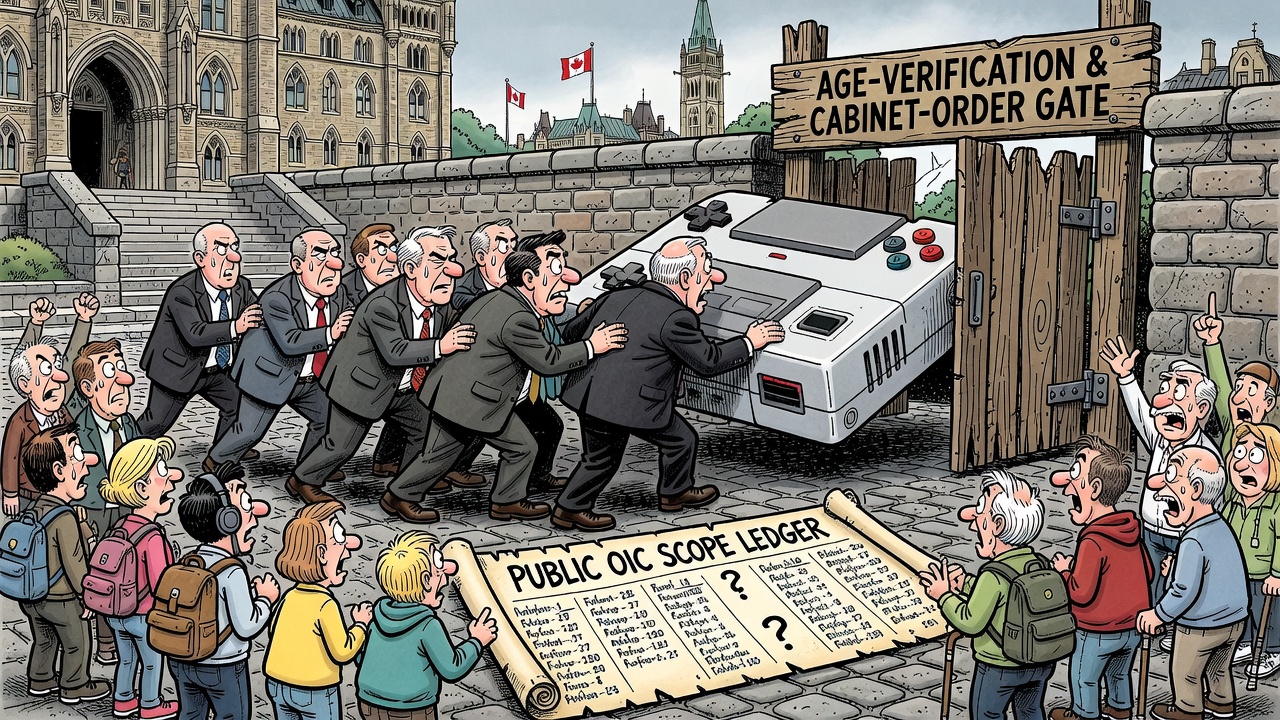
Ottawa’s Bill C-34 was sold as a Safe Social Media Act. Now the live question is whether it becomes a gaming-platform law too.
MobileSyrup reported October 27 that the federal government is considering adding gaming platforms to the digital safety bill, pointing to concerns about predators using interactive game spaces to target children. The same report says Canadian Identity Minister Marc Miller told The Globe and Mail he would “absolutely consider” changing the bill to regulate gaming platforms, while also saying the under-16 social-media ban would not apply to gaming.
That distinction matters, but it is not enough. If Ottawa can add platform categories later, Canadians need to see the trigger before the machinery is built. Reclaim The Net reported that Miller discussed “proper age verification,” parental controls and the possibility of carving aspects of gaming into the bill through an Order-in-Council process. The government’s own Bill C-34 page confirms the bill would create a Digital Safety Act and a Digital Safety Commission, with regulated services facing child-protection duties, transparency plans and age-appropriate design obligations.
No serious person should minimize online predation, child sexual exploitation, grooming or harmful design features. Parents are right to demand safer products from large platforms. Gaming companies that profit from child-heavy communities should have enforceable duties to prevent adults from exploiting those spaces.
But Conservatives should be equally clear about the accountability line: child safety is not a blank cheque for scope creep. A bill aimed at social media and AI chatbots can become something else if cabinet and a new regulator can expand coverage first and explain limits later. The risk is not only censorship. It is also identity infrastructure. Age verification in practice can mean government ID checks, face-based age estimation, third-party databases, new retention risks and pressure on platforms to collect more information from every user, including adults who simply want to play a game, join a server or chat with friends.
The fix is not to ignore gaming harms. The fix is to publish the ledger before expanding the law. Ottawa should list the platform types under consideration, the legal test for “significant risk,” the evidence threshold, the exact Order-in-Council process, the role of the Digital Safety Commission, the appeal route, the privacy-impact analysis and whether age checks would touch adult users. It should also say what Parliament sees before cabinet changes the regulated universe.
If Bill C-34 is narrow, prove it. If gaming platforms are next, say which ones and why. If age assurance will be privacy-preserving, publish the standard. Protecting children requires precision, not a regulatory fog machine.
- MobileSyrup: Canada’s digital safety bill could cover gaming platforms like Roblox
- Reclaim The Net: Canada’s Digital Censorship Bill Could Expand to Roblox and Discord
- Canadian Heritage: Bill C-34, the Safe Social Media Act
This article supports enforceable child-safety duties while arguing that any expansion of Bill C-34 into gaming platforms should be narrow, transparent, privacy-protective and reviewable by Parliament.