Carney’s Defence Procurement Office Needs a Conflict-Screen Ledger
When a former bank executive helps steer billion-dollar defence files, Canadians deserve public recusals, not private reassurances.
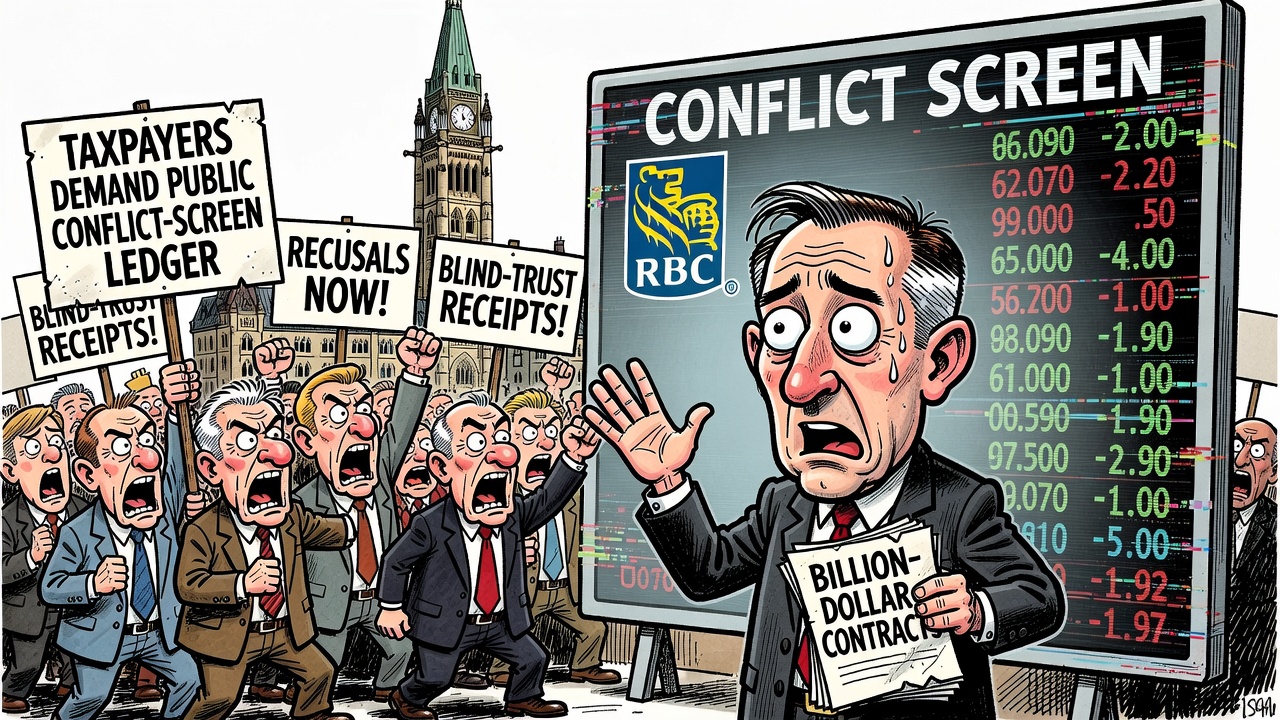
Blacklock’s Reporter’s public archive says Doug Guzman, appointed to help oversee defence contracting, disclosed shareholdings in dozens of publicly traded firms, including federally regulated companies. The Ethics Commissioner’s public registry separately lists a March 18, 2026 declaration for Guzman that includes Royal Bank of Canada deferred performance share units. That combination is exactly why Ottawa should stop relying on trust-me ethics language and publish a defence procurement conflict-screen ledger.
The issue is not that private-sector experience is automatically disqualifying. Conservatives should want competent managers in a procurement system that has too often delivered delays, overruns and excuses. The issue is whether Canadians can see the firewall when a former RBC executive, known to Prime Minister Mark Carney from the banking world, is placed close to enormous military purchasing decisions.
At the Government Operations committee on February 10, Guzman told MPs he had no military experience, had advised defence-related companies, and had expressed interest in serving Canada to Prime Minister Carney before discussions moved to the Privy Council Office. MPs also pressed him on whether the Ethics Commissioner’s report and conflict screen were public while he was already making decisions. Those are fair questions, not partisan trivia.
The stakes are not theoretical. Committee questioning referenced major files such as satellite procurement and a Telesat-MDA strategic partnership described in the hearing as potentially worth up to $5 billion. At the National Defence committee, Guzman said he was not permitted to own direct holdings outside the blind-trust structure, that the Ethics Commissioner had identified one screen for RBC, and that no screen was required for the rest. That may be compliant with the Commissioner’s advice. It is still too opaque for a defence procurement shop asking taxpayers to finance urgent, expensive modernization.
iPolitics also listed Guzman on the Senate National Security, Defence and Veterans Affairs committee agenda for October 26 alongside Defence Procurement Secretary Stephen Fuhr. Good. Senators should ask the obvious receipt questions in public: when was the blind trust fully operational; what files did Guzman touch before and after the screen; which RBC-related matters trigger recusal; which former clients or advised companies were screened; who enforces the firewall; and how are decisions logged?
A conservative accountability standard is simple: spend what is necessary for national defence, but do not build a procurement empire on insider ambiguity. If the Carney government wants Canadians to accept faster defence contracting, it should prove the process is cleaner, not merely quicker.
Publish the conflict screen, blind-trust completion date, screened entities, past-client safeguards, procurement files touched, recusal decisions, Telesat-MDA due-diligence file, RBC firewall and any updates filed with the Ethics Commissioner. If there is nothing improper, the ledger protects Guzman, the government and taxpayers. If there is a problem, Canadians should find out before the cheques are signed.
- Blacklock’s Reporter archive: Ethics filings / defence contracting archive item
- Office of the Conflict of Interest and Ethics Commissioner: Douglas Guzman public declaration
- House of Commons OGGO evidence: February 10, 2026 committee evidence
- House of Commons NDDN evidence: National Defence committee evidence
- iPolitics: October 26 parliamentary agenda
Blacklock’s full article is members-only; this post relies on the public archive summary, official ethics registry material and parliamentary committee evidence for verifiable context.