Choose Canada Needs a Contract Ledger
If Ottawa sells a “Choose Canada” message, taxpayers deserve to know who was paid to stage it, how they were chosen, and whether Canadian suppliers got a fair look.
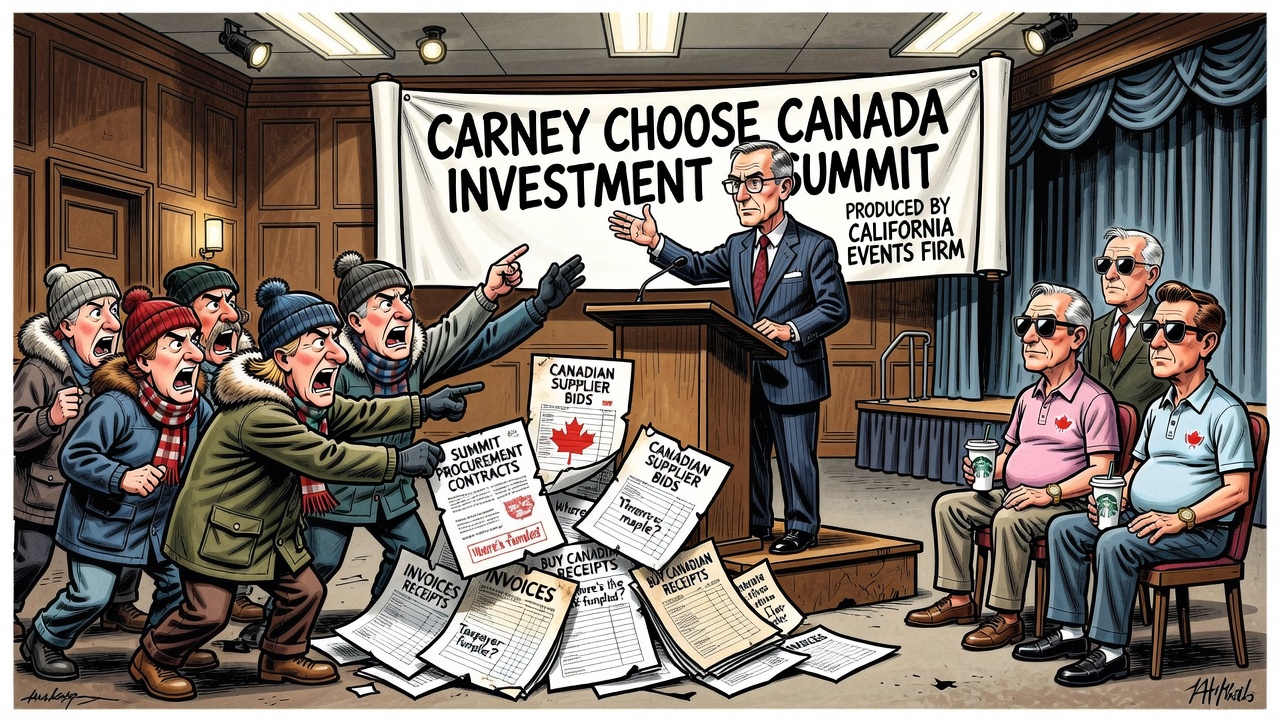
The point of the Canada Investment Summit was simple: convince global capital that Canada is open for serious business. Prime Minister Mark Carney used the Toronto summit to pitch tax changes, faster approvals and a more independent economy to hundreds of investors. The sales job may be legitimate. The procurement story around the sales job now needs receipts.
Juno News reported that the “Choose Canada” summit was produced by a U.S. events firm even as Carney has been telling Ottawa to contract Canadian companies and hire Canadian workers. The Receipts went deeper into the paper trail and found the summit’s delegate privacy notice named Olmstead Productions, Inc., doing business as e2k events × entertainment, of Mountain View, California, as the summit producer and publisher of the registration website and event app.
That finding should be handled carefully. The Receipts also notes the notice identifies CPP Investments as the controller of delegate personal information, not necessarily the body that selected, contracted or paid the producer. In other words, the public record does not yet prove who made the procurement call. That is exactly why the contract ledger matters.
Ottawa cannot ask Canadians to trust slogans while basic accountability questions sit unanswered. Was there a competitive process? Were Canadian event firms invited to bid? Was any exemption used? Which public or Crown entity signed the purchase order? What did the producer cost? Which subcontractors were Canadian? What delegate-data protections applied when event systems involved service providers beyond Canada? What follow-up office owns the investor relationships after the lights came down?
This is not a complaint that every microphone, badge printer or software tool must be Canadian. A conservative procurement test is value for money, national interest, clear authority and honest competition. If a California firm was the best qualified supplier, publish the file and defend the choice. If the summit was routed through pension-board partners or other entities outside the usual federal procurement lane, publish that too.
Carney’s own summit pitch leaned on the idea that Canada can move faster, attract investment and build at scale. Fine. But speed without procurement transparency becomes a loophole factory. When the event exists to sell Canada, the government should be especially careful not to make Canadian suppliers look like props in their own country’s branding campaign.
The answer is a Choose Canada contract ledger: producer contract, selection memo, bid list, invoices, Canadian-content assessment, subcontractor list, data-processing map, responsible signing authority and post-summit follow-up owner. If the summit delivered value, the receipts should strengthen the case. If they are withheld, the slogan will keep sounding like marketing instead of accountability.
- Juno News: Carney’s “Invest in Canada” summit produced by U.S. firm
- The Receipts: Canada Already Has an Investment Agency. An American Firm Produced the Investment Summit Instead.
- Associated Press: Carney says Canada can wait for the right conditions in Trump trade war and emerge stronger
- Canadian Press/Yahoo Finance: Carney, Harper make the case for Canada at inaugural investment summit
- Prime Minister of Canada: Opening remarks at the Canada Investment Summit
This article does not assert who selected or paid the summit producer; it asks Ottawa and the relevant public entities to publish the procurement record so Canadians can see the answer.