Carney’s National Security Strategy Is Now a Receipt Clock
If the first full strategy in more than two decades is finally weeks away, Canadians should see the timetable, threat ledger and oversight plan now.
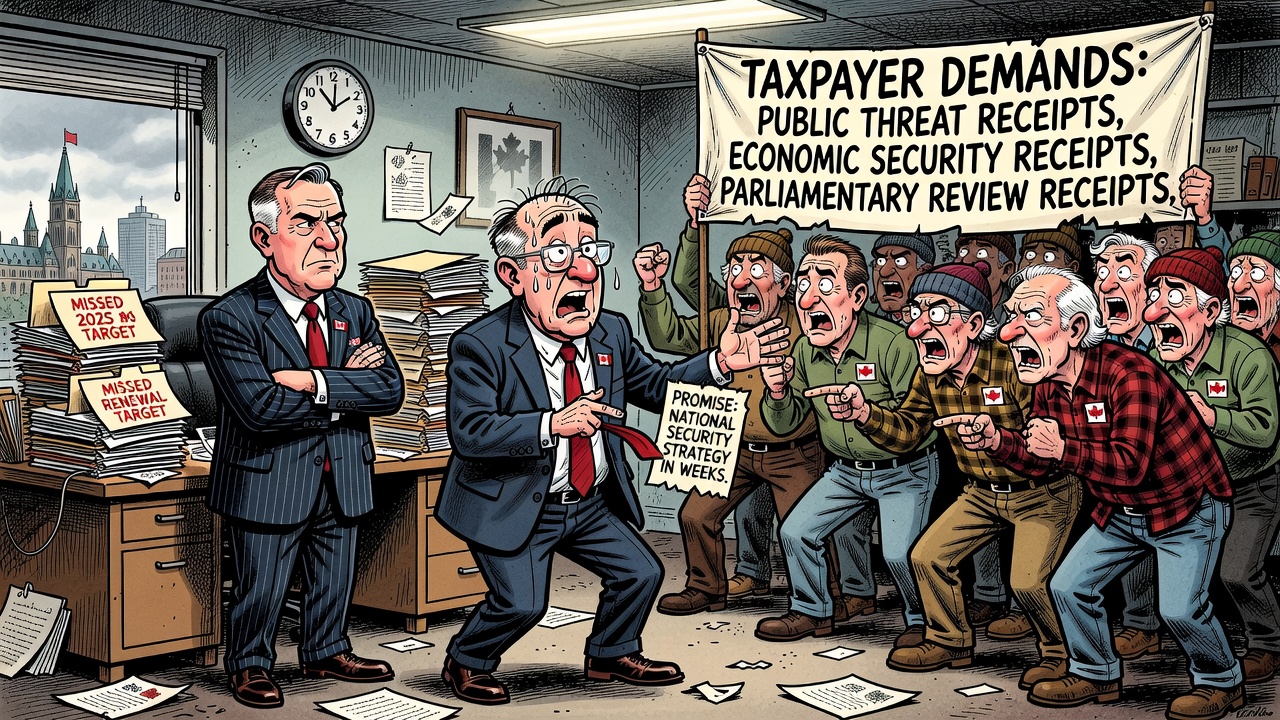
Canada may finally be close to seeing a new national security strategy. According to a Canadian Press report, David Morrison, Prime Minister Mark Carney’s senior diplomatic and international affairs adviser, told MPs on the House of Commons public safety and national security committee that he hopes the strategy will be public “within a few weeks.”
That is not a small administrative update. The same report notes that Canada’s last complete national security policy was Paul Martin’s Securing an Open Society in 2004. It also says Justin Trudeau directed officials two years ago to deliver a renewed strategy in 2025. Canadians are therefore not looking at an optional communications product. They are looking at a missed deadline on one of the federal government’s core duties.
A conservative accountability standard is simple: national security requires seriousness, and seriousness requires receipts. If the Carney government is ready to tell Canadians that a whole-of-government strategy is almost ready, it should also be ready to explain what has been delayed, what has changed, and how Parliament will test the plan before it becomes another glossy document.
The stakes are broader than spies and soldiers. Privy Council Office spokesperson Mélany Gauvin told Canadian Press the coming strategy will increase Canada’s focus on economic security. That phrase can cover supply chains, hostile investment, critical minerals, cyberattacks, sanctions, research security, ports, agriculture, energy and foreign interference. It can also become a blank cheque for ministers if the government refuses to define the risks, powers, costs and limits.
Canadians do not need classified details posted online. They do need a public framework. The government should publish the release date, the departments responsible, the threat categories, the economic-security authorities being contemplated, the consultation record, the budget implications, and the parliamentary review process. Where cabinet confidence, intelligence sources or active operations require redactions, Ottawa can say so plainly and still disclose the structure.
This matters because the Liberals have spent years asking Canadians to trust them on sensitive files while keeping too much behind curtains: foreign-interference briefings, procurement decisions, cyber readiness, defence timelines and emergency powers. National security secrecy is sometimes necessary. Political secrecy is not.
Carney’s office now has a clock. “Within a few weeks” should mean a date, not a vibe. If the strategy is real, publish the timetable. If economic security is central, define the powers. If Parliament is expected to trust the government, give MPs a review path before decisions are locked in.
The first full national security strategy in more than twenty years should not arrive as a branding exercise. It should arrive with a receipt package Canadians can audit.
- The Canadian Press via The Canada Nation: National security strategy to address array of threats coming soon: Carney adviser
This article argues for public accountability around a forthcoming strategy. It does not seek disclosure of classified intelligence, sources, methods or active operations.