Carney Says Erdoğan Shares Canada’s Values. Show Canadians the Human-Rights Ledger.
If Ottawa wants deeper defence ties with Türkiye, it owes Canadians more than ceremony and “shared values” language.
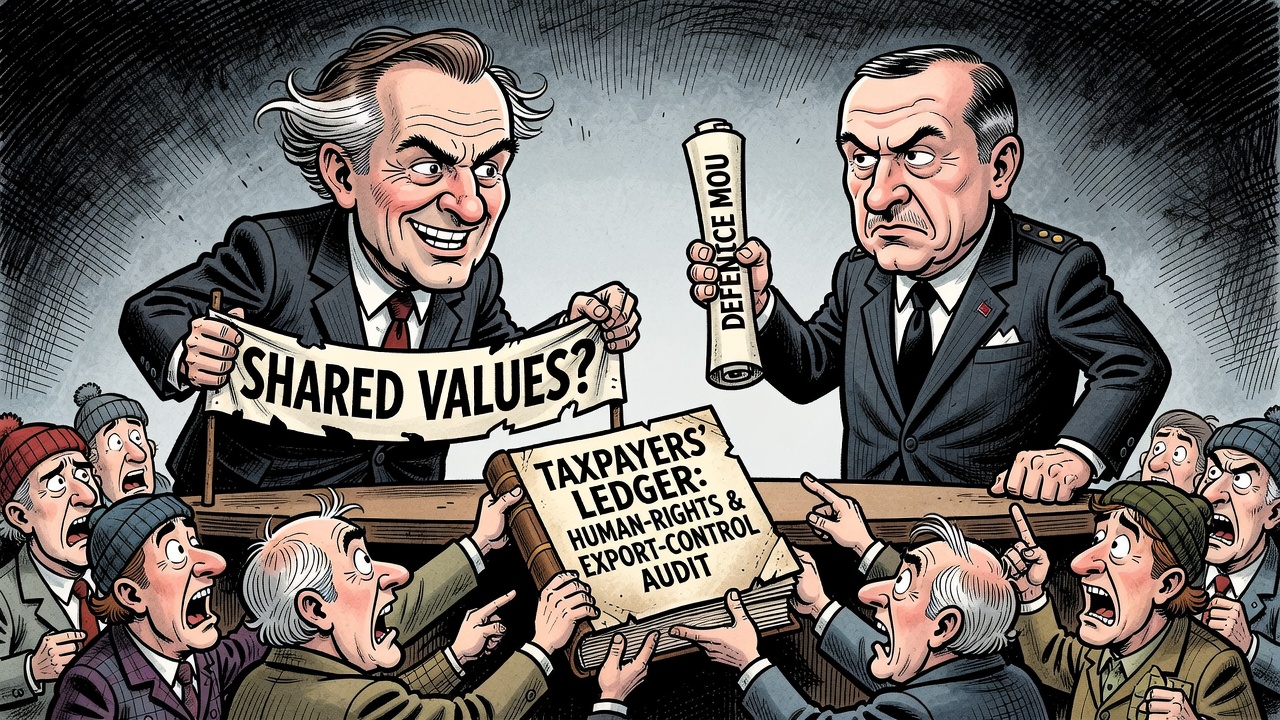
Prime Minister Mark Carney’s visit to Türkiye may be diplomatically important. Canada and Türkiye are NATO allies, trade matters, and there are legitimate conversations to be had about energy, Ukraine, the Middle East, aerospace, transportation and security. But the standard for accountability rises when a Liberal government wraps those talks in moral language while pursuing defence-industry cooperation.
The Prime Minister’s Office says Carney and President Recep Tayyip Erdoğan launched a Canada–Türkiye Strategic Partnership on October 22. The official statement says the two countries are “bound together by shared values: human rights, individual liberties, democracy and the rule of law.” It also says the partnership includes work toward a free-trade agreement, cooperation on energy and critical minerals, and deeper defence and security ties, including a Defence Sector Partnerships memorandum of understanding.
That “shared values” sentence is the problem. It is not anti-diplomacy to ask whether the words match the record. Amnesty Canada warned before the visit that Türkiye faces a deepening human-rights crisis, including pressure on elected politicians, journalists, activists and ordinary citizens. Human Rights Watch reported that September raids targeted LGBT-rights groups, HIV-support groups, bars, nightclubs and homes in several Turkish cities; HRW said at least 112 people were arrested and 82 remained detained under court order.
A conservative accountability test is simple: do not let values become branding. If the government signs defence understandings with Ankara, Canadians should know what safeguards apply before Canadian technology, financing, expertise or components enter sensitive supply chains. What end-use monitoring will exist? What human-rights risk assessment was completed? Which export permits could be affected? Which files will require ministerial review? What happens if Canadian-origin goods are diverted, misused or combined into systems deployed against civilians or dissidents?
Ottawa should also publish what Carney raised privately. Did he press Erdoğan on detainees, media freedom, opposition rights, LGBT-rights organizations, judicial independence and freedom of assembly? Did Canada request releases, trial monitoring, legal reforms or protections for civil society? If officials say those conversations must remain diplomatic, they can still publish a non-sensitive issues ledger with dates, topics and follow-up commitments.
Strategic partnership is not automatically wrong. NATO allies sometimes have hard conversations with imperfect partners. But Canadians have watched too many governments use lofty language at podiums and vague assurances behind closed doors. Defence cooperation is too serious for that pattern.
Carney’s government chose the phrase “shared values.” Now it should prove those values were not merely a press-release ornament. Publish the three-year action plan, the defence MOU, the export-control safeguards, the end-use rules, the human-rights briefing note and the follow-up table. If the partnership is defensible, the receipts should be too.
- Associated Press: Canada and Türkiye announce strategic partnership during Carney visit
- Prime Minister of Canada: Statement by Prime Minister Carney and President Recep Tayyip Erdoğan
- Prime Minister of Canada: Prime Minister Carney meets with President Erdoğan
- Amnesty Canada: Carney must address human-rights crisis in Türkiye during historic trade visit
- Human Rights Watch: Türkiye: LGBT Rights Crackdown Strikes at Rule of Law
This article critiques federal transparency around foreign affairs, defence cooperation and export controls. It does not oppose diplomacy with NATO allies.