Gun-Buyback Cost Secrecy Belongs on a Court-Date Ledger
If Ottawa can release one RCMP regional estimate, it can explain why the rest are being treated as cabinet secrets.
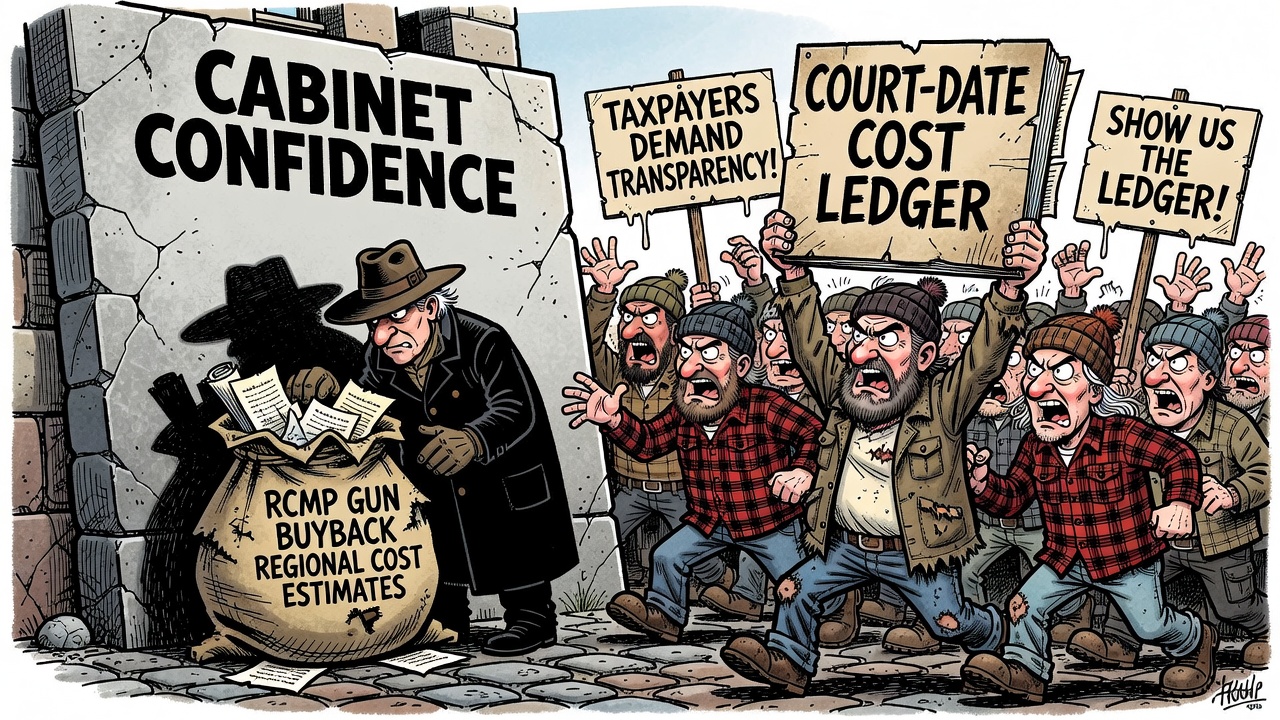
The fight over Ottawa’s firearms compensation program should not be reduced to a slogan war about guns. The immediate accountability question is narrower and easier: why are taxpayers still missing basic regional cost estimates for a program Public Safety Canada already describes as a three-quarter-billion-dollar undertaking?
The Canadian Taxpayers Federation says it filed an access-to-information request with the RCMP in July 2023 seeking projected costs to confiscate firearms. According to the CTF, the January 2024 response released a Pacific Region RCMP estimate of $12.6 million, but withheld estimates from other divisions. The group says the government later shifted to a cabinet-confidence claim during the Information Commissioner process, leaving the watchdog unable to review the records and the CTF asking Federal Court to compel disclosure.
That is exactly where conservative accountability should focus. If one regional estimate could be disclosed without endangering cabinet deliberations, Ottawa owes a serious explanation for treating the rest as cabinet secrets. Cabinet confidence is supposed to protect real cabinet decision-making, not become a magic curtain for embarrassing implementation math.
The public numbers are already large. Public Safety briefing material for Minister Gary Anandasangaree lists the Assault-Style Firearms Compensation Program funding envelope at $742.5 million. It identifies up to $248.6 million for compensation to businesses and individuals, about $21.8 million for program design, $28.7 million for the web portal and case-management system, and $132.2 million to the RCMP for collection, validation and supporting activities.
Those figures do not settle the debate. They sharpen it. A program with compensation, administration, technology, collection, storage, police support, legal risk and final disposal costs needs a ledger the public can follow. Canadians should not have to reverse-engineer the bill from briefing binders, advocacy releases and court filings after the spending train has already left the station.
Ottawa can argue that the policy is lawful, necessary and effective. Fine. Then publish the receipts: every RCMP divisional estimate, the precise cabinet-confidence rationale for any redactions, the Information Commissioner timeline, compensation versus administration costs, collection and disposal totals, and the final count of firearms declared, collected, deactivated, compensated and destroyed.
Public Safety’s briefing notes say more than 126,000 prohibited firearms had been declared or claimed as of May 10, 2026, with more than 12,000 already disposed of, and that final collection and disposal numbers will be reported after the program is completed. That final report should not be a press-release victory lap. It should be an auditable cost ledger.
Taxpayers can disagree on firearms policy. They should not disagree on this: when Ottawa spends hundreds of millions and fights to hide internal cost estimates, the burden of proof belongs to the government, not the citizens forced to pay the legal fees to see the bill.
- Canadian Taxpayers Federation: Taxpayers entitled to know all costs of the federal gun confiscation
- Public Safety Canada briefing material: Minister Anandasangaree SECU appearance notes / ASFCP envelope details
- Government of Canada: Budget 2025, Chapter 4
This article relies on Public Safety briefing material for official program figures and attributes access-to-information and litigation claims to the Canadian Taxpayers Federation. It argues for disclosure of cost records without alleging criminal wrongdoing.