After “No to the Nine,” Publish the Immigration Capacity Ledger
Carney can celebrate Alberta’s No vote on separation. He cannot pretend the other questions disappeared.
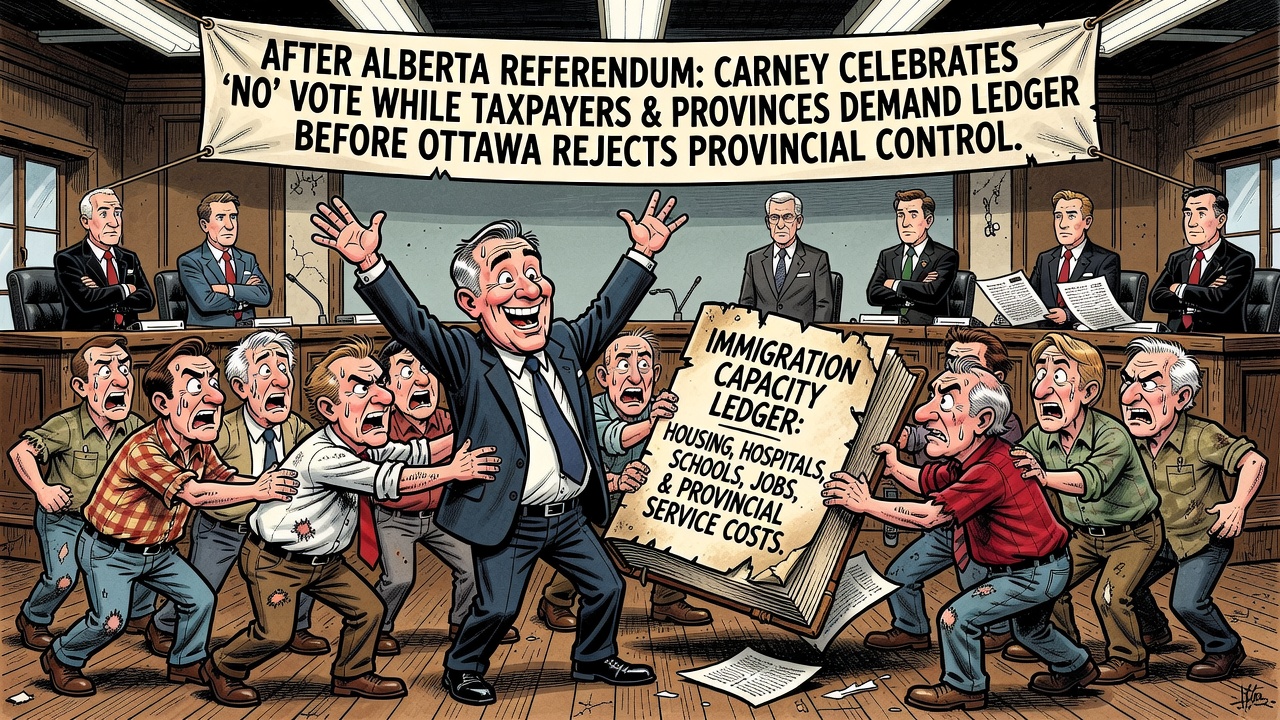
Alberta’s referendum produced the result Ottawa wanted on the defining question: separation was rejected. Prime Minister Mark Carney’s office said Albertans chose Canada and promised a future of new trade partners, fast-tracked national projects and Alberta as a core energy player.
But unity is not the same thing as consent to the status quo. The Canadian Press reported that the ballot also included nine non-separation questions on immigration and constitutional issues. Carney had urged Albertans to vote “No to the Nine.” The day after the vote, he said constitutional change is difficult and long, and that immigration disputes can be handled through practical federal-provincial solutions.
That may be constitutionally convenient. It is not enough for accountability. If Ottawa wants to keep immigration control centralized, it should prove it understands the capacity costs that provinces, cities and families actually absorb.
Conservative Leader Pierre Poilievre put the issue plainly: provinces deliver services, regulate local labour markets and face the housing pressure. Whether Canadians agree with provincial control or not, that is a serious governance argument, not a slogan. Immigration targets are set in Ottawa, but classrooms, emergency rooms, rental markets, settlement services and job pipelines are felt locally.
Global News commentator Darrell Bricker argued that the referendum should not be read only as a rejection of separation. The other questions, he wrote, show Albertans want their relationship with Ottawa changed. That is the point Carney’s government now has to answer with documents, not reassurance.
The answer should start with an immigration capacity ledger. Publish the federal assumptions for Alberta and every province: planned admissions, temporary-resident levels, student and work-permit flows, housing starts required, rental vacancy assumptions, health-care and school-capacity impacts, settlement-service funding, wage and youth-employment analysis, and the timeline for reducing temporary-resident pressure. Add the legal memo explaining which powers Ottawa says cannot be shared, which powers it could delegate by agreement, and what “common solutions” actually means.
This is not an argument against immigration. It is an argument against governing by abstraction. A country can welcome newcomers and still insist that cabinet show the math for homes, doctors, classrooms, jobs and provincial budgets. If the numbers are responsible, Ottawa should be eager to publish them. If the numbers do not exist, Canadians should know that before the next levels plan is sold as compassion or growth.
Carney won the unity headline. Now he owes the capacity receipts.
- Canadian Press via National Newswatch: Carney warns constitutional reforms “difficult,” says he’s after “common solutions”
- Prime Minister of Canada: Statement on Albertans choosing to build a stronger Canada
- Global News commentary: Alberta’s real referendum message for Carney
- iVoteLiberal context: After Alberta Votes No, Publish the Unity Deal Receipts
This article argues for disclosure of the evidence behind federal immigration and federalism decisions. It does not argue that any individual newcomer is responsible for government capacity failures.