Bill C-39’s Regions of National Interest Need a Consultation Ledger
Ottawa says Bill C-39 will get projects built faster. Fine. Speed is not a substitute for consent, lawful consultation, environmental evidence or a public audit trail.
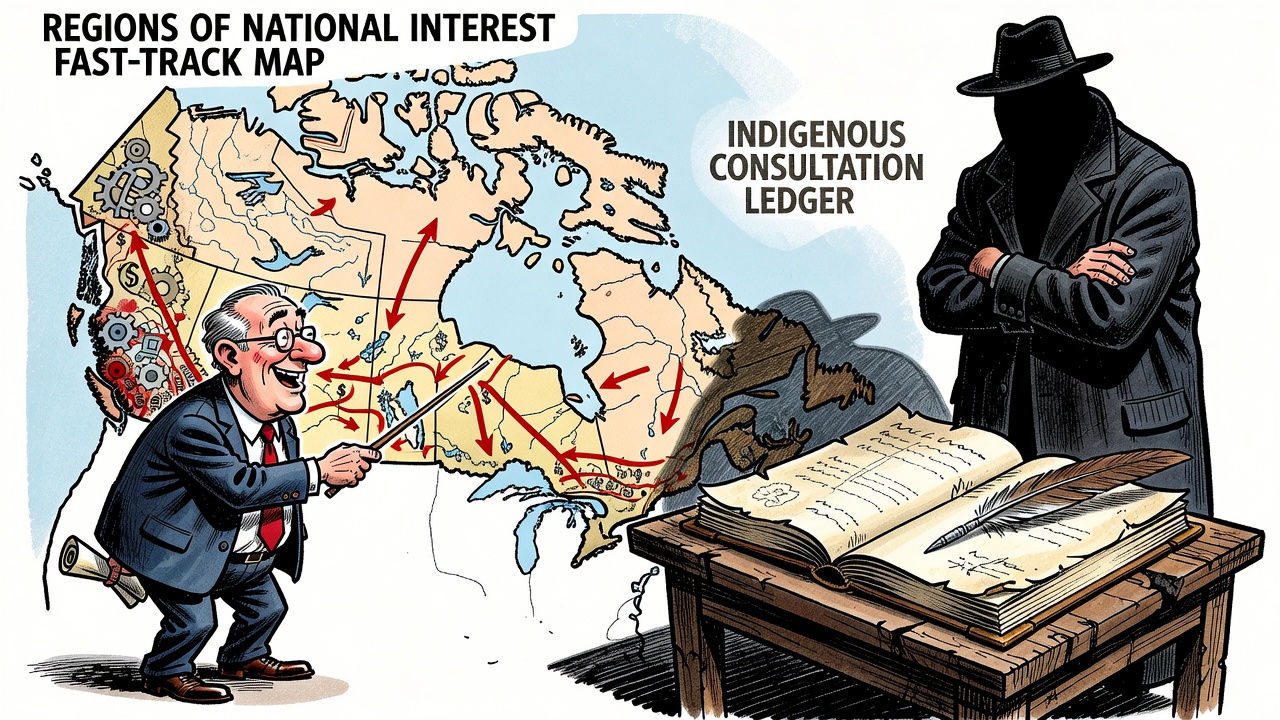
Bill C-39, the Building Canada Strong Act, is being sold as a cure for Canada’s slow approval machine. The government says it would bring speed, certainty and predictability to infrastructure reviews, including a one-year federal review target. Canadians can support building mines, ports, pipelines, power lines and trade corridors without giving cabinet a blank cheque.
The problem is the new power centre inside the bill: “regions of national interest.” The Narwhal reported that senators questioned ministers at an October 6 hearing about the bill’s impact on First Nations, and highlighted concerns that projects in designated regions could bypass normal approval processes, with some work beginning before assessment is complete and with government able to change or remove conditions already imposed on a project.
The official bill text shows why scrutiny is warranted. Before recommending a regional order, the minister must be satisfied that adequate consultations have been conducted with affected provinces, territories and Indigenous peoples whose section 35 rights may be adversely affected. It also says details of a region must be published in a registry within 30 days, and that certain determinations and findings can be deemed favourable for eligible projects in those regions.
That is a lot of discretion to place behind ministerial satisfaction. The government’s defence is that environmental standards and Indigenous obligations are not being reduced. Dominic LeBlanc told senators the government still has responsibilities to assess projects and fulfill obligations to Indigenous Peoples. Good. Then publish the receipts before MPs and senators vote.
A conservative accountability test is straightforward: if Ottawa wants extraordinary fast-track powers, it must accept extraordinary transparency. Show the proposed regional maps. Show which First Nations, Métis and Inuit governments were contacted, when, by whom and on what documents. Show how upstream and downstream communities are counted. Show the regional assessment evidence that justifies deeming later approvals favourable. Show every condition that could be changed, removed or replaced, and who signs off.
Canada needs serious infrastructure. But serious countries do not build confidence by compressing reviews, centralizing consultations and asking citizens to trust that the paperwork exists somewhere inside Ottawa. They build confidence by making the paperwork public, searchable and challengeable. That discipline protects taxpayers, project proponents and rights holders from years of litigation after political shortcuts fail.
If Bill C-39 is as responsible as ministers claim, a regions ledger should be easy. No map, no consultation record, no legal-risk memo and no condition-change log should mean no fast-track designation.
- The Narwhal: Senators question federal Bill C-39’s impacts on First Nations
- Government of Canada: Government of Canada introduces legislation to transform how Canada builds
- Parliament of Canada LEGISinfo: Bill C-39 progress
- Parliament of Canada: Bill C-39 first reading text
This article argues for a public audit trail before fast-track regional powers are used. It relies on government documents, parliamentary records and published reporting, and does not allege wrongdoing beyond the cited public record.