After Alberta Votes No, Publish the Unity Deal Receipts
Albertans chose Canada. That is not a permission slip for Ottawa to bury the costs, promises and side-deals behind the unity campaign.
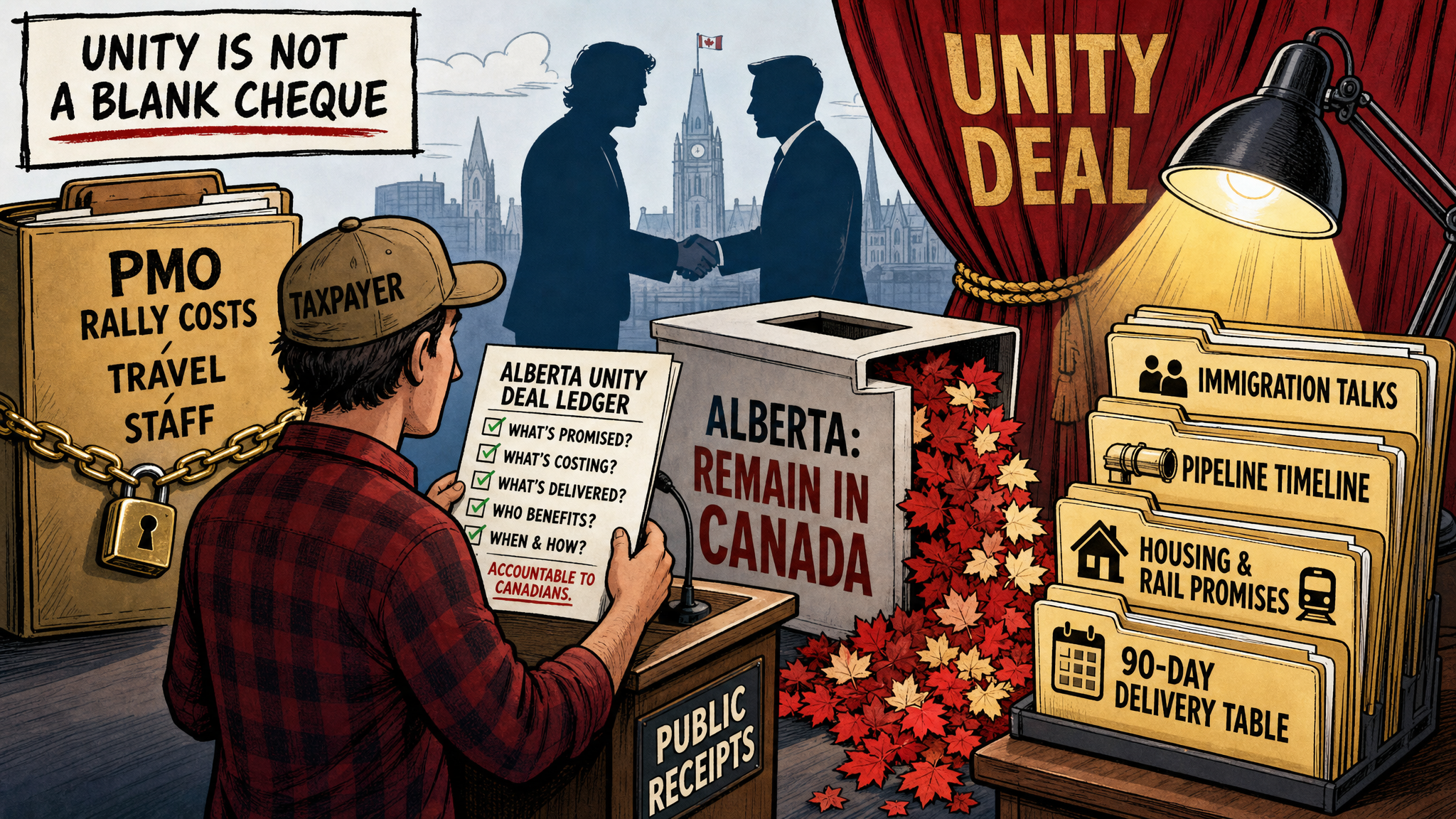
Alberta’s referendum result was decisive. The Associated Press reported Tuesday that, with more than 1.8 million votes counted and most voting areas reporting, roughly three quarters of voters backed remaining in Canada while roughly one quarter backed beginning a process toward separation. Elections Alberta’s unofficial results page framed the question clearly: remain a province of Canada, or begin the constitutional process required for a binding future separation referendum.
Prime Minister Mark Carney is entitled to welcome that result. CityNews reported that he called it “a great result for Canada,” said he spoke with Premier Danielle Smith the morning after the vote, and said they discussed moving forward in a spirit of co-operative federalism, including immigration. The PMO also issued a post-vote statement saying Albertans had made a clear choice and tying unity to trade diversification, fast-tracked national projects and Alberta’s role in Canada’s energy future.
Good. National unity matters. But conservative accountability starts where the victory lap ends. A No vote on separation does not erase the public’s right to know what Ottawa spent, promised and negotiated to secure that outcome.
Carney did not merely comment from Ottawa. Official PMO materials show he delivered referendum-week remarks at Forever Canadian rallies in Calgary on October 15 and Edmonton on October 16. In those speeches, he urged Albertans to vote for Canada while also listing federal commitments: local infrastructure for affordable housing, high-speed rail between Calgary and Edmonton, defence investments, major-project approvals, Pacific Link, new ports, energy corridors and access to new markets.
Those promises now need receipts. If the federal government used taxpayer-funded travel, staff time, security, event support, communications resources or official announcements during referendum week, Canadians deserve a clean accounting. If Liberal Party resources were involved separately, Canadians deserve proof that the firewall held. If Carney and Smith discussed immigration after the vote, Canadians deserve a written public readout of the subjects, requested powers, federal limits and next steps.
The same standard applies to the policy promises. Pacific Link should have a public timetable, route-decision process, Indigenous-consultation milestones, port requirements, environmental review steps and cost assumptions. Housing and rail promises should come with funding tables, delivery dates and responsible departments. The Major Projects Office should publish what, if anything, changed because of the referendum campaign.
The unity win is not a blank cheque. It is a public mandate to keep Canada together by governing honestly, not by converting referendum emotion into backroom discretion. Ottawa should publish an Alberta unity-results ledger within 30 days and a 90-day delivery table after that: campaign-period costs, PMO travel and staffing, event/vendor records, party-government firewall certifications, Carney–Smith call details, immigration-control discussions, Pacific Link milestones, housing and rail commitments, and every federal promise made while asking Albertans to vote No.
Albertans kept their end of the deal. Now Ottawa should show the deal.
- Associated Press: Alberta rejects a move toward independence from Canada
- Elections Alberta: Unofficial results — 2026 Referendum
- CityNews / Canadian Press: Carney says Alberta’s choice of unity is “a great result” for Canada
- Prime Minister of Canada: Statement on Albertans choosing to build a stronger Canada
- Prime Minister of Canada: Forever Canadian Rally remarks in Calgary
- Prime Minister of Canada: Forever Canadian Rally remarks in Edmonton
- iVoteLiberal context: Publish the Alberta Unity Firewall
This article accepts the reported referendum result and argues for post-vote disclosure of costs, promises, federal-provincial discussions and delivery timelines. It does not allege an undisclosed agreement; it demands the public record needed to confirm one way or the other.