Diab’s Immigration Increase Signal Needs a Reversal Ledger
Before Ottawa raises intake again, publish the reversal receipts.
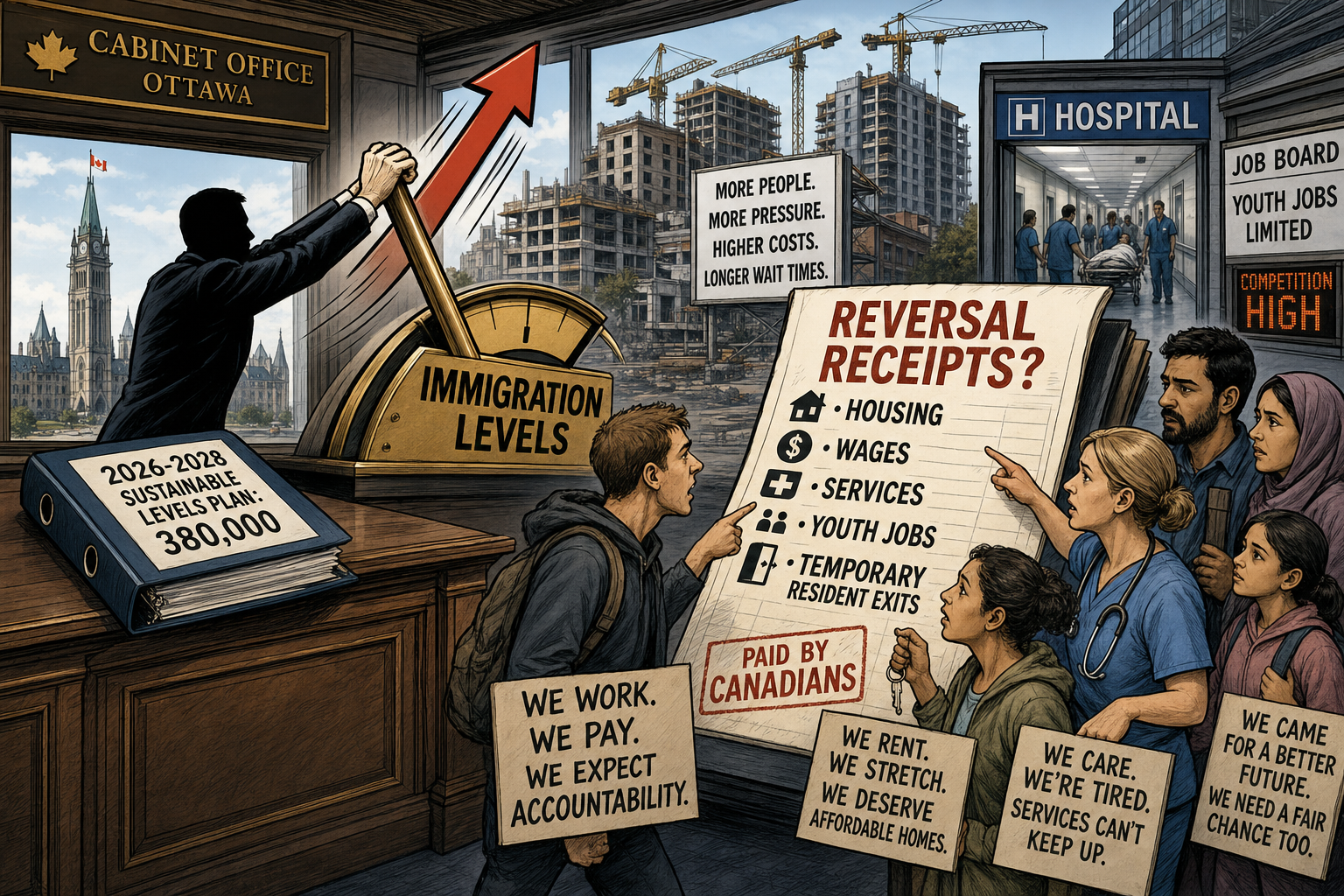
Immigration Minister Lena Metlege Diab is now floating the possibility of higher immigration levels. That is a major signal from a government that only recently sold Canadians a “sustainable levels” correction after housing, services and labour markets were pushed past capacity. If Ottawa wants to reverse course, it should not get to do it by sound bite.
The official 2026–2028 Immigration Levels Plan says permanent resident admissions are to stabilize at 380,000 in each of 2026, 2027 and 2028. IRCC’s own committee briefing also says temporary resident arrival targets were reduced to 385,000 in 2026 and that the government committed to reducing temporary residents to less than five percent of Canada’s population by the end of 2027. Those were not minor footnotes. They were the public case for restraint.
Now the minister’s message is shifting toward growth. The reported argument is that Canada wants stronger economic performance and “we do need people.” Fine: then publish the math. Canadians deserve to know what changed between the levels plan and this new signal. They deserve the cabinet assumptions, the population scenarios, the housing tests, the provincial capacity tables and the labour-market evidence behind any increase.
The warning lights are already on the dashboard. Statistics Canada’s July 1, 2026 population estimates show annual population growth slowed to 0.5 percent in 2025/2026 after 1.1 percent the year before. That slowdown was policy-driven, and it followed years when population growth ran ahead of homes, doctors, classrooms and basic service capacity. The Bank of Canada’s October analysis likewise says immigration rose significantly in the early 2020s and has begun declining as policy adjusted, while demographic change affects labour supply, demand, inflation and monetary policy.
This is where Conservative accountability should be relentless. A bigger headline GDP number is not enough. Ottawa must show whether Canadians are better off per person. Show GDP per capita. Show rents and housing starts by region. Show youth unemployment, newcomer unemployment and wage effects. Show temporary resident exits, removals and compliance. Show how many provinces asked for higher levels, how many warned they could not absorb them, and what the federal government did with those warnings.
Canada can support immigration and still reject government-by-intake-target. Newcomers do not benefit from a system that admits more people than housing, credential recognition, health care and local labour markets can absorb. Citizens do not benefit when population growth is used to paper over weak productivity.
If the Carney government wants to raise levels, the burden is on cabinet. Publish the reversal ledger first. No more slogans. No more hidden capacity assumptions. No more using immigration as an economic shortcut while Canadians are told to trust the same planners who created the pressure in the first place.
- National Newswatch / CTV News listing: Stephanie Ha article listing
- The Economic Times: Canada may raise immigration levels as population growth hits lowest since WWII
- Immigration, Refugees and Citizenship Canada: Supplementary Immigration Levels Plan 2026–2028
- Immigration, Refugees and Citizenship Canada: 2026–2028 Immigration Levels Plan committee briefing
- Statistics Canada: Canada’s population estimates, July 1, 2026
- Bank of Canada: Demographic changes are reshaping the Canadian economy
This article criticizes federal policy and transparency. It does not criticize immigrants, newcomers or individual applicants.