Ottawa’s Digital Records Problem Needs a Public Ledger
If federal work happens in Slack, Teams, texts or other digital channels, Canadians still own the records. Ottawa should prove those records can be found before it rewrites access law.
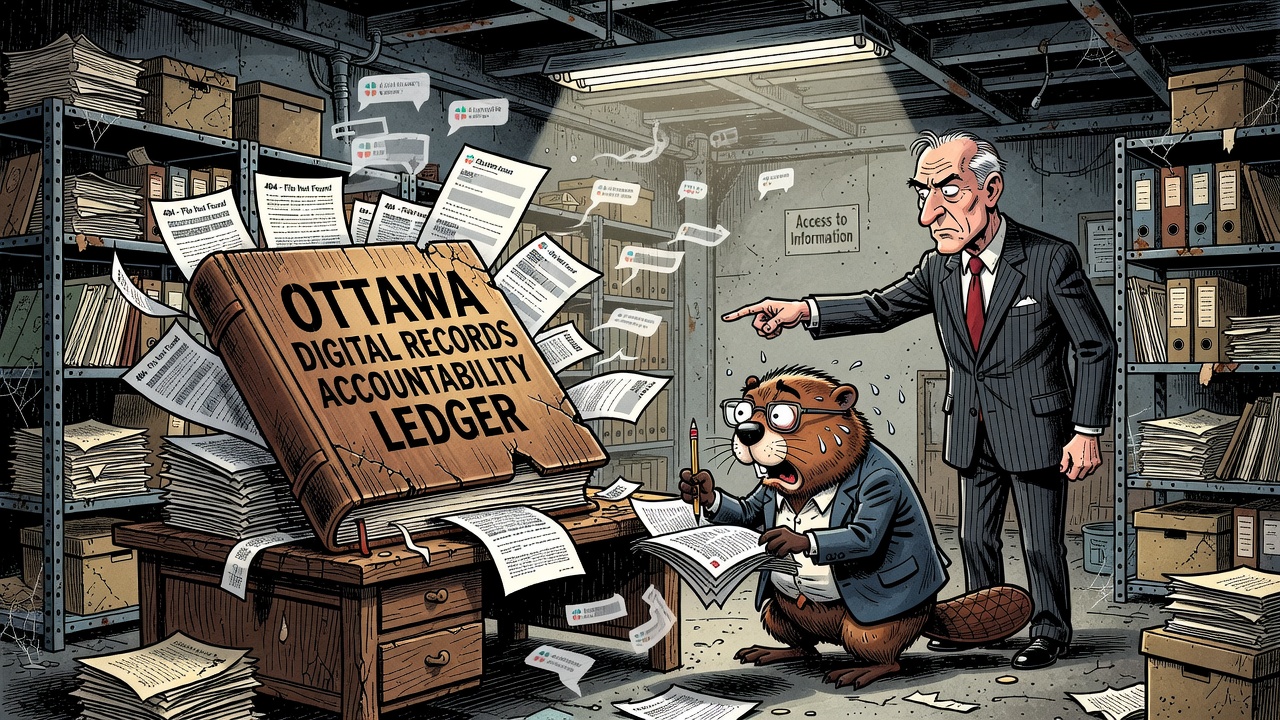
The Information Commissioner’s 2025–26 annual report lands at a pivotal moment for federal transparency. Parliament is reviewing the Access to Information Act again, and Ottawa’s instinct will be to talk about modernization. Conservatives should ask the more basic question first: can this government even preserve and search the records it already creates?
The watchdog’s own numbers show the system is not healthy. In 2025–26, the Office of the Information Commissioner reported 5,839 complaints submitted and 5,894 complaints concluded. Of the concluded files, 662 were well founded, 538 were not well founded, 825 were discontinued and 1,930 were ceased. That is a large accountability machine running because Canadians, journalists, businesses and MPs keep hitting walls when they ask for federal records.
The sharper warning is ArriveCAN. In a special report to Parliament, the Commissioner found the Canada Border Services Agency failed to conduct reasonable searches in response to six access requests about the app. The report says CBSA used Slack for ArriveCAN work, Slack was generally not searched for responsive records, the access-to-information unit was unaware the workspace existed, and the workspace was later deleted.
That should alarm anyone who believes taxpayers are entitled to receipts. A record does not become less public because a department chose a collaboration tool instead of a formal memo. A decision trail does not stop mattering because officials typed it into a channel, message thread or shared workspace. If the federal government can spend public money, manage contractors and make operational decisions in digital rooms that ATIP staff do not know exist, then “access to information” becomes a slogan, not a right.
Ottawa’s Liberal record on transparency already deserves skepticism. Governments promise openness when asking for power and discover exceptions once they have it. But this is not just a partisan communications problem. It is an operating-control problem. Before ministers ask Parliament to accept any access-law rewrite, they should publish a government-wide digital-records ledger.
That ledger should name every approved collaboration platform by department, state whether messages are records of business value, list retention periods, identify who can place legal or ATIP holds, explain how deleted workspaces are preserved, and show how search teams verify that unofficial channels were not missed. It should include audits, not assurances.
Canadians do not need another transparency speech. They need proof that when Ottawa creates a record, Ottawa can still find it. After ArriveCAN, the burden is on the government to show the receipts.
- Office of the Information Commissioner of Canada: 2025–2026 Annual Report
- Office of the Information Commissioner of Canada: Letter to the Standing Committee on Access to Information, Privacy and Ethics regarding ArriveCAN access requests
- Office of the Information Commissioner of Canada: 2025–26 Annual Report on the Administration of the Access to Information Act
This article argues for stronger public recordkeeping and access-to-information controls. It relies on official Information Commissioner material and does not allege wrongdoing beyond the Commissioner’s published findings.