Palestine Election Grant Needs a Taxpayer Ledger
A nearly $1 million election-readiness grant deserves deliverable, risk and value-for-money receipts now that the election timetable has slipped.
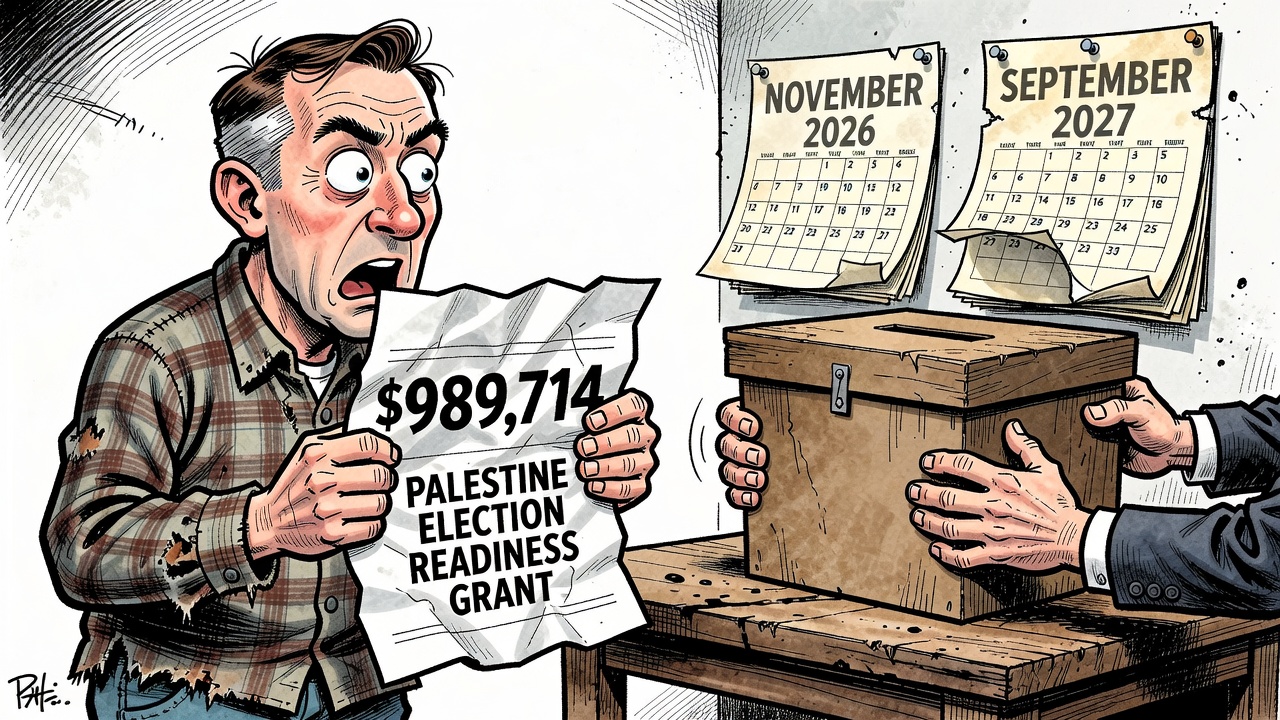
Ottawa’s Palestine policy was sold with conditions. One of the most important was democratic renewal: Palestinian Authority reforms, elections, and the exclusion of Hamas from future governance. That was the public case. The taxpayer question now is simple: where are the receipts?
The federal grants database lists a Global Affairs Canada contribution agreement with Adam Smith International Ltd. for the “SAWT Programme: Support to Elections and Political Processes.” The value is $989,714, with an agreement period running from April 22, 2026 to March 31, 2028. The government description says the project supports electoral readiness, political participation and democratic renewal, including April 2026 local elections and November 2026 Palestinian National Council elections.
That record matters because the political timetable has already moved. Reuters reported that the planned November 28, 2026 legislative vote was being postponed after Palestinian officials concluded the necessary political, security and economic conditions had not materialized. Follow-up reporting said President Mahmoud Abbas set a presidential election for September 11, 2027.
Canadians do not need a lecture about complexity in the Middle East. They need a basic value-for-money ledger. If Ottawa committed nearly $1 million to prepare election processes that are now delayed, Global Affairs should publish the agreement, deliverables, milestones, payment schedule, risk assessment and stop-work or clawback clauses. Taxpayers should not have to guess whether money is paid regardless of performance, whether milestones changed after postponement, or whether officials updated the risk rating once the schedule slipped.
This is especially important because Prime Minister Mark Carney’s recognition of a Palestinian state was defended in part on promises of reform and elections. Global News, citing the Associated Press, reported that Canada tied recognition to Palestinian Authority commitments, including general elections in 2026 in which Hamas would play no role. If an election condition helped justify a major foreign-policy move, then spending attached to election readiness deserves even more scrutiny, not less.
None of this is an argument against supporting democratic institutions abroad. It is an argument against blank-cheque foreign policy. Conservatives should insist on measurable results: what was purchased, who was paid, what was delivered before postponement, what changed afterward, and how Ottawa will judge success by March 2028.
The standard should be boring and strict. Publish the contribution agreement. Publish the deliverable tracker. Publish payment dates and amounts. Publish the monitoring reports, risk updates and any amendment after the election delay. If the work remains useful, prove it. If the deliverables no longer match reality, pause payment and explain the fix.
Foreign aid should not operate on vibes, headlines or diplomatic symbolism. When Ottawa spends Canadian tax dollars to support elections, Canadians deserve election receipts.
- Government of Canada: SAWT Programme: Support to Elections and Political Processes grant record
- Prime Minister of Canada: Carney remarks on Palestine recognition preconditions
- Global News / Associated Press: Canada recognizes Palestinian state with reform and election conditions
- Reuters via Investing.com: Palestinians set to delay legislative elections
- Reuters via Investing.com: Abbas postpones Palestinian elections and sets presidential poll for September 2027
This article argues for grant transparency and value-for-money controls. It does not allege wrongdoing by the contractor or any individual official.