From 500,000 Homes to Lowered Expectations
A government that sold Canadians scale and urgency on housing is now trying to lower the bar. The data did not change in Ottawa’s favour, so the promise is being softened.
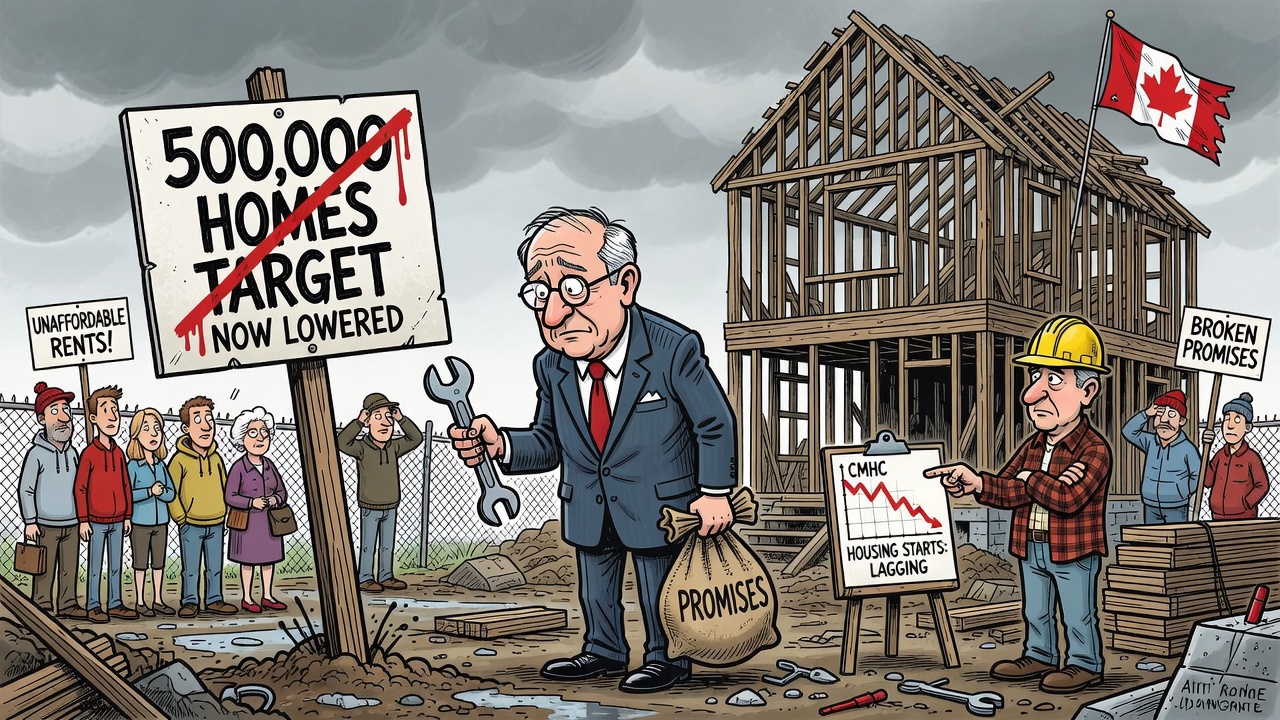
The Carney Liberals’ housing promise is meeting the real world, and the real world is winning. During the campaign, Liberals talked about doubling Canada’s pace of homebuilding to nearly 500,000 homes a year. The pitch was simple: a crisis this large required wartime-scale construction, not another round of slogans.
Now Canadian Press reporting carried by CityNews says the federal government has dropped the ambition of reaching that 500,000-home annual pace in the near term, with the 2026 budget expected to acknowledge the target cannot be met soon. That is a major political retreat, especially for a government that asked young Canadians and renters to believe it had a plan big enough for the shortage.
The official numbers explain why Ottawa is backing away. CMHC’s September 2026 data put the six-month trend in housing starts at 250,411 units, while the monthly seasonally adjusted annual rate was 279,234. That is not nothing; builders are still working. But it is also not 500,000 homes a year. Even with one better month, Canada remains far below the construction pace the Liberals used to market their housing credibility.
This is the accountability problem. When politicians announce a giant target, they get the headline immediately. When the target proves unrealistic, families get the bill slowly: higher rents, longer commutes, delayed home ownership and more pressure on local services. Conservatives should not let Ottawa rebrand failure as “prudence” without demanding the receipts.
If the government now says 500,000 homes a year is not achievable soon, Canadians deserve the full bridge between promise and retreat. Which bottlenecks did Ottawa underestimate: labour, financing, municipal approvals, infrastructure, immigration-driven demand, materials, interest rates or federal program design? Which programs are actually producing completed homes, not just announcements? Which targets survive the budget, and which were campaign decoration?
The answer cannot be another photo-op at a construction site. CMHC data should become the scorecard. Budget documents should show annual starts, completions, federal dollars per completed unit, infrastructure constraints, permitting timelines and a clear explanation of how Ottawa’s immigration and housing plans fit together.
Canada does not need a government that changes the yardstick after missing the mark. It needs one that tells the truth about the shortage, publishes measurable targets and stops pretending press releases can house people. If 500,000 homes was the promise, the Liberals owe Canadians either a credible path to get there or an honest admission that they sold more ambition than they could deliver.
- CityNews / Canadian Press: Federal government housing target reduction report
- Canadian Mortgage and Housing Corporation: September 2026 housing starts release
- CMHC data table: Monthly housing starts and completions
- Liberal Party of Canada: Mark Carney will double the pace of homebuilding in Canada
This article critiques public targets, housing delivery and fiscal accountability. It does not allege misconduct by builders, CMHC staff or municipal officials.