Canada’s NATO Spy Clearance Failure Needs a Global Affairs Security Ledger
A Canadian-sponsored NATO clearance case should not disappear into process language. Publish the timeline, flags, sign-off and reforms.
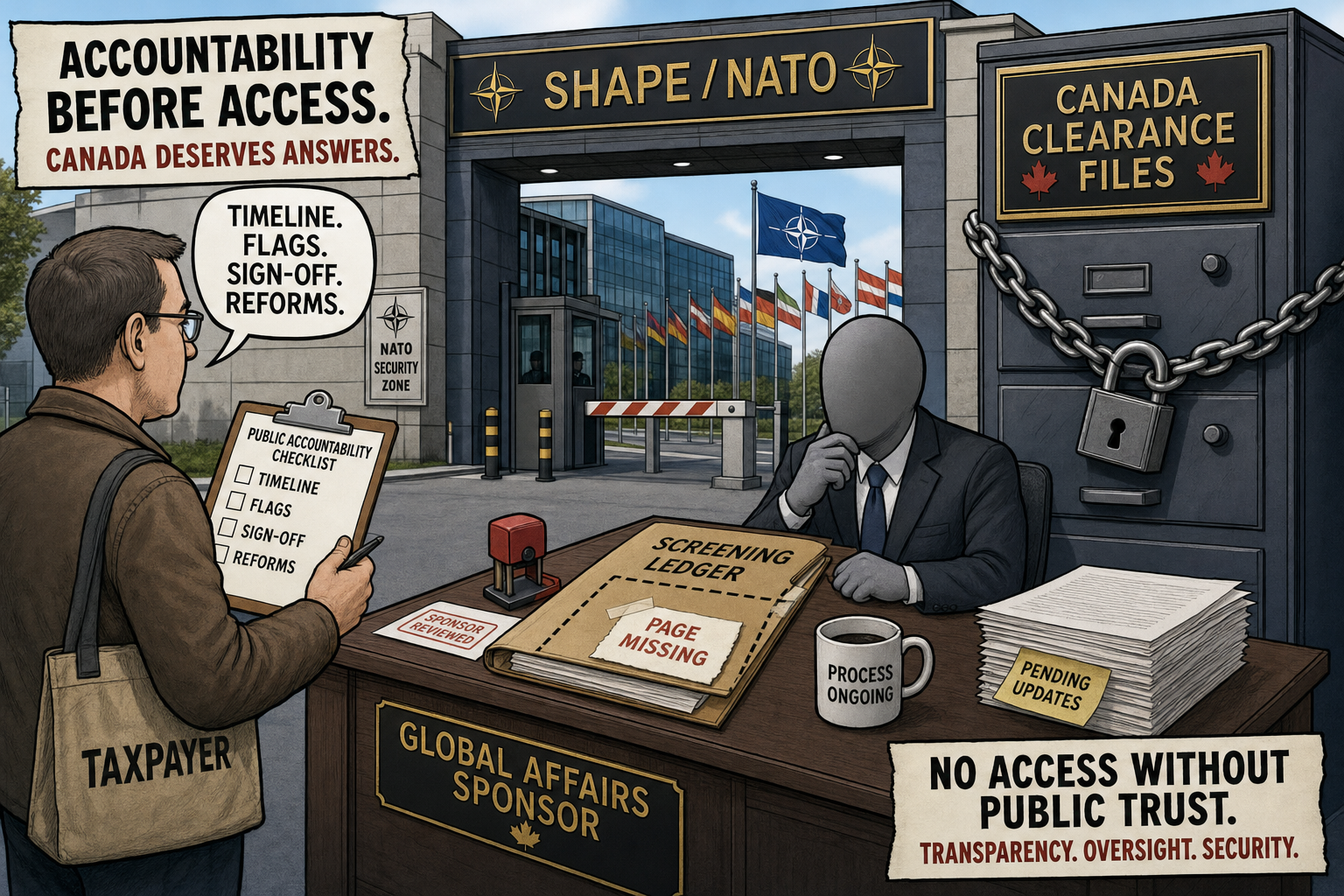
The NATO intern case is no longer just a foreign espionage allegation in Belgium. It is now a Canadian clearance-accountability problem, and Global Affairs Canada needs to publish the ledger.
Belgian prosecutors said in July that a Canadian woman who had worked as an intern at NATO’s Supreme Headquarters Allied Powers Europe in Mons was arrested on suspicion of espionage for a third country and membership in a criminal organization. Reuters later reported, citing two sources familiar with the case, that Belgian authorities suspected the alleged spying was for China. Those remain allegations. The accused is entitled to due process, and no Canadian official should turn this into collective suspicion against any community.
But due process for the accused does not erase accountability for the government that sponsored the access. At the House public safety committee on October 5, Public Safety Minister Gary Anandasangaree told MPs the matter is under Belgian investigation and that Canadian agencies are co-operating. He also said that, in this case, the authorization went through Global Affairs Canada with support from CSIS and the RCMP.
That matters. Anandasangaree’s own opening statement described the security-screening chain: deputy heads decide whether to grant, deny or revoke clearances; CSIS provides security assessments for the requested level; the RCMP performs criminal and law-enforcement record checks; and the requesting department weighs that information with employment history, references and performance material. If that is the system, Canadians deserve to know where the system worked, where it failed and who owned the final sign-off.
The committee record sharpened the point. CSIS deputy director Vanessa Lloyd said the normal NATO requirement is NATO secret clearance, depending on the role, and that the sponsoring department in this case was Global Affairs. MPs also pressed officials about how a person whose record had raised public-service fraud questions could still obtain clearance for a NATO internship. The government’s answer cannot be a fog of “active investigation” forever.
Nobody is asking Ottawa to release intelligence methods, allied operational details or evidence that belongs in a Belgian courtroom. The demand is narrower and safer: publish a Canadian clearance ledger. Identify the sponsoring department, the dates of application and approval, the clearance level requested, the agencies consulted, the employment and fraud-flag checks performed, the risk exceptions granted or rejected, the current clearance status and the reforms ordered after the arrest.
If Canada expects NATO allies to trust Canadian-sponsored personnel inside sensitive institutions, Liberal ministers cannot hide behind process language while Belgium does the hard work. A serious government would provide a classified briefing to the appropriate parliamentary oversight bodies and a public, redacted timeline for everyone else.
The Carney government says national security is a priority. Fine. Then prove it with receipts. Publish the Global Affairs clearance ledger before Canadians are asked to accept another promise that Ottawa has learned lessons it will not show.
- OpenParliament.ca: House Public Safety Committee transcript, October 5, 2026
- Associated Press: Canadian intern at NATO military headquarters faces spying allegations
- Reuters via Internazionale: Arrested Canadian NATO intern suspected of spying for China, sources say
- Global News: Canadian intern at NATO military HQ arrested in Belgium on spying charge
Charges are allegations. This article argues for institutional accountability and security-screening transparency, not for prejudging the accused or disclosing operationally sensitive information.