CFB Wainwright Fire Needs a Public Safety-and-Investigation Ledger
Support the personnel and families first. Then publish the timeline, response decisions, investigation mandate, losses and lessons learned.
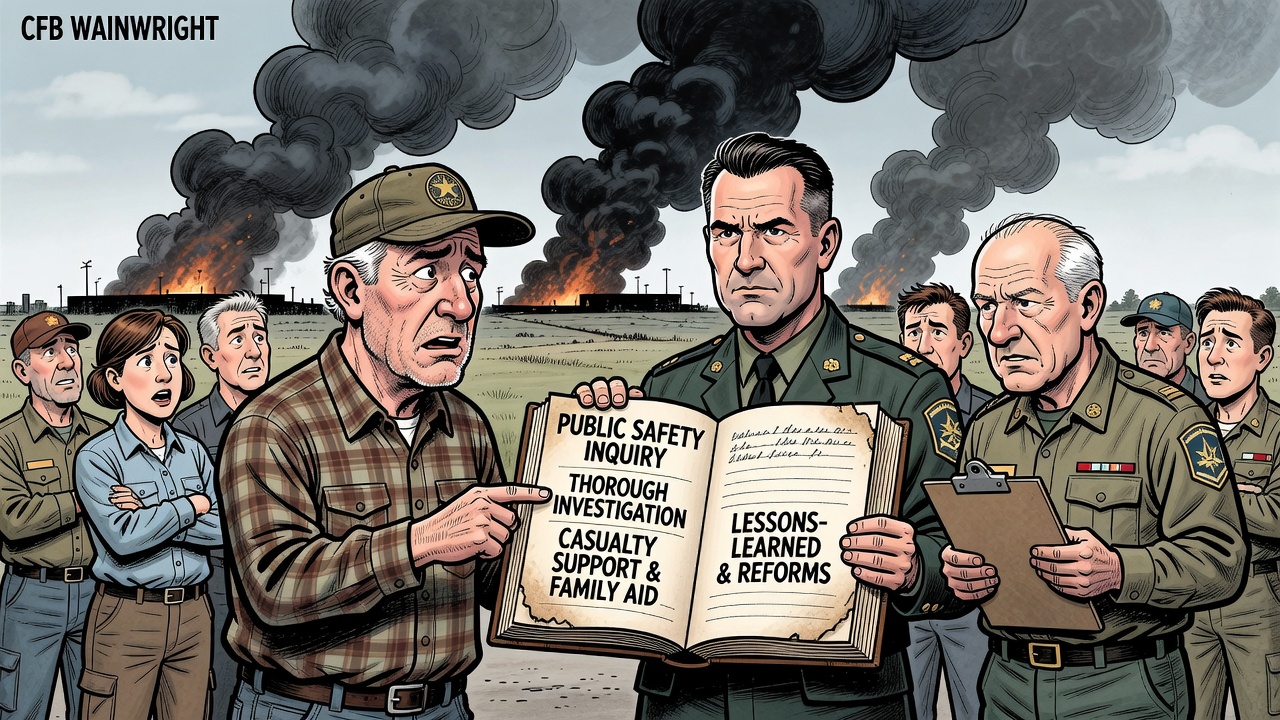
The serious incident and major fire at Canadian Forces Base Wainwright should be handled with sobriety, not speculation. People, families and emergency crews come first. But once the immediate danger is controlled, Ottawa has a basic duty: publish the public safety-and-investigation ledger.
Prime Minister Mark Carney said Saturday that a serious incident had caused a major fire at the Alberta base and that the federal government was working with Alberta officials and local authorities. The Associated Press reported that early public statements did not provide a cause. Later reporting said people had been killed and injured, while officials had still not released numbers. That is exactly why the government’s next step must be disciplined transparency rather than rumour control.
CFB Wainwright is not an ordinary workplace. It is a military training area, a national defence asset and a neighbour to local communities that depend on fast, accurate emergency information. Local reporting said high winds were spreading a large fire, and a military public-affairs officer confirmed emergency personnel were attending the scene while responders worked to protect people, property and critical infrastructure. Those facts point to a public-safety event that crosses federal, provincial, municipal and military lines.
The Carney government does not need to publish operationally sensitive details, names of casualties before families are notified, or premature theories about the cause. It does need to publish the things that accountable governments can publish: when the incident began, when base and civilian fire crews were notified, what evacuation or shelter decisions were made, which agencies were in unified command, what public alerts were issued, and when ministers were briefed.
Defence Minister David McGuinty, the Canadian Armed Forces and National Defence should also set the investigation rules now. Who has carriage of the safety review? Will military police, occupational-safety officials, provincial fire investigators or outside experts participate? What evidence will be preserved? What preliminary update schedule will the public receive? What support is being provided to injured personnel, families, base workers and nearby residents?
Conservatives who believe in the military should be the first to insist on this ledger. Supporting the troops is not a slogan for campaign signs; it means demanding safe facilities, honest after-action reviews, and a chain of command that can admit what went wrong without burying it in departmental language.
There will be time for a full cause finding. Tonight, the standard is simpler: no speculation, no stonewalling, no bureaucratic fog. Publish the response timeline, casualty-support process, equipment and infrastructure loss ledger, investigation mandate, local coordination record and lessons-learned deadline. Canadians can respect the military mission and still expect receipts from the government responsible for it.
- Associated Press: Canada’s Prime Minister says people have been killed and injured in a fire at a military base
- Border Pulse: Explosion reported at CFB Wainwright, crews respond
- CJME / Canadian Press NewsAlert: Carney says serious incident caused major fire at CFB Wainwright in Alberta
This article does not speculate on the cause of the incident or identify casualties. It argues for public-safety transparency, family support and an accountable after-action process.