Bill C-40 Leak Ledger: Who Told Reporters Before MPs?
Parliament should not learn material bill details from media backgrounders first.
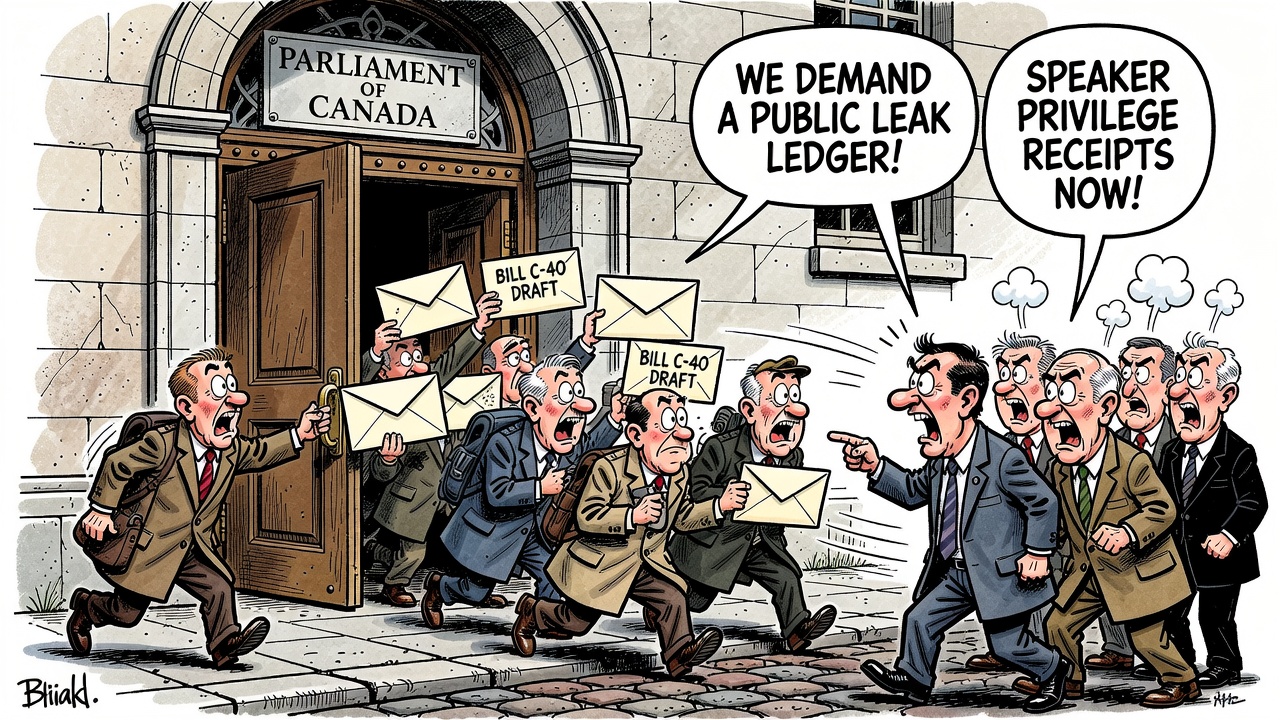
Bill C-40 may be about defence procurement, but the first accountability question is simpler: did the Liberal government let reporters see the shape of the bill before MPs could read it?
OpenParliament’s bill tracker records Bill C-40, the Strengthening Canada’s Defence Sector Act, at first reading on October 6, 2026. A Government of Canada backgrounder says the bill would establish the Defence Investment Agency as a Crown corporation, with more independence, its own board of directors and greater authority over defence-related procurement, production and investment. That is a major governance choice for defence spending, industrial policy and ministerial responsibility.
Conservative MP Andrew Scheer raised the problem in the House on October 6. His privilege argument said key details had appeared in media before MPs received the bill, including that the agency would become a Crown corporation. He argued that this was not obvious from the short title on the Order Paper and that MPs should not be learning the substance of government legislation through unnamed-source reporting.
This is not a complaint about journalists doing their jobs. Reporters chase leaks. Governments manage narratives. The constitutional problem begins when the executive appears to treat Parliament as the last audience instead of the first institution. A bill is not a campaign product or a comms rollout. Once it is on the parliamentary track, MPs deserve the text before ministers, staffers or officials start shopping the details around Ottawa.
The concern is not partisan theatre either. On October 8, NDP MP Don Davies supported the parliamentary principle at stake, telling the House that once a bill is on the Order Paper, it is a matter for Parliament. That matters because privilege fights are not only about the offended party of the day. They are about whether all MPs can do the job voters sent them to Ottawa to do.
There may be an innocent explanation. Perhaps the media reports drew from policy briefings, old procurement proposals, or people outside government. Perhaps officials believed they were backgrounding general defence policy rather than bill contents. If so, the government should have no trouble proving it. Publish the chronology.
A conservative accountability standard is straightforward: the executive must not use selective leaks to shape public opinion before elected MPs see legislation. Ottawa should release a Bill C-40 disclosure ledger showing when the final bill package was ready, when MPs received it, which ministers’ offices held media briefings, whether embargoes or background terms were used, who authorized them, and what Speaker-risk advice was given before introduction.
Defence procurement already suffers from slow timelines, cost risk and blurred responsibility. Creating a new Crown-corporation structure may or may not improve that record. But if the government cannot respect Parliament at the starting line, Canadians should be skeptical of its promises about transparency after the money starts moving.
- OpenParliament: Bill C-40 tracker
- OpenParliament: October 6 privilege argument by Andrew Scheer
- OpenParliament: October 8 comments by Don Davies
- Government of Canada / Defence Investment Agency: Introduction of legislation to strengthen Canada’s Defence Sector
- The1News / CBC mirror: Ottawa gives defence buying agency more muscle and more independence
This article argues for a disclosure ledger. It does not claim a named official leaked Bill C-40; it asks Ottawa to publish the records needed to establish the chronology.